The Ritz Club London Laser Roulette Scandal
In 2004, three men walked into the Ritz Club and won 1.3 million pounds in an evening using a concealed laser device. What followed was the largest casino fraud prosecution in modern British gaming history.
The Ritz Club occupied a discreet corner of Mayfair from 1962 to 2009. Its clientele included minor royalty, oligarchs, and professional gamblers who preferred privacy to the spectacle of the Strip. In March 2004, that discretion became a liability.
The Setup
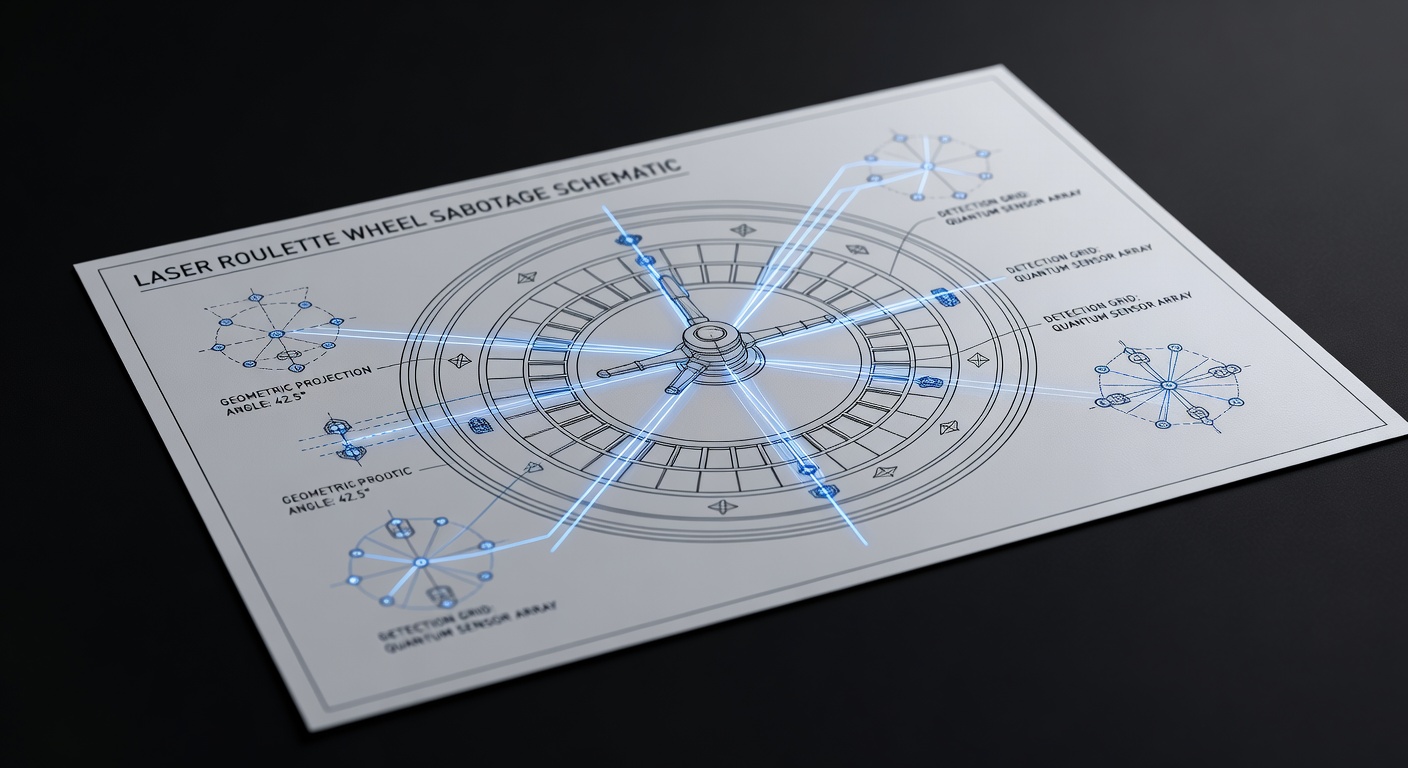
Three men entered: Serge Kutcher, a Hungarian hustler. Ermir Bukureshta, an Albanian. And a third conspirator whose role remained deliberately obscured. They carried a concealed laser scanner, no larger than a sugar cube, capable of reading the tilt and speed of a roulette wheel.
The device connected to a mobile phone with a modified ear-piece that received predicted numbers. The system could forecast the roulette outcome with sufficient accuracy to place informed bets.
They selected roulette table twelve. Over twelve hours, they placed bets of between 10,000 and 20,000 pounds. The wheel, perhaps owing to minor manufacturing variance or wear, was sufficiently biased toward their machine's predictions.
By evening, they had won 1,342,400 pounds.
The Casino's Response
The Ritz Club's management noticed nothing. No alarm triggered. The house edge simply reversed. It was only when the men returned several days later to repeat the feat that management began reviewing footage.
What the footage revealed was not visible cheating. No palming chips. No sleight of hand. The men sat and bet. The wheel spun. They won. No rule violation appeared evident.
Yet casino management consulted with Gaming Board investigators. The laser device itself violated no gaming regulation because no regulation existed to address such a thing. Roulette regulations specified what the wheel should be and when it should be inspected. They did not address predictions generated by external measurement.
The Legal Uncertainty
Berkeley, the prosecuting counsel, faced an unusual problem. The men had used no physical interference with the wheel. They had merely observed it and acted on information derived from observation.
Was this cheating? Legally, the question turned on whether the device constituted an "artificial aid" in the meaning of the Gaming Act 1968. The three argued they had exploited only the wheel's inherent bias. Roulette, they submitted, cannot be cheating-proof. Any wheel has variance. Predicting that variance through physics, not magic, violated no law.
The Gaming Board disagreed. In April 2004, all three were arrested.
The Trial
The prosecution's case rested on the argument that the device, combined with the men's conspiracy to use it, constituted cheating regardless of whether the wheel itself had been tampered with. The intention to defraud was evident. The method was merely sophisticated rather than crude.
The three were convicted in December 2004 under Section 19 of the Gaming Act 1968, which forbids using equipment or collaboration to cheat.
Kutcher received two years imprisonment. The gaming world reacted with relief. The notion that a casino could be defeated through observation and physics rather than force or theft had unsettled the industry.
The Industry's Reckoning
Every casino subsequently reviewed their roulette wheel specifications. Manufacturers increased wheel weight and seal frequency. The Gaming Commission (later UKGC) amended inspection protocols to address potential bias.
But the scandal exposed a vulnerability in gaming regulation: the assumption that cheating required visible transgression. The laser device required no touch. It left no trace. It operated in full sight.
That invisibility proved most valuable.
The Legacy
Nearly twenty years later, online casinos implemented RNG (Random Number Generator) audits that would have made laser prediction impossible. Live dealers at regulated studios now operate under camera surveillance and strict wheel specifications.
Yet the Ritz incident remained in the industry's memory as a boundary case: the moment when prediction and observation challenged the premise that casinos were immune to rational analysis.
The three men had not beaten the house. They had merely shown that the house could be beaten, given sufficient preparation and the right wheel. Everything that followed in casino security was constructed to prevent that happening again.
Next notes
More from #jackpots

Crypto Jackpot Slots: Who Funds the Prize, and in What Coin
A jackpot slot pays its top prize out of every spin you make. How the meter is funded, what it does to RTP, and what that means for a wallet balance.

Mattress Mack's 75 Million Dollar Astros World Series Win
Jim McIngvale's 75 million dollar World Series bet in 2022 represents a rare intersection of narrative and reinforcement learning. What it reveals about gambling behavior.

Craps Records: The Longest Rolls Ever Documented
On May 23, 1989, a woman named Patricia Demauro walked to a craps table. She rolled the dice for four hours. What happened in those four hours changed craps forever.

Daily Jackpots vs Mega Jackpots: Key Differences
The difference between daily and mega jackpots is not subtle when you examine the mechanical distributions. One is designed for consistent hits. One is designed for the rare life-changing moment.

Joseph Jagger: The Engineer Who Solved Monte Carlo's Roulette Wheel
In 1873, an English mill engineer hired clerks to record every roulette spin at Monte Carlo. He found a wheel bias and walked away with 65000 francs.

The Crown Casino Scam: How 33 Million Was Stolen via CCTV
In 2013, a Crown Melbourne employee and his network stole 33 million in chips using security footage and inside help. It was not complicated. It was methodical.