AI and Machine Learning in Sports Betting Models
One might ask: what is the bettor trying to do? Is he trying to predict outcomes, or is he trying to find where the market is wrong? These are different questions requiring different approaches.
The Question
When we speak of machine learning in sports betting, we often conflate two distinct activities. The first is prediction: building a model that forecasts outcomes. The second is arbitrage: finding where the market's prices diverge from reality.
The bettor who seeks prediction is asking: what will happen? The bettor who seeks arbitrage is asking: what does the market think will happen, and where is it wrong?
These require different models and different approaches.
Prediction Models
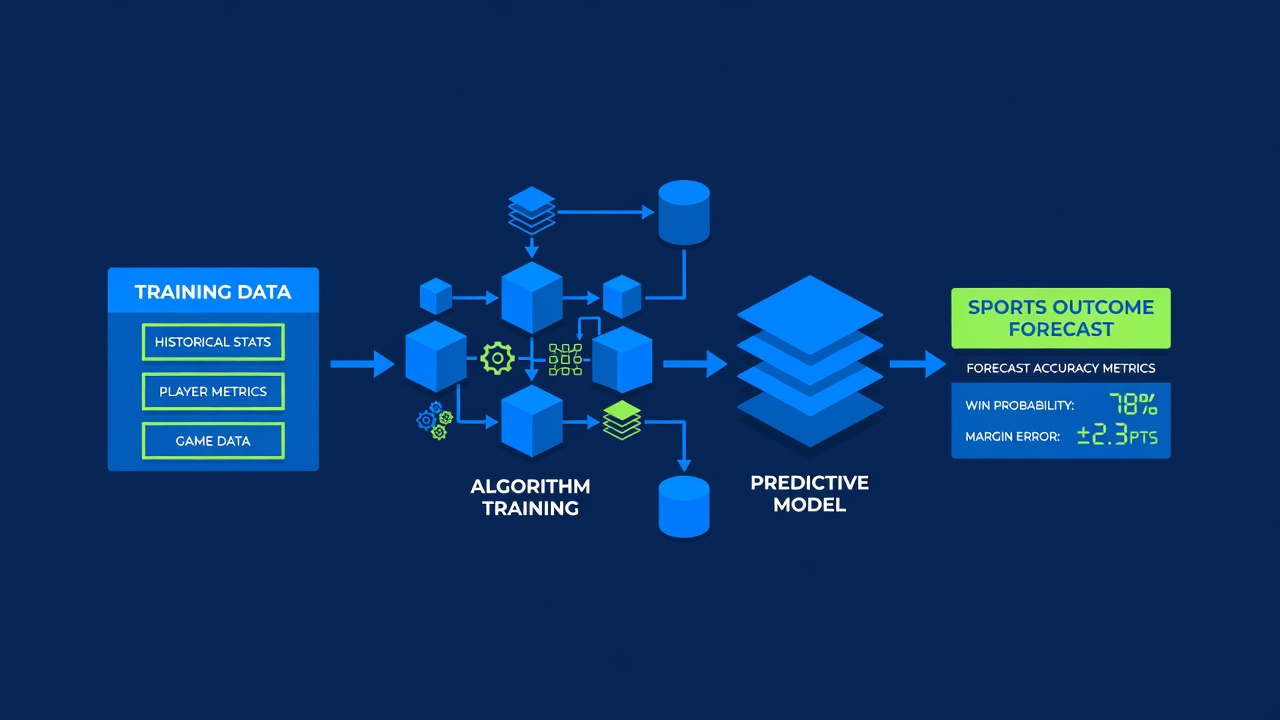
A prediction model takes historical data (past game results, player statistics, team composition) and extracts patterns to forecast future outcomes.
Machine learning excels at pattern recognition. Feed a model thousands of historical games and it will find correlations you cannot see manually. A team's performance when the backup quarterback plays. A team's performance after a bye week. A team's performance against teams with similar defensive statistics.
The challenge is that sports are not stationary. The NFL in 2024 is different from the NFL in 2014. Player specialization changed. The salary cap changed. Rule interpretations changed. A model trained on 2010-2015 data may not accurately predict 2024 outcomes.
Effective prediction models require constant retraining. Every season, the historical data shifts. New patterns emerge. Old patterns become stale.
Market-Finding Models
The second approach asks: where does the market disagree with reality?
The sportsbook sets a line. The market (aggregate of all bettors) moves that line through their collective action. If the line is wrong, there's an opportunity.
A machine learning model trained to detect line errors is different from a model trained to predict outcomes. The model learns: when the market sets the line at X, and reality is Y, there's an edge.
This requires calibration data. Historical lines and historical outcomes. The model learns patterns about where markets are systematically wrong.
The Difference
A prediction model might say: "The Eagles have a 62% chance of beating the Cowboys."
A market-finding model might say: "The market is pricing the Eagles at 55%. The model estimates 62%. There's a 7-point edge on the Eagles."
The first model answers: what will happen? The second model answers: where is the market wrong?
Profitable betting requires the second approach. A perfect prediction model is useless if the market has already priced in that prediction. You need a model that finds where the market is wrong.
The Data Problem
Machine learning requires training data. The more data, the better the model.
For sports betting, this is challenging. You can access decades of historical games and lines. But the game itself changes constantly. A model trained on 30 years of NFL data must account for rules changes, salary cap growth, and strategic evolution.
Some teams have better data than others. Advanced analytics shops working for sportsbooks have access to information casual bettors don't: detailed player tracking data, injury probability models, and coaching tendency databases.
This asymmetry makes it difficult for casual model-builders to compete. The data is not equally available.
The Overfitting Trap
Machine learning models are prone to overfitting. The model learns historical patterns so precisely that it fails on new data.
Imagine a model trained on NFL seasons 2000-2020. The model learns: when it rains on Sunday, the line moves by 2 points. This is a spurious correlation. Rain doesn't actually affect outcomes in modern football (the fields and equipment are designed for it).
But the model learned it from historical data. Now in season 2021, it applies this pattern to new data, and it fails.
Good model-builders validate on out-of-sample data. They test their model on years it wasn't trained on. If the model performs well on unseen data, it might actually work. If it only works on training data, it's overfit.
The Honest Assessment
Machine learning in sports betting is useful. But it's not a shortcut to free money.
The professionals who profit from sports betting typically combine machine learning models with domain knowledge. They understand football deeply. They understand how the market thinks. They use models to augment their intuition, not replace it.
A pure machine learning approach, without domain knowledge, is less likely to find edges. The model will find patterns, but it won't understand which patterns are real and which are spurious.
The Philosophical Point
We began by asking: what is the bettor trying to do?
The answer shapes everything. If the goal is prediction, machine learning can help. If the goal is finding market errors, machine learning is essential but insufficient. You also need to understand markets, psychology, and context.
Next notes
More from #sportsbook
Common Biases That Hurt Sports Bettors
Been taking bets for forty years. The mug punters, they lose for the same reasons every time. Bias, mostly. They think they know better than the numbers.

Push, Void, and No Action: Sports Betting Terms You Must Know
I did not understand what a push was for my first three years of sports betting. I just kept money in my account and assumed I was stupid. I was not stupid. The sportsbooks just do not explain it well.

How Geolocation Works on Regulated Sports Betting Apps
Geolocation technology is the difference between a legal sportsbook and an illegal one. The tech is not sophisticated, but the stakes are absolute.

How the Gambler's Fallacy Affects Roulette Players
Roulette teaches the human brain how to recognize patterns that don't exist. Understanding the design loop reveals why the game is so effective at it.

Mattress Mack's 75 Million Dollar Astros World Series Win
Jim McIngvale's 75 million dollar World Series bet in 2022 represents a rare intersection of narrative and reinforcement learning. What it reveals about gambling behavior.

The Ultimate Guide to 3-Betting in No-Limit Hold'em
Three-betting is a specific technique used in poker to apply pressure. It worked the same way in organized crime investigations. Apply pressure, watch who cracks.