Classic 3 Reel Slots: How Strips and Paytables Set the Odds
Two cherries on a 22-stop reel look like 1 in 11, but the patent's virtual table makes it 3 in 44. How reel strips and paytables set classic slot odds.
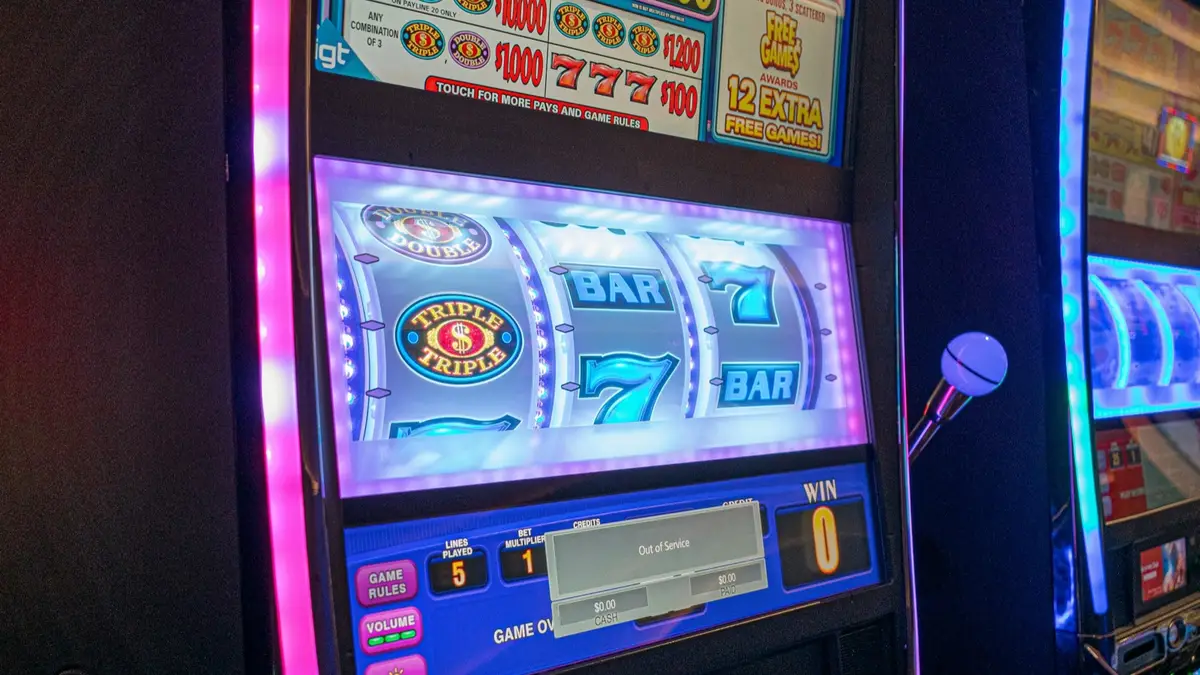
Photo: Gabriel Santos on Unsplash
Classic 3 reel slots are built from two documents: a strip of symbols for each reel and a paytable that says what each line pays. Your odds come from how many positions each symbol gets in the game's random number table, which can be far more than the stops you see, so three reels and a handful of symbols do not mean better odds. The return you can expect over time is set by that paytable math, inside a legal floor that is lower than most players assume.
We see the same pitch a lot: fewer reels, fewer symbols, so the game must be easier to beat. The numbers below show why that reasoning breaks, using the worked example from the patent that made modern reel slots possible.
How classic three reel slots are actually built
A classic three reel slot is a set of reel strips, a paytable and a program that maps random numbers onto strip positions. Nevada's submission rules for a gaming device list reel strips, rules and paytables among the material a manufacturer has to hand over, and the same regulation counts the mapping of random numbers to game elements as part of the controlled program.
That mapping is the part a player never sees. The 1984 Telnaes patent describes a design where the physical reels are only a display of a result the random number generator already picked. The spinning reel is the scoreboard, not the dice.
Reel strips versus the virtual table
On early mechanical machines, the number table matched the reel: if a reel had a given count of stops, each stop had the same chance. The Telnaes design broke that link, putting more positions in memory than on the reel, which lets a designer weight symbols without changing what the strip looks like.
The patent works one example through, and it is the clearest illustration we know of:
| Layout | Cherry positions | Total positions | Chance per reel |
|---|---|---|---|
| Physical reel | 2 | 22 | 0.0909 |
| Virtual table | 3 | 44 | 0.0681 |
The cherry gets more entries in the virtual table, three instead of two, yet its odds drop from 0.0909 to 0.0681 because the table doubled in size. You would count two cherries on a strip of 22 and expect roughly one hit in eleven spins on that reel. The machine is actually working closer to one in fifteen.
Working the hit chance on a three reel line
Stack that across three reels and the gap widens. If every reel used the patent's physical layout, three cherries on the line would come up once in 1,331 spins (22 x 22 x 22 divided by 2 x 2 x 2). With the virtual table on all three reels, it comes up about once in 3,155 spins. Same symbols, same look, less than half the frequency.
This is our arithmetic on the patent's own figures, not data from any live game. The point is the method: a hit frequency is the product of each reel's weighted chance, and the weights are invisible from the glass.
What the paytable does to RTP
Return to player is the paytable multiplied through those weighted chances, summed across every winning combination. A three reel game with few symbols still has its RTP set by that sum, and the law only sets a floor.
Nevada requires each device to theoretically return no less than 75 percent for each wager available on it (Regulation 14 as read in October 2026). That floor applies to every bet size the machine offers, not just an average across the machine, so no single wager on the device can sit below it. Put the other way, the legal ceiling on what a Nevada machine keeps is 25 percent.
New Jersey sets its bar higher: a minimum theoretical RTP of 83 percent per slot game, as of October 2026. It adds a rule that matters for paytables: every winning combination used to reach that 83 percent has to be available on each paid play.
New Jersey also caps how long any outcome can be: no play may carry odds greater than 100 million to 1.
What machines keep in practice
The floors are wide, but actual hold is much tighter. The Las Vegas Review-Journal, reporting on a UNLV study, puts the real split closer to 93.5 percent returned and 6.5 percent kept, against the 75 percent legal minimum.
UNLV's Center for Gaming Research puts the statewide average Nevada slot hold since 2004 at 6.55 percent. That is an average across all machines in the state, not a number for any one classic game. A given three reel title can sit well above or below it, and the machine does not tell you which.
For a wallet balance, what matters is that hold is a long-run rate. Over a short session the paytable's spread of small and rare wins decides what happens, and a game that holds 6.55 percent on average can still empty a balance quickly or pay above it for a stretch.
What this means when you pick a game
Count the symbols on a strip if you like, but do not read odds from them. The virtual table decides the odds, and neither the strip nor the reel window shows it.
- Look for a published RTP figure from the game provider, since that is the number the paytable math produces.
- Treat a short list of symbols as a style choice, not a better deal.
- Remember that the regulatory floor is a minimum, not a promise of what you will get back in any session.
Questions players ask
Do three reel slots have better odds than five reel slots?
Not by default. Odds come from how many positions each symbol holds in the game's random number table, and the Telnaes patent shows that table can have more positions than the physical reel, so reel count alone tells you little.
What is the minimum payback on a slot in Nevada?
Nevada requires a theoretical payout of no less than 75 percent for each wager a device offers, as of October 2026. Reported practice runs much higher, near 93.5 percent.
What is the minimum RTP for slots in New Jersey?
New Jersey sets it at 83 percent per slot game as of October 2026, and every winning combination counted toward that figure has to be available on each paid play.
Are the reels on a classic slot random?
The outcome is random, but the reels are not where it happens. In the design the Telnaes patent describes, the reels display a result the random number generator already selected.
Where this comes from
- Nevada Gaming Control Board, Regulation 14, Manufacturers, Distributors, etc., accessed October 2026
- Cornell Legal Information Institute (New Jersey Administrative Code), N.J. Admin. Code 13:69E-1.28A, Standards for the approval of a slot machine game, accessed October 2026
- Google Patents (US Patent and Trademark Office record, inventor Inge S. Telnaes), US4448419A Electronic gaming device utilizing a random number generator for selecting the reel stop positions, published 15 May 1984
- Las Vegas Review-Journal, Nevada slot machines are getting tighter, says UNLV report, accessed October 2026
Related notes
The newest notes

GTA Shark Card Value: A Currency With a One-Way Door
Dollars go into GTA$ and never come back out. Rockstar can change the rate and refunds nothing. How that differs from a stablecoin's redeemable peg.
Do Penny Slots Still Exist? Yes, but Not at 1 Cent a Spin
Nevada still reports 1 Cent slots as their own category. The one-cent spin is another story: forced lines push the cheapest bet to 40 cents or more.

Crypto Slots Game Fairness: How to Verify One Spin
A provably fair spin is locked by a hashed server seed before you play. Here is how to check the hash, rerun the nonce and spot slots the badge skips.
Stablecoin Cross Border Payments: Each Leg Priced vs a Wire
Stablecoin transfers are cheap on chain and costly at the fiat edges. We price on-ramp, chain hop and off-ramp against a wire and the 6.36% remittance average.