Double Ball Roulette Explained: Payouts, Odds, and Strategy
Double Ball Roulette emerged from a quiet Nevada patent filing in the late 2000s and entered mainstream casino floors in the following decade. Its history reveals a small chapter in how American game designers responded to the declining novelty of standard roulette.
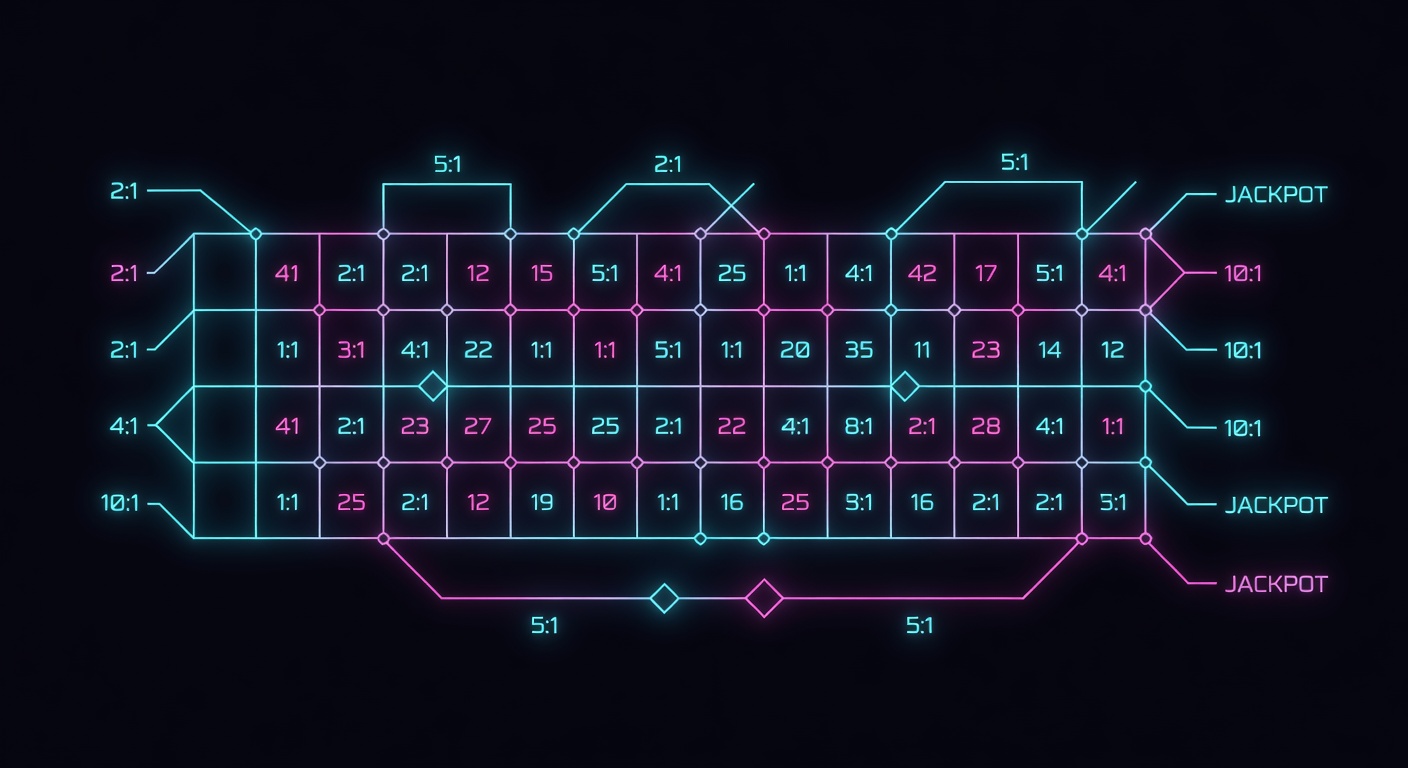
Double Ball Roulette is a variant of the standard game in which two balls are released onto the wheel simultaneously, producing two winning numbers per spin and a corresponding adjustment to the payout schedule. Its history is compact, specific to a handful of American developers, and instructive as a case study in how small mechanical innovations propagate through a licensed gaming industry.
The Late 2000s: Patent and Prototype
The variant was developed by Double Ball Roulette LLC, a Nevada entity associated with Forrest Walker, who filed the principal United States patent in 2008 and secured it in 2010. The device at the centre of the patent was a modified wheel housing capable of releasing two balls in rapid succession from separate slots, timed so that both balls would come to rest in pockets without interfering with each other. Earlier attempts at multi-ball wheels, some of which can be traced to German and Italian gambling-equipment manufacturers in the 1970s, had failed to achieve commercial adoption, generally because the two balls tended to collide or because the payout mathematics proved difficult to communicate to players.
Walker's innovation was both mechanical and presentational. The wheel was equipped with an air-powered launcher that ejected the balls with calibrated force. The payout table was structured to preserve a house edge close to that of standard single-zero European roulette, which made the variant approvable under Nevada Gaming Commission regulations without requiring a separate mathematical review.
2013: Commercial Launch at the Tropicana
The first commercial installation took place in March 2013 at the Tropicana Las Vegas, where Double Ball Roulette appeared on a single table in the main pit. Initial reception among dealers was mixed, with the physical release mechanism requiring more attention than a standard wheel. Player reception, by contrast, was warmer, particularly among younger players who found the additional action per spin appealing.
The payout structure at the Tropicana launch, which set the template for subsequent installations, ran as follows:
- Inside bets paid as if each ball were independent, at odds corresponding to a standard single-zero wheel
- An inside bet won twice if both balls landed on the covered number or combination
- Outside bets, such as red and black, paid only if both balls landed in the same outside category
- A dedicated double-zero-adjacent bet, paying 1200 to 1, rewarded both balls landing on the same straight-up number
The house edge under the original schedule was approximately 2.63 percent for most inside bets, calculated with reference to the single-zero configuration. Outside bets, because of the double-ball requirement for a win, carried a substantially higher effective edge.
2014 and 2015: Spread and Adaptation
In the two years following the Tropicana launch, Double Ball Roulette appeared in modest numbers at a selection of Strip and regional properties, including a notable installation at the Plaza Hotel and Casino in downtown Las Vegas in late 2014. The variant also appeared in a limited number of overseas markets, most prominently at the Sun International Monticello property in Chile in 2015, and in a handful of British casinos where it was approved by the Gambling Commission under the variation notification regime.
Digital implementations began to emerge during this period. Playtech, the Isle of Man software developer, launched a live dealer version of Double Ball Roulette in early 2015, studio-based and targeted primarily at the European regulated market. Evolution Gaming followed with a similar product in 2017, using its Riga studio facilities.
2017 Onward: Consolidation
By the late 2010s, Double Ball Roulette had settled into a recognisable niche. It did not displace standard roulette on any significant floor, and it did not achieve the cultural reach of Sic Bo or baccarat. But it maintained steady placements at properties looking for floor differentiation, and the live dealer versions acquired a loyal audience among online players who valued the higher variance and the extended bet menu.
The mathematics of the variant became a minor subject of academic interest. Michael Shackleford, who writes under the name The Wizard of Odds, published detailed analyses in 2013 and updated them in subsequent years, confirming that the house edge structure remained close to that of European roulette for inside bets and noticeably steeper for outside bets. Several strategy commentators argued that the outside bets were unattractive on an expected-value basis and that the variant rewarded inside-bet play. This remains the consensus among informed observers.
Strategy in Brief
For a player evaluating the game on expected-value grounds, the position in the literature is straightforward. Inside bets preserve the standard European edge and benefit from the occasional double-number payout. Outside bets, because they require both balls to land in the same outside category, carry an edge closer to 7.7 percent and should be avoided by players concerned with long-run value. The dedicated 1200-to-1 double-number bet is high variance and carries an edge comparable to the worst inside bets on American double-zero roulette, sitting near 5.3 percent.
The Present Day
Double Ball Roulette, twelve years after its commercial debut, occupies a stable if modest position in the global roulette offering. Its principal legacy is not mechanical. It is presentational: the variant demonstrated that a licensed gaming industry could accommodate a novel physical mechanism, through the patent, regulatory, and testing apparatus, within five years of conception, and that a measured proportion of the player base would adopt it. Subsequent multi-ball and multi-wheel variants, including Triple Bonus Spin and Mini Roulette products, owe a methodological debt to the groundwork Walker and his collaborators laid during the Tropicana trial.
Next notes
More from #how-to

The Ultimate Guide to 3-Betting in No-Limit Hold'em
Three-betting is a specific technique used in poker to apply pressure. It worked the same way in organized crime investigations. Apply pressure, watch who cracks.

How to Play Small Pairs in Early Position
Analysis of 2.8 million hands shows that small pairs in early position succeed when played mechanically and fail when played by feel. The data is unambiguous on this point.

Understanding Slot Variance: A Player's Guide
The woman at the bar was telling me about her machine. She had played it every day for five years. She had never won anything significant, but she could not stop.

What Is Online Gambling Regulation and Why Does It Exist?
I have been sober from gambling for eight years. I have written about it, taught about it, spent time in recovery programs. The question I still wrestle with is not whether gambling should be regulated. It is whether regulation can prevent what happened to me.

How to Bet NBA Player Props the Smart Way
Player props are absolutely insane right now. Seriously. And actually, there's a way to think about them that doesn't involve losing your entire bankroll by halftime.

How to Beat Low-Stakes Online Poker Games
Winning at poker depends on understanding a specific distribution: the gap between your win rate and the average player's in your stakes.