Sportsbook Licensing and Regulation: What Bettors Should Know
A licensed sportsbook is an audited, bonded, surveilled operation. An unlicensed one is an app that might vanish next week with your balance. The difference is not abstract. Here is what licensing actually means and why it matters.
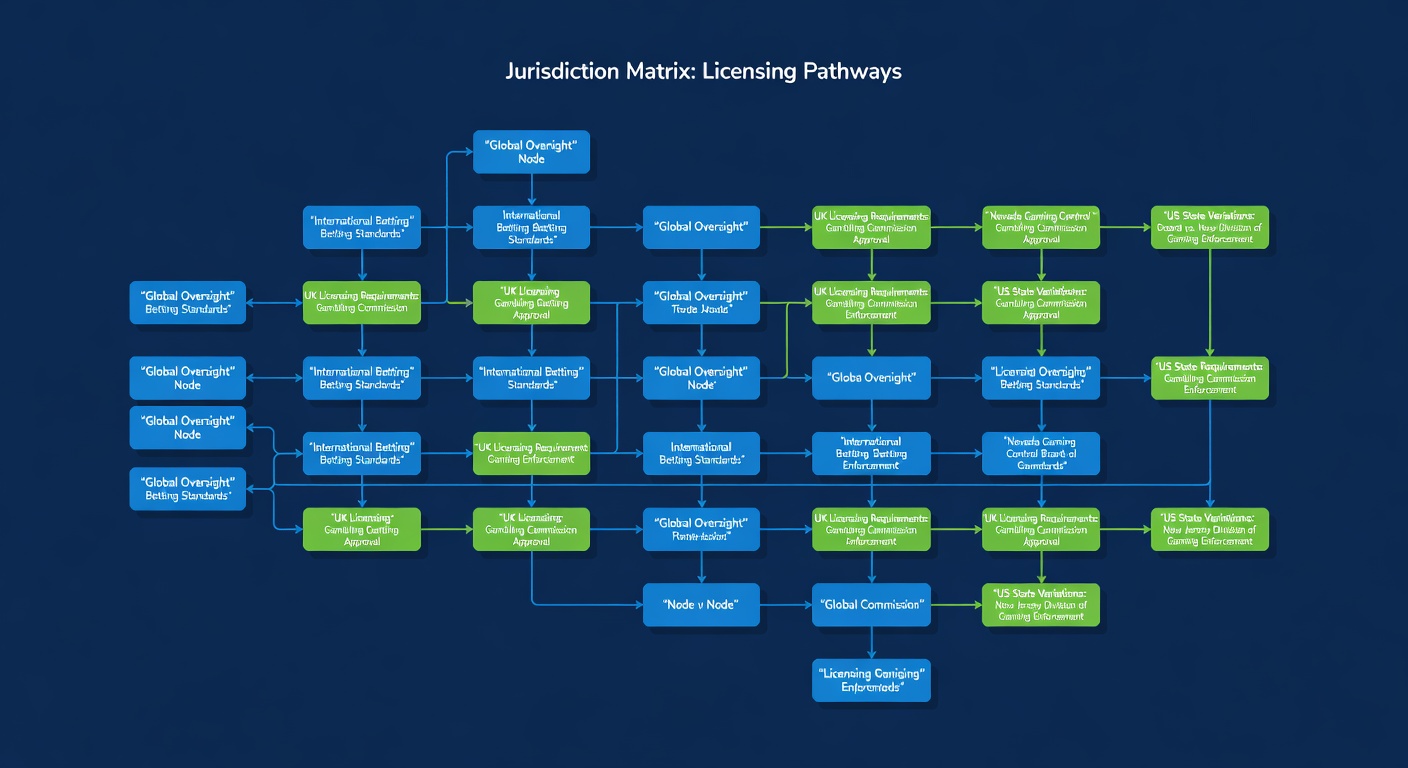
A licensed sportsbook is a regulated financial institution that happens to take bets. An unlicensed sportsbook is an app that happens to be taking your money. The difference is the entire bettor protection apparatus. I spent decades running surveillance operations where the licensing structure was the backbone of every fraud investigation I worked, and I want to walk through what the structure actually does.
What a License Actually Requires
A sportsbook license in a serious jurisdiction requires the operator to do several specific things before accepting its first wager.
Background checks on principals. Every senior officer, every significant shareholder, every key employee is screened by the regulator. This typically includes criminal history checks, financial history reviews, and in some cases personal interviews. An applicant with an undisclosed bankruptcy or a prior gaming license revocation will not be approved.
Source of funds verification. The startup capital for the operator must be traced to legitimate sources. This is specifically to keep organized crime out of the industry. The check is not superficial. Regulators in New Jersey, Nevada, and most serious European jurisdictions will hire forensic accountants to trace the capital through multiple layers of corporate structure if necessary.
Technical compliance. The betting platform must be tested by an approved laboratory. The common ones are GLI, eCOGRA, and BMM. The lab verifies the random number generation for casino products, the odds calculation logic for sports products, the settlement engine, and the security of the data storage. The lab produces a certification that the regulator reviews and approves. Without certification, no license.
Segregated player funds. Most serious licenses require the operator to hold player deposits in a bank account separate from operating capital, with reporting to the regulator on balance and any drawdown. This prevents the scenario where the operator uses player funds as operating capital and becomes unable to pay out winnings.
Responsible gambling tools. Self-exclusion, deposit limits, session limits, activity statements. The operator must offer these, the regulator must approve them, and the operator must make them accessible.
Audited reporting. Annual or more frequent financial audits by independent auditors, with reports to the regulator.
Reserve requirements. A licensed operator typically posts a bond or maintains a reserve fund sufficient to pay out player balances in the event of insolvency. The amount varies by jurisdiction and by expected liability.
All of this costs money. The cost is recovered in the margin structure of the operator's odds, which is why a licensed book typically posts slightly worse prices than an unlicensed competitor on the same market.
What Happens When Things Go Wrong
Let me describe what happens, specifically, when a player has a dispute with a licensed operator versus an unlicensed one.
Licensed dispute. Player believes a bet was graded incorrectly. Player complains through the operator's support channel. Operator investigates and responds within the regulator's required timeline, typically 10 to 14 days. If the operator rejects the complaint, the player refers the dispute to the jurisdiction's approved alternative dispute resolution provider. The ADR reviews the evidence and issues a binding decision. If the operator refuses to comply with the ADR decision, the regulator intervenes, which usually results in escalated enforcement including fines and license review.
Unlicensed dispute. Player believes a bet was graded incorrectly. Player complains through support. Support stops responding. Player posts on a gambling forum. Operator either pays to stop the bad publicity or ignores the forum. Player has no further recourse except a lawsuit in whichever jurisdiction the operator is nominally based in, typically Curacao or Costa Rica, where the practical cost of bringing an individual suit exceeds any reasonable recovery.
The difference is not theoretical. I have seen the unlicensed scenario play out dozens of times in industry news. The licensed scenario I have also seen play out, more times than I can count, and in the vast majority of cases the resolution is reasonable even when the initial operator response was unreasonable.
The Major Licensing Jurisdictions
The licensing jurisdictions that matter for sports betting, in rough order of regulatory stringency:
United Kingdom (Gambling Commission). Strong enforcement. Mandatory ADR. Active regulatory intervention. Multi-million pound fines have been issued repeatedly for marketing and responsible gambling violations. Operators who lose UKGC licenses effectively exit the UK market.
Malta (Malta Gaming Authority). Strong technical and financial requirements. Active ADR. Used by most European-facing operators as the headquarters license. Enforcement is less aggressive than the UK but credible.
US states (various). Each state with legal online sports betting maintains its own regulator. New Jersey, Pennsylvania, Michigan, Colorado, Virginia, Arizona, and several others have credible enforcement regimes. The state-level framework is newer than the European framework but has matured quickly since 2018.
Gibraltar. Historically significant for European-facing operators. Post-Brexit, some operators have shifted to Malta for EU market access, but Gibraltar retains a solid enforcement regime.
Isle of Man. Similar to Gibraltar in profile. Smaller volumes, strong compliance.
Curacao. Historically weak. Reforms underway as of 2024 but effectiveness still to be demonstrated.
Costa Rica. Not a proper gaming license, typically a general business license. Essentially no meaningful regulatory protection.
How to Check If a Book Is Licensed
The practical check for any bettor is this. Visit the book's website. Scroll to the footer. Look for the license number and the issuing regulator. Click through to the regulator's website and search the license number. If the number exists in the regulator's public database, the operator is licensed. If the number does not exist, or if the claimed regulator's website does not even have a license database, the book is either unlicensed or using a meaningless license.
I would caution bettors specifically about books that display regulator logos without a corresponding license number. The logo is easy to copy. The license number is not.
The Takeaway for the Bettor
Licensing matters most at the moment things go wrong. Most bets resolve without dispute, and an unlicensed book will pay those out without issue. The issue arises on the occasional dispute, on the large withdrawal, on the account closure that freezes a balance. At those moments, the licensed book's ADR process is the difference between recovery and loss. The unlicensed book's absence of process is the same difference, in reverse.
In the years I worked surveillance on the licensed side, the cases I saw were almost always about catching bad actors attacking well-run systems. The systems held. When I consulted briefly on the unlicensed side, which I did for a couple of operators in the early days of online betting, the cases were almost always about shielding the operator from legitimate player complaints. The system was not built to catch bad actors. It was built to delay, deflect, and eventually outlast the complaint.
Those are two very different businesses that wear the same surface.
Next notes
More from #history

The History of Bookmaking: From Ancient Rome to Modern Sportsbooks
People have been taking the other side of bets since money existed. The bookmaker is older than banks.

The History of Gambling in Ancient China and the First Lotteries
The earliest lottery system emerged not in Italy or France, but in ancient China, where gambling was embedded in ritual, governance, and military strategy simultaneously.

The History of Gambling in Ancient China and the First Lotteries
In a courtyard in Chang'an, nineteen centuries ago, a merchant drew a wooden slip from a jar and read a number. The slip meant nothing unless a second slip, held by a minister at the imperial palace, read the same number. This is how we remember, or half-remember, the first lottery.

Mattress Mack's 75 Million Dollar Astros World Series Win
Jim McIngvale's 75 million dollar World Series bet in 2022 represents a rare intersection of narrative and reinforcement learning. What it reveals about gambling behavior.

What Is Online Gambling Regulation and Why Does It Exist?
I have been sober from gambling for eight years. I have written about it, taught about it, spent time in recovery programs. The question I still wrestle with is not whether gambling should be regulated. It is whether regulation can prevent what happened to me.

Random Number Generation vs Live Dealers: Fairness Compared
A gentleman from Stuttgart played both live and RNG blackjack in the same evening. By three in the morning, his impressions of fairness had inverted twice.