NFL Point Spread Betting Strategy for Beginners
The spread is designed to split action 50-50. When a team is favored by 7, the sportsbook expects half the money on the home team minus 7 and half on the road team plus 7. Beginners bet on team quality. Sharp bettors bet on line movement.
The Basics
Point spread betting in the NFL is straightforward at the surface level. The home team is favored by a certain number of points. Let's say the Cowboys are favored by 7 against the Eagles.
You can bet the Cowboys minus 7 (they need to win by 8 or more) or the Eagles plus 7 (they can lose by 6 or less and you win). The payout is typically minus 110 on both sides, meaning you risk $110 to win $100.
The spread's job is not to predict the winner. It's to balance the action. If the Cowboys are favored by 7, the sportsbook believes roughly equal money will come in on both sides at that number.
Why Beginners Lose
Beginners bet on their favorite team or their prediction of who wins. This is not betting strategy. This is fandom with money attached.
An NFL fan believes the Cowboys are better than the Eagles. The spread agrees. The Cowboys are favored. The fan bets the Cowboys minus 7. What they don't understand is that the spread already incorporates this opinion. Everyone already knows the Cowboys are better.
The profitable bet is not on teams you think will win. It's on the line being wrong.
Line Movement as Signal
Lines open and move based on two forces: the sportsbook's attempt to balance action and new information.
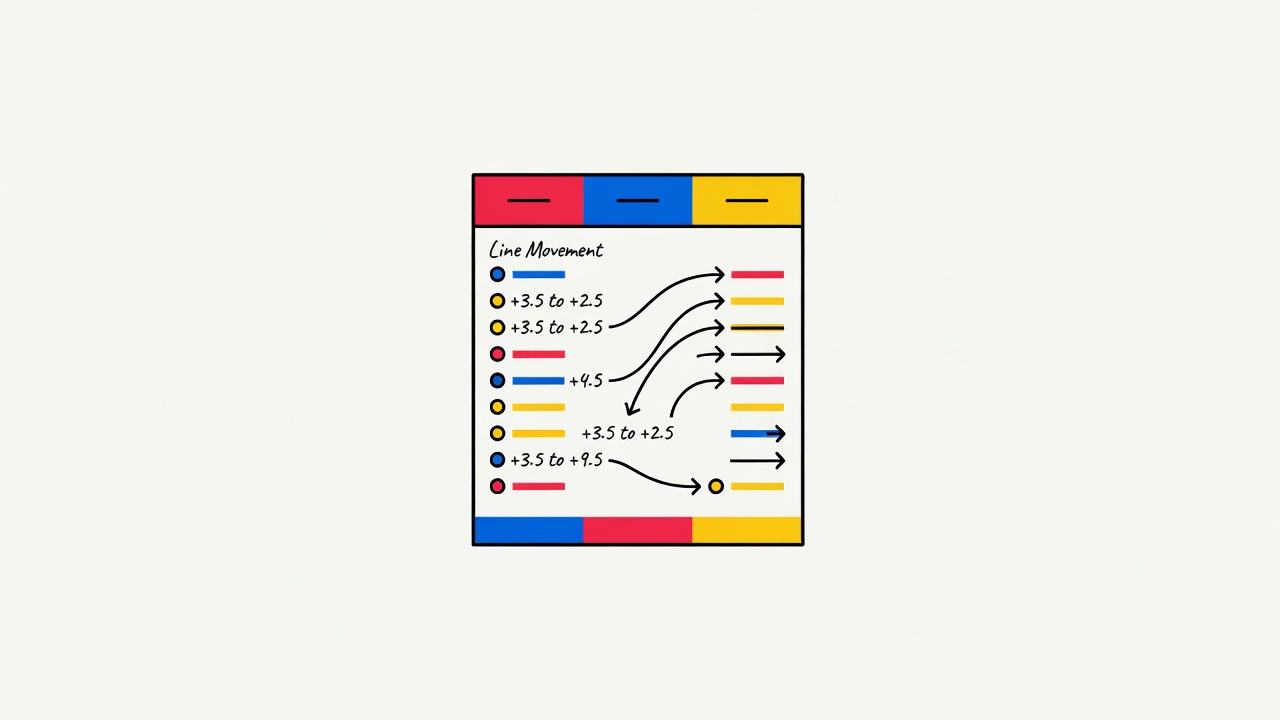
If a line opens Cowboys minus 6 and sharp money comes in on the Eagles, the line moves to Cowboys minus 5.5. The sportsbook is protecting itself by making the Eagles more attractive.
If a line opens Cowboys minus 7 and a star player gets injured two hours before kickoff, the line moves to Cowboys minus 5 or 6. The sportsbook adjusts for the new information.
Movement in the final hour before the game is typically sharp money. Casual bettors place bets throughout the week. Professionals wait for line movement and pounce.
The Opening Line vs The Market Consensus
The opening line is set by oddsmakers at the sportsbook. It reflects their view of the matchup and their estimate of balanced action.
The consensus line is what the market has moved it to after the opening. This reflects the aggregate view of all bettors, including professionals.
If the consensus line is significantly different from the opening line, it suggests the opening was wrong or new information has emerged.
Looking at what the market moved, compared to where it started, tells you where the intelligent money is flowing.
The Vegas Angle
Super Bowl week, I'm watching the casinos. The wise guys from Vegas show up to place massive bets. These guys have access to injury reports, team practices, and information the general public doesn't have. Where they're betting is where I'm looking.
A wise guy betting heavily on a team that opened as a big underdog suggests the line is mispriced. He knows something.
Can you access this? Not directly. But you can infer it from line movement. If sharp money is coming in on an underdog, the line will compress toward a pick or a smaller favorite.
Situational Spots
Certain situations create patterns.
Teams coming off emotional highs tend to underperform the following week. A team that just beat a division rival in a crushing game is more likely to lay an egg against a mediocre opponent the next week.
Teams with a lot of rest (two weeks between games) play differently than teams coming off short weeks. The correlation is weak but real.
Home teams are favored on average by half a point to a point more than their actual home field advantage. Home field advantage in the NFL is around 2.5 points. But the spread incorporates it, then adds a bit more because public money loves home teams.
Money Management
The single biggest difference between winners and losers in spread betting is bankroll management.
Never bet more than 1-2% of your bankroll on a single game. Never chase losses by increasing bet size. Never go all-in on a "lock."
A winning spread bettor has a win rate slightly above 50% (maybe 52-53%) and disciplines their bankroll. A losing bettor has terrible discipline and might be profitable on paper but breaks even or loses because they blow up their bankroll during downswings.
The Long Game
Point spread betting is a long game. You make small edges on individual bets. Over a season (or years), those edges compound.
If you're winning 52% of your bets at minus 110, you're making money. If you're winning 48%, you're losing money. The difference is marginal. This is why discipline matters so much. One week of drunken betting can wipe out a month of small gains.
Next notes
More from #how-to

The Ultimate Guide to 3-Betting in No-Limit Hold'em
Three-betting is a specific technique used in poker to apply pressure. It worked the same way in organized crime investigations. Apply pressure, watch who cracks.

How to Play Small Pairs in Early Position
Analysis of 2.8 million hands shows that small pairs in early position succeed when played mechanically and fail when played by feel. The data is unambiguous on this point.

Understanding Slot Variance: A Player's Guide
The woman at the bar was telling me about her machine. She had played it every day for five years. She had never won anything significant, but she could not stop.

What Is Online Gambling Regulation and Why Does It Exist?
I have been sober from gambling for eight years. I have written about it, taught about it, spent time in recovery programs. The question I still wrestle with is not whether gambling should be regulated. It is whether regulation can prevent what happened to me.

How to Bet NBA Player Props the Smart Way
Player props are absolutely insane right now. Seriously. And actually, there's a way to think about them that doesn't involve losing your entire bankroll by halftime.

How to Beat Low-Stakes Online Poker Games
Winning at poker depends on understanding a specific distribution: the gap between your win rate and the average player's in your stakes.