Common Slot Myths Debunked by Math
Gambling myths persist because they match how our brains process randomness and reinforcement. Understanding the actual mechanisms behind slots helps separate folklore from fact.
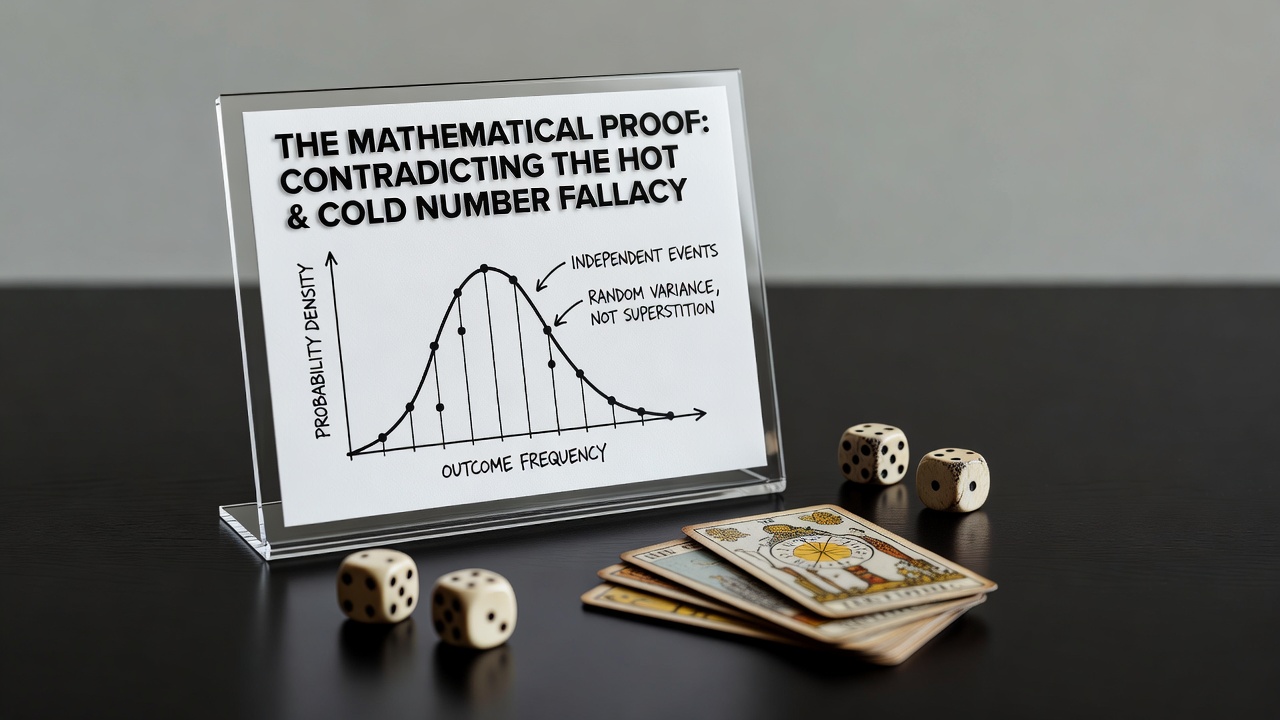
The belief that a machine is 'due' for a payout ranks among the most persistent myths in gambling psychology. This fallacy emerged because our brains evolved to detect patterns in environments where patterns genuinely exist. When a slot goes 20 spins without a significant win, the near-miss effect activates: we focus intensely on how close we came, how the symbols almost aligned. This near-miss activates the same dopamine pathways as an actual win, but imperfectly, creating cognitive discomfort. The brain seeks resolution. 'The machine is due' becomes the resolution.
But slot machines operate on pseudo-random number generators, or PRNGs. Each spin generates a number between 0 and the machine's cycle length, typically millions. That random number maps to an outcome before you press the button. The outcome was determined the instant the previous spin settled. No historical spin influences the next one. The PRNG has no memory, no trajectory toward a particular outcome. The machine is never 'due.' Yet research by Langer and others shows people attribute control to themselves in games of pure chance, especially when reinforced intermittently. Variable-ratio reinforcement schedules, like those in slots, produce the most persistent behavior. A gambler wins sometimes, unpredictably. This unpredictability is precisely what makes the slot effective as a behavioral reinforcer.
The Illusion of Hot and Cold Machines
Casino floors divide into belief systems: 'hot' slots near entrances get more play because players assume the casino positions winners prominently. 'Cold' machines in corners are avoided. In reality, machine placement follows traffic patterns and demographics, not payout history. But the illusion persists because of a phenomenon called the hot-hand fallacy. If a machine paid out large amounts last week, people assume it remains favorable. Conversely, a machine that paid out heavily now gets avoided for its 'reset period.' Neither assumption matches how probability works. A machine that paid a large jackpot has not depleted its pool; the PRNG cycles through its full range regardless of prior outcomes.
Casinos do adjust hold percentages and RTP (return-to-player) values, but this happens through firmware updates, not through real-time decisions during play. The machine's hold is locked in at certification. A player cannot detect or influence this variance session to session.
Why We Fall for These Myths
Cognitive research on gambling behavior shows that near-miss effects and the illusion of control activate reward-processing circuits in the brain more powerfully than understanding randomness does. When you almost win, your brain responds more intensely than when you clearly lose. This teaches persistence. In evolutionary environments, persistence paid off: persistence in hunting, in resource-seeking, in social negotiation. Gambling exploits this ancient adaptation.
Chasing losses compounds the problem. Loss aversion research by Kahneman and Tversky demonstrates that losses loom approximately twice as large as equivalent gains. A person who lost $100 does not feel satisfied winning $100; they feel they broke even. This asymmetry drives chasing behavior. People keep playing not because they believe the machine owes them a win, though they often frame it that way, but because the pain of the loss is still active and they are seeking relief.
The mathematical reality remains: slots return between 85% and 98% of wagered money over time, depending on jurisdiction and machine. That return is achieved by the machine's algorithm, not by its mood, recent history, or proximity to the casino entrance. Players who understand this mechanical truth still gamble, but the understanding allows for better harm reduction. Recreational play differs sharply from chasing behavior driven by false beliefs about control and mechanical obligation.
Next notes
More from #slots

Why Some Slots Have 117,649 Ways to Win
The number of paylines in a gaming product is a published specification. The manufacturer must disclose it to the licensing jurisdiction. Here is how that process works.
Why Some Slots Have 96% RTP and Others Only 92%
You see two identical-looking slot machines. One advertises 96% RTP. The other 92%. The 4% difference equals roughly $40 per $1,000 wagered. Over a year, that's substantial.
Crypto Jackpot Slots: Who Funds the Prize, and in What Coin
A jackpot slot pays its top prize out of every spin you make. How the meter is funded, what it does to RTP, and what that means for a wallet balance.
Penny Slots Online Casino Math: Why 1 Cent Games Hold More
Nevada's revenue report shows 1 cent slots holding 9.06% of every dollar played, more than $1 machines. Here is what a penny spin really costs.

How the Gambler's Fallacy Affects Roulette Players
Roulette teaches the human brain how to recognize patterns that don't exist. Understanding the design loop reveals why the game is so effective at it.

The Ultimate Guide to 3-Betting in No-Limit Hold'em
Three-betting is a specific technique used in poker to apply pressure. It worked the same way in organized crime investigations. Apply pressure, watch who cracks.