Why Some Slots Have 117,649 Ways to Win
The number of paylines in a gaming product is a published specification. The manufacturer must disclose it to the licensing jurisdiction. Here is how that process works.

The Malta Gaming Authority publishes minimum technical standards for gaming products. Under the MGU/2017 Technical Standard for Gaming Software, every gaming product must declare its RTP percentage, volatility classification, and the method by which winning combinations are calculated. A product with 117,649 ways to win has disclosed that calculation method to the MGA and to the UKGC (if it operates under that license as well) and to the Curaçao eGaming authority (if applicable). The number is not marketing. It is a technical specification.
Ways to win differ from paylines in a crucial manner. A payline is a fixed path through the reel grid. If you have five reels and five rows, you have precisely defined paylines (horizontal lines, diagonal lines, zigzag patterns, all documented). A ways-to-win system replaces the payline structure with a symbol-adjacency rule. If you have matching symbols on adjacent reels, you win. The number of ways your current reel configuration can produce winning combinations depends on how many symbols are showing on each reel.
The 117,649 figure comes from a specific game structure. If a slot has six reels and each reel shows between 2 and 7 symbols, the maximum number of ways to win is 6 x 6 x 6 x 6 x 6 x 6 or, more accurately, the product of the maximum symbol count on each reel if they vary. Pragmatic Play and NetEnt both use this method. The Megaways format, licensed from Big Time Gaming, operates under this same principle.
The Regulatory Framework
Licensing jurisdictions require manufacturers to submit technical specifications before product launch. The submission includes the RTP calculation, the symbol configuration, the bonus feature mechanics, and the payout matrix. The regulator tests the product in a laboratory setting. Software engineers run millions of simulated spins to verify the RTP, volatility, and feature frequency match the submitted specification. Only after approval can the product launch in that jurisdiction.
Key procedural points:
When a manufacturer declares a product with 117,649 ways to win, they are making a specific claim about their algorithm. The number must be reproducible. Every spin must be capable of producing that maximum. If the RNG generates a configuration that cannot theoretically hit all ways, the product is non-compliant. The MGA would require remediation.
- The RTP for a ways-to-win product is weighted across all possible reel configurations.
- A specific spin might only have a fraction of those ways available based on which symbols appear.
- The published RTP assumes the player plays indefinitely and hits all possible configurations in their statistical proportion.
- Casinos operating under licenses from Malta, the UK, or Curaçao cannot modify the RTP after launch.
Operators in unregulated jurisdictions face different pressures. They publish RTP figures, but those figures are not audited by a gaming authority. A player in an unregulated environment cannot verify whether the 117,649 ways to win are actually being used, whether the RTP is honest, or whether the game code matches the submitted specifications.
The specificity of the number matters. 117,649 is not a marketing choice. It is the result of a mathematical formula applied to the reel structure. Changing that number would require re-submission to the gaming authority and re-testing in the laboratory. Jurisdictions like Malta impose strict change-control procedures. A manufacturer cannot modify a game's core mechanics without approval. The number reflects regulatory enforcement as much as it reflects game design.
Next notes
More from #slots
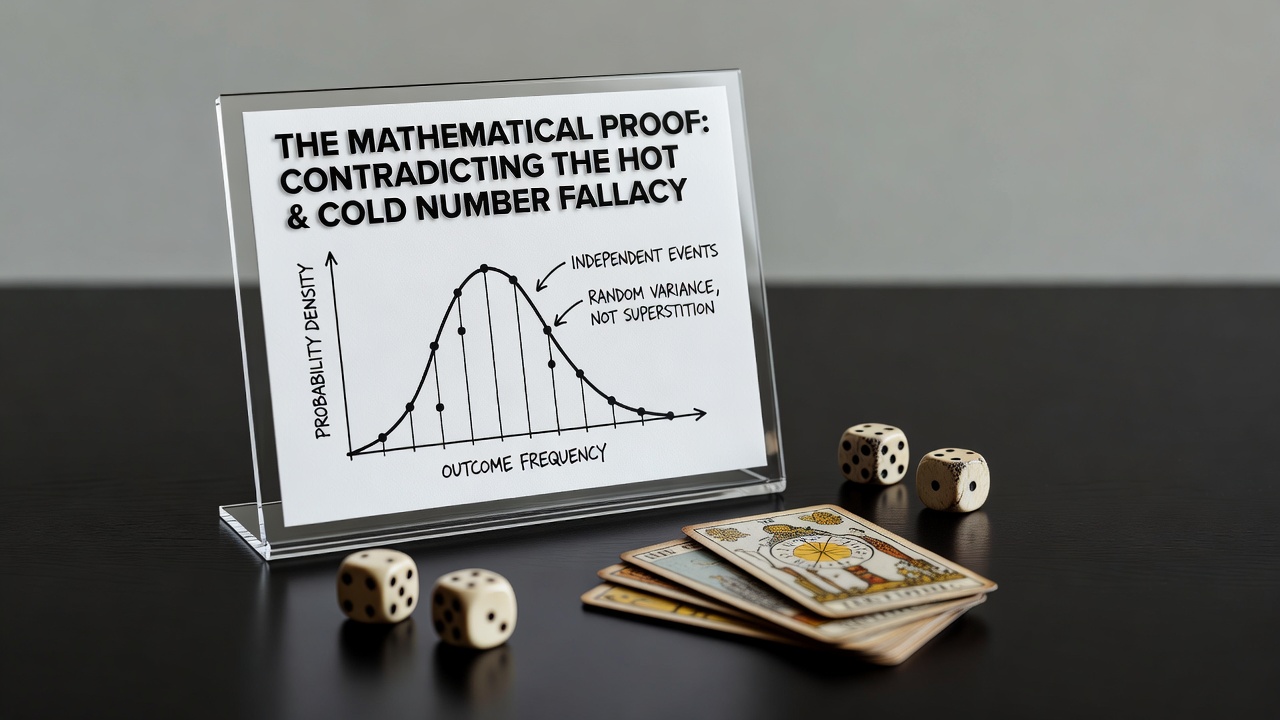
Common Slot Myths Debunked by Math
Gambling myths persist because they match how our brains process randomness and reinforcement. Understanding the actual mechanisms behind slots helps separate folklore from fact.
Why Some Slots Have 96% RTP and Others Only 92%
You see two identical-looking slot machines. One advertises 96% RTP. The other 92%. The 4% difference equals roughly $40 per $1,000 wagered. Over a year, that's substantial.

Crypto Jackpot Slots: Who Funds the Prize, and in What Coin
A jackpot slot pays its top prize out of every spin you make. How the meter is funded, what it does to RTP, and what that means for a wallet balance.

Penny Slots Online Casino Math: Why 1 Cent Games Hold More
Nevada's revenue report shows 1 cent slots holding 9.06% of every dollar played, more than $1 machines. Here is what a penny spin really costs.

Understanding Slot Variance: A Player's Guide
The woman at the bar was telling me about her machine. She had played it every day for five years. She had never won anything significant, but she could not stop.

Free Spins on Registration: How They Typically Work
A casino hands you free spins when you join. A young man from Nevada sat down and played them. By the time they were done, he understood something about generosity.