Best Ways to Practice Blackjack Strategy Before Playing for Real
Demonstrates why most people fail at this activity. best ways to practice blackjack strategy before playing for real requires both knowledge and discipline.
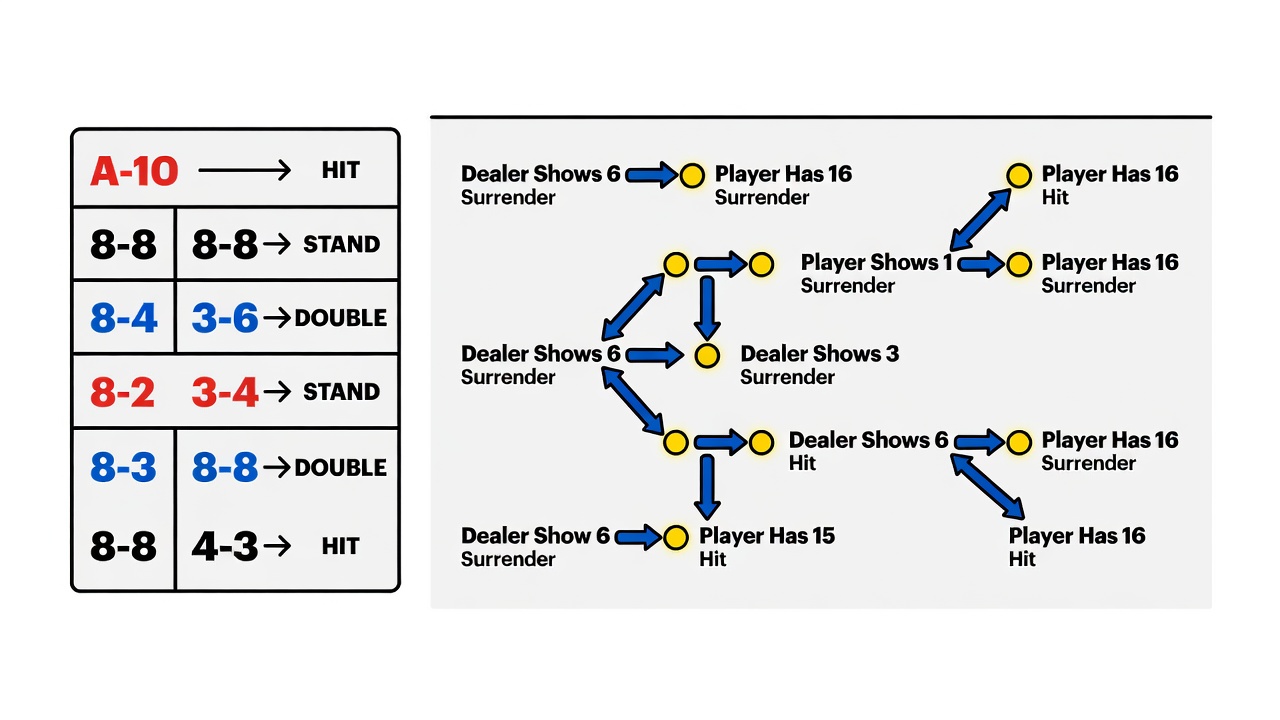
Best Ways to Practice Blackjack Strategy Before Playing for Real
Practicing blackjack strategy before real money play prevents expensive learning through losses. Multiple practice methods exist; each has different benefits.
The Basic Strategy Foundation
All blackjack strategy rests on basic strategy: the mathematically optimal play for every situation. The player has a hand value and a suit count. The dealer shows one card. Based on these variables, basic strategy prescribes whether to hit, stand, double down, or split.
Memorizing basic strategy is the prerequisite for any profitable blackjack play. The strategy is published in charts. The player learns to read the chart instantly. Over thousands of hands, following basic strategy provides 99% of the benefit available to skilled play.
Most profitable blackjack opportunities come from basic strategy play alone, not from advanced technique. Master this first.
Practice Method One: Flash Cards
Create physical or digital flashcards with scenarios. Card front: dealer shows 6, you have 15. Card back: stand. Run through the entire strategy chart repeatedly until you recognize patterns automatically.
This method is effective but tedious. Flash cards work because repetition builds memory through recognition. The downside is they are boring and time-consuming.
Spend 20-30 minutes daily for 2 weeks and basic strategy becomes semi-automatic. After that, occasional review maintains the knowledge.
Practice Method Two: Online Simulators
Multiple free blackjack simulators exist online. The simulator deals hands and the player makes decisions. The simulator evaluates the decision against basic strategy and tells the player if the decision was optimal.
This method is more engaging than flashcards because it resembles actual play. The player experiences the decision-making pressure without the financial pressure.
The downside is that simulators do not exactly match real casino rules. Some casinos allow doubling after split. Some do not. Some casinos pay 3:2 on blackjack. Some pay 6:5. The simulator rules may not match the actual casino rules you will play under.
Practice with simulator rules that match the casino where you will play.
Practice Method Three: Low-Stake Live Play
After basic strategy is semi-automatic, low-stake play provides real-world practice. Play for $5-10 per hand. The financial risk is minimal but the psychological pressure is real.
Low-stake play teaches decision-making speed, bet sizing, and emotional regulation. It reveals which scenarios you have not memorized. It shows how fast you need to be to keep up with the table pace.
Expect to lose money during this phase. The loss is tuition for learning real play. A $100-200 loss over 50-100 hands is normal and acceptable as learning cost.
Practice Method Four: Card Counting Drills
After basic strategy is solid, card counting (if you intend to use it) requires separate practice. Counting practice involves running through shoe simulations and maintaining a running count.
This is advanced and only relevant if you intend serious play. Most casual players should ignore this.
The Practice Timeline
Week one: flashcards for 30 minutes daily. Focus on hard hands and split decisions (the trickiest scenarios).
Week two: online simulator for 30 minutes daily. Match simulator rules to real casino rules.
Week three: Low-stake live play. Play 50 hands at minimum. Be comfortable with the decision-making speed.
Week four: Review any decision you were unsure about. Return to flashcards or simulator for those specific scenarios.
After this timeline, basic strategy should be semi-automatic. You will play close to optimal and the house edge will approach its mathematical minimum.
The Discipline Requirement
The temptation during practice is to deviate from basic strategy based on feeling. "I feel like this should be a hit even though strategy says stand." Resist this. The whole point of practice is to internalize strategy so your intuition aligns with mathematics.
If you cannot follow basic strategy during practice, you will not follow it during real play. The stress and pressure of real money makes deviations more likely. Get the discipline down first.
Next notes
More from #blackjack
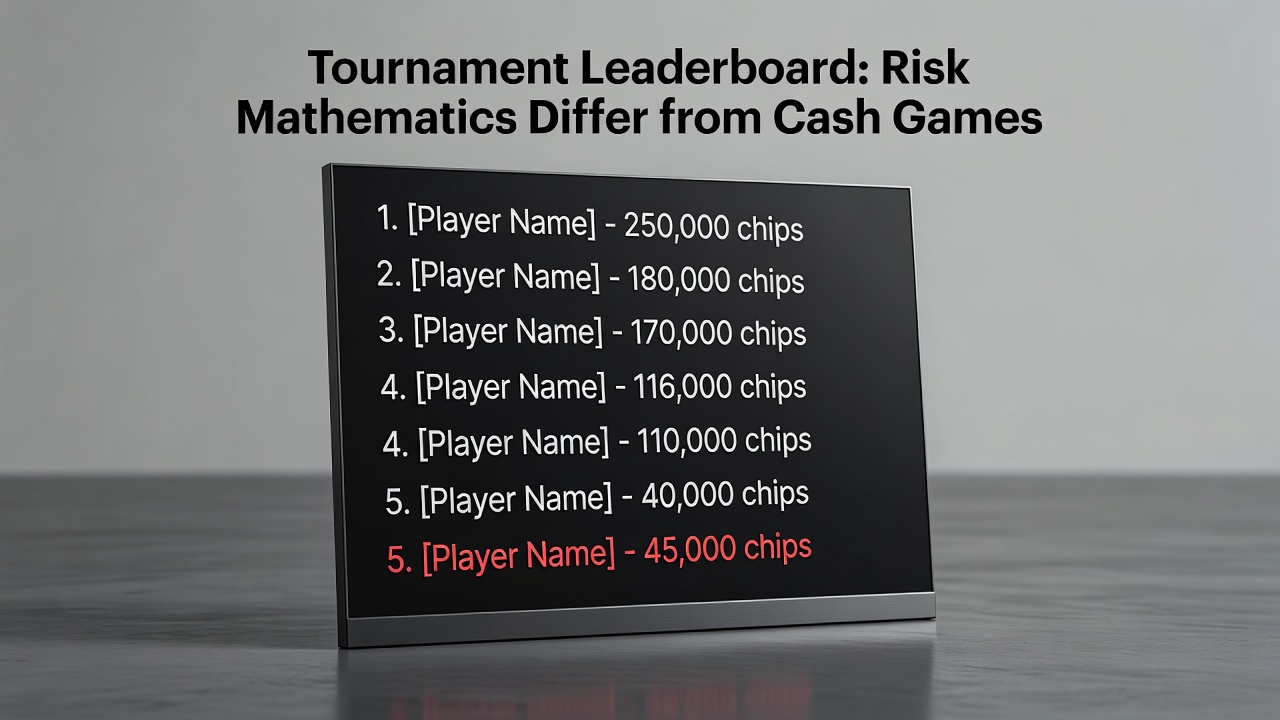
Tournament Blackjack: How Elimination Rounds Differ From Cash Play
In cash blackjack, you're optimizing for long-term wealth accumulation. In tournament blackjack, you're optimizing for position relative to competitors. The math is different. The strategy is different. Many players don't adjust.
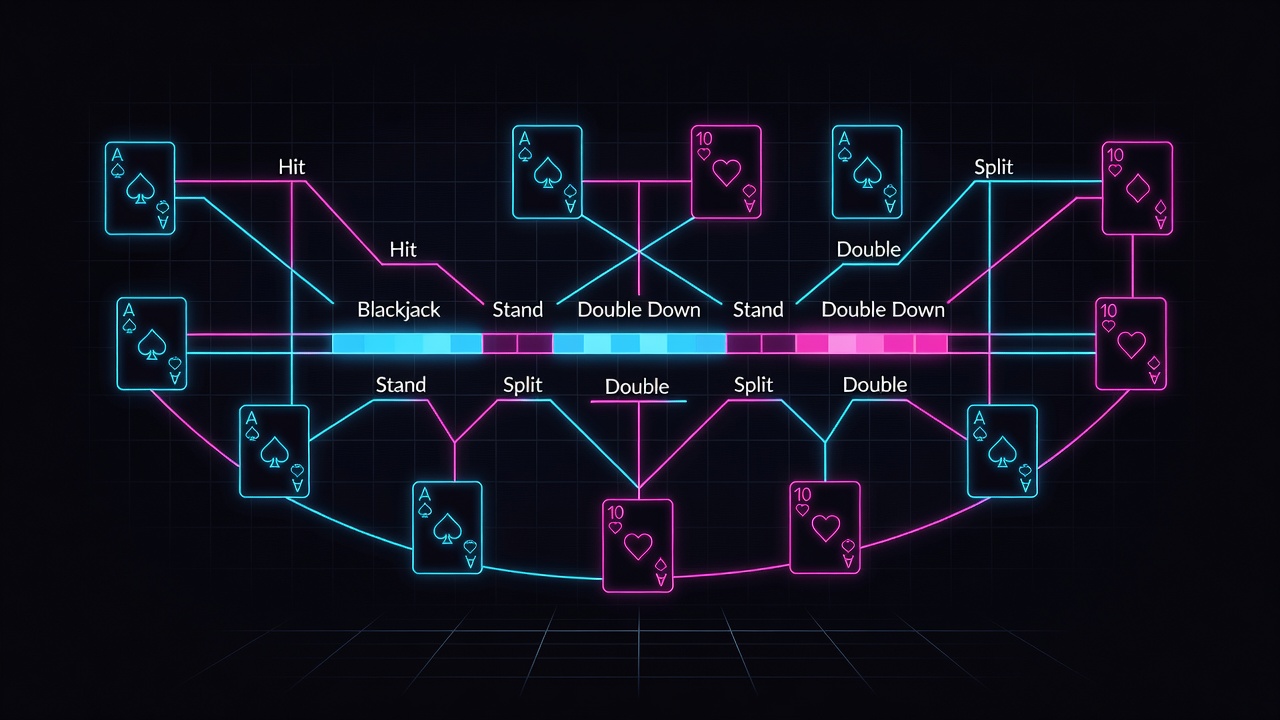
The Kelly Criterion Applied to Blackjack Bet Sizing
The Kelly Criterion is a formula for optimal bet sizing. Blackjack has an edge. Apply Kelly and you get bet sizes that change dynamically.
Beat the Dealer: Edward Thorp's Book That Changed Gambling
Edward Thorp proved that a game with rules could be beaten. Not through luck, through mathematics. What does this tell us about games in general.
The MIT Blackjack Team: How Card Counters Beat the House
The MIT Blackjack Team made millions counting cards. They were not geniuses. They just understood the math better than the casinos did.
The Birth of Nevada Gambling: The 1931 Legalization Explained
On March 19, 1931, Nevada legalized gambling to raise tax revenue during the Great Depression. The move created an industry that has not stopped growing. No state has ever successfully banned gambling after legalizing it.

Johnny Chan: The Orient Express and His Back-to-Back WSOP Wins
Johnny Chan won the WSOP Main Event in 1987 and 1988. Back-to-back. No one had done it before. No one has done it since. He earned the nickname The Orient Express for playing fast and never showing weakness.