Crypto Casino Security Basics: Protecting Your Wallet and Account
I have watched players lose everything not to the house, but to their own carelessness. A weak password. A shared computer. A clicked link. The casino was blameless. The player was negligent.

The high-limit room at a Macau casino is quiet. No noise. Dealers do not call out bets. Players do not celebrate. Money moves with whispers. In this room, I have watched a gentleman from Hong Kong deposit three million dollars and lose two million in an hour. His face never changed. The composure was complete.
What struck me was the security detail. Two men behind him. The money in a locked case. Everything protected. Nobody could steal from him. But online, everything is different. Online, the only security is what you build.
Password Security
Your casino password is your vault. If someone has it, they have your money. I have seen players use "123456" or "password" or their child's name. This is not laziness. This is a death wish.
A strong password has 12+ characters, mixed case, numbers, symbols. "Th1$_1s_R34lly_H4rd" is strong. "MyPassword1" is not.
Use a password manager (1Password, Bitwarden, LastPass). Let it generate a 32-character gibberish password. You do not memorize it. The manager remembers it. You only need one master password to access the manager.
Two-Factor Authentication
Two-factor authentication (2FA) is the second lock on your vault. You log in with password. The casino sends a code to your phone. You type that code. Only then do you get access.
If someone steals your password, they still cannot log in without your phone. This is critical. Enable it immediately. Most casinos require it for withdrawals anyway.
Use an authenticator app (Google Authenticator, Authy), not SMS. SMS can be intercepted. An authenticator app runs on your phone and is harder to compromise.
The Wallet Security
If you gamble with crypto, you need a wallet. The wallet holds your private key, the string of numbers and letters that proves you own the money.
There are three types: hardware (a physical device like Ledger), software (an app on your phone), and exchange wallets (you keep money on Coinbase or Kraken).
For casino deposits and withdrawals, a software wallet (MetaMask, Phantom) is reasonable. For long-term holdings, a hardware wallet is better.
Never share your private key. Never type it into a website. Never give it to anyone. If someone has your private key, they own your money forever. There is no reversal.
The Phishing Attack
You receive an email: "Verify your casino account. Click here." You click. A fake login page appears. You enter your password. You have just given your money away.
Phishing emails are the most common attack vector. They look legitimate. They use the casino's logo. They create urgency.
Never click links in emails from casinos. Always go directly to the casino's website by typing the URL yourself. If the email says your account is compromised, go to the website and log in normally. The real warning will be in your account.
Public Wi-Fi
Public Wi-Fi at a coffee shop is not encrypted. Anyone on that network can see your traffic. If you log into your casino account on public Wi-Fi, you are exposing your password.
Use a VPN (Virtual Private Network) if you must use public Wi-Fi. Or simply wait. Never gamble on public networks.
Device Security
Your phone or computer is the gateway to your money. If it is compromised (malware, spyware), your casino account is compromised.
Keep your operating system updated. Keep your security software updated. Do not download files from unknown sources. Do not click links from strangers.
I know a player who installed a "mining app" that promised free Bitcoin. It was malware. It captured his casino login. He lost 15,000 dollars before he realized what happened. The casino refunded half because they felt responsible for something they were not.
Withdrawal Delays
Many casinos require a security verification before they process a withdrawal. They send a code to your email or phone. You type that code. Only then do they send your money.
This delay is not a bug. It is a feature. It stops a hacker from withdrawing your money if they have only your password. They would need your 2FA code or your email access as well. The layers matter.
The Bottom Line
In the high-limit room, security is physical. Cameras, guards, locked cases. Online, security is digital. Password, 2FA, a clean device. You are the security detail. You are the guard. If you are negligent, you will lose money. Not to the casino. To yourself.
Next notes
More from #crypto-casinos
Penny Slots Online Casino Math: Why 1 Cent Games Hold More
Nevada's revenue report shows 1 cent slots holding 9.06% of every dollar played, more than $1 machines. Here is what a penny spin really costs.

Stablecoin Payment Gateway: From Wallet to Settled Dollars
How a stablecoin payment actually settles: Stripe's 10,000 USD cap, final once the chain records it, no chargebacks, refunds back to your wallet as tokens.

Tron in Crypto Gambling: Why It's Popular for USDT Deposits
Tron carries something in its design that speaks to a particular kind of want. The want for speed. The want for certainty. The want for transactions that happen now.
The Difference Between Crypto Casinos and Traditional Online Casinos
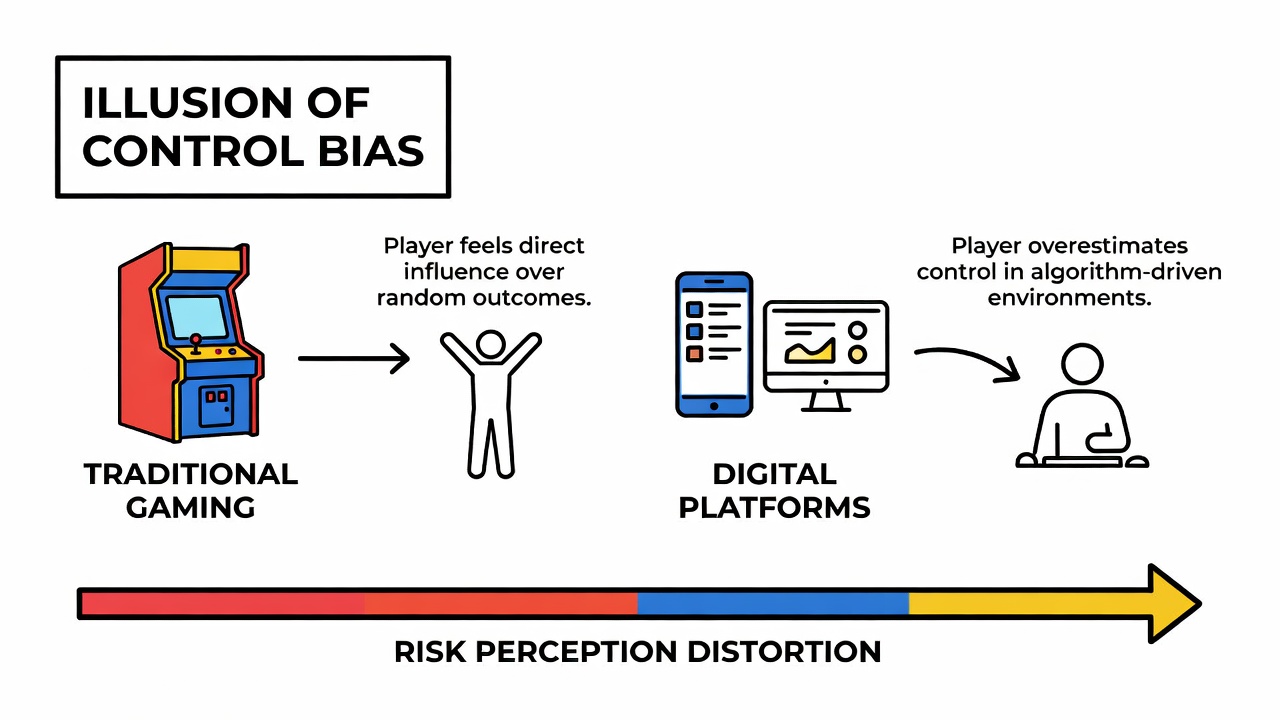
Kahneman and Tversky studied how people evaluate risk. Crypto casinos exploit one specific bias more effectively than traditional operators: the illusion of control.

Crypto Sportsbooks vs Crypto Casinos: Key Differences
The technical architecture between crypto sportsbooks and crypto casinos looks similar to the outsider. But the underlying systems are fundamentally different.
Crypto Deposits at Live Dealer Casinos: A Step-by-Step Walkthrough
The casino is a designed space, and every transaction flows through that design. Crypto deposits have altered the sightlines, but the principles remain unchanged.