Stablecoin Payment Gateway: From Wallet to Settled Dollars
How a stablecoin payment actually settles: Stripe's 10,000 USD cap, final once the chain records it, no chargebacks, refunds back to your wallet as tokens.

A stablecoin payment gateway takes a dollar-pegged token from your wallet, waits for the blockchain to record the transfer, and hands the merchant a settled balance, usually in ordinary currency. On Stripe's version, once the chain records the deposit the payment is final: there is no chargeback, and any refund comes back to your wallet as stablecoins. Most pages ranking for this are vendor pitches, so we pieced the flow together from the processor's own docs and terms, the issuer's reserve page and the US law that now governs payment stablecoins.
How a stablecoin payment moves from wallet to merchant
The short version: you choose the coin, wallet and network, you sign the transfer, the chain records it, and the merchant is paid in local currency.
Here is the path on Stripe, the most fully documented processor we could source. At checkout you pick the token, the wallet and the network. You are then redirected to crypto.stripe.com to connect your wallet and approve the transaction from there. Once the transfer lands, the merchant does not end up holding your tokens: Stripe says these payments settle in the merchant's balance in local currency.
| Stage | What happens | Who handles it |
|---|---|---|
| Choose | Payer picks token, wallet and network | Payer |
| Connect | Payer connects a wallet on crypto.stripe.com and signs | Payer and processor |
| Record | Blockchain records the deposit to the merchant's settlement account | Network |
| Settle | Merchant balance is credited in local currency | Processor |
| Refund (if any) | Stablecoins go back to the original wallet | Merchant via processor |
When the payment counts as final
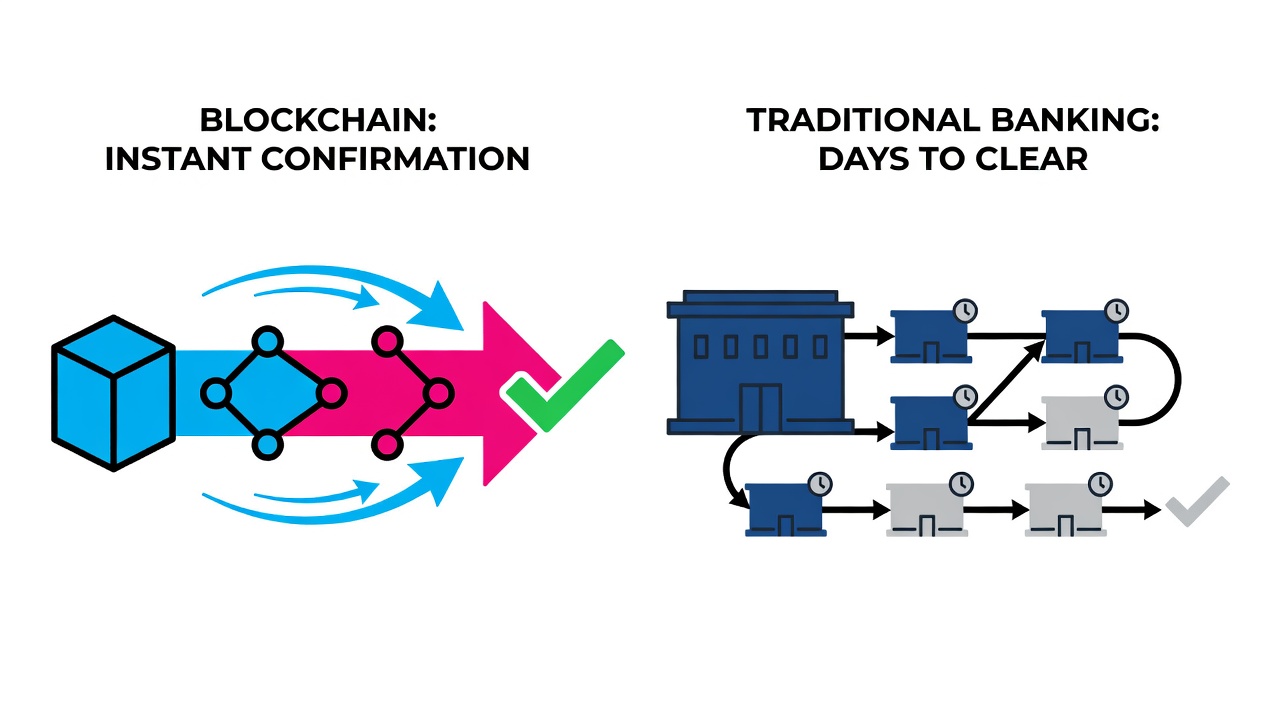
The payment is done when the blockchain records it, and after that nothing on the processor side can pull it back.
Stripe's terms put this in legal language: the customer's debt is satisfied when the blockchain records the deposit to the merchant's settlement account. The same terms, last updated in April 2026, say stablecoin transactions cannot be cancelled, modified or reversed once submitted, and disputes are not supported.
For anyone used to cards, that is the biggest difference. Stripe's developer docs pitch it as a merchant benefit: because the customer authenticates the payment, merchants won't face disputes that become chargebacks. From the payer's chair it reads the other way round. If you send to the wrong place or change your mind, there is no bank to call.
Refunds come back to your wallet, not a card
If a merchant refunds you, the money returns in the same form it left, to the same address.
Stripe states that refunds are always returned as stablecoins to the original wallet. That matters if you move wallets often. A refund aimed at an address you no longer control is still a refund on paper, so keep the paying wallet around until the purchase is settled in your favour.
Limits on a single payment
Stripe caps each customer payment, which shapes how much one deposit or purchase can carry.
As of October 2026, Stripe lists a customer limit of 10,000 USD per transaction. The documentation we drew on does not give a processing fee figure, so we leave fees out rather than guess.
What backs the dollar at the other end
A gateway only works if the coin it moves holds its peg, and that depends on the issuer's reserves and the rules they sit under.
For USDC, Circle says the coin is always redeemable 1:1 for US dollars (reserve data on its page dated October 2026). It adds that a Big Four accounting firm gives monthly third-party assurance on reserves, stating reserves are worth more than the USDC in circulation, and that part of the reserve can sit in a money market fund managed by BlackRock.
The GENIUS Act sets the floor for every permitted US issuer. It requires identifiable reserves on an at least 1 to 1 basis, limits eligible Treasury holdings to those with a remaining maturity of 93 days or less, and obliges issuers to publicly disclose a redemption policy. It also bars issuers from paying holders interest or yield just for holding the coin.
What this means for a wallet-funded balance
For players, three things carry over from the mechanics above. A payment through a stablecoin payment gateway is final once the chain records it, so check the address and network before you sign. Refunds follow the coin back to the wallet it came from. And the peg you rely on is only as good as the issuer's reserves, which for a permitted US issuer the law now requires to match outstanding coins at least one for one.
Questions players ask
What is a cryptocurrency payment gateway?
It is the service that sits between a payer's wallet and a merchant's account. With Stripe's version, the merchant ends up holding local currency rather than the token the customer sent.
What are some companies that offer blockchain payments?
Stripe is one processor with public documentation for taking stablecoins at checkout, and Circle is the issuer of USDC, one of the coins such payments move. Issuers and processors play different roles: one backs the coin, the other moves it and settles the merchant.
Can a stablecoin payment be charged back?
Not under Stripe's setup. Its terms say a stablecoin transaction cannot be cancelled, modified or reversed once submitted, so a refund only happens if the merchant sends one, and it goes back as stablecoins to the original wallet.
Where this comes from
- Stripe documentation, Stablecoin payments, accessed 2026-10-16
- Stripe legal terms, Stablecoin Payments, last updated 2026-04-16
- Circle, Transparency & Stability, reserve data as of 2026-10-12
- U.S. Government Publishing Office, S. 1582, GENIUS Act (enrolled bill), 2025-07-18
Next notes
More from #crypto-casinos

Penny Slots Online Casino Math: Why 1 Cent Games Hold More
Nevada's revenue report shows 1 cent slots holding 9.06% of every dollar played, more than $1 machines. Here is what a penny spin really costs.

Tron in Crypto Gambling: Why It's Popular for USDT Deposits
Tron carries something in its design that speaks to a particular kind of want. The want for speed. The want for certainty. The want for transactions that happen now.

The Difference Between Crypto Casinos and Traditional Online Casinos
Kahneman and Tversky studied how people evaluate risk. Crypto casinos exploit one specific bias more effectively than traditional operators: the illusion of control.

Crypto Sportsbooks vs Crypto Casinos: Key Differences
The technical architecture between crypto sportsbooks and crypto casinos looks similar to the outsider. But the underlying systems are fundamentally different.

Crypto Deposits at Live Dealer Casinos: A Step-by-Step Walkthrough
The casino is a designed space, and every transaction flows through that design. Crypto deposits have altered the sightlines, but the principles remain unchanged.
Bitcoin Sportsbooks vs Fiat Sportsbooks: Pros and Cons
A Bitcoin sportsbook and a traditional sportsbook sell the same thing: access to betting. But they're different animals because of how money moves through them.