Why Hot and Cold Numbers in Roulette Are a Myth
Bettors have tracked roulette results for centuries looking for patterns in hot and cold numbers. The pattern they find is the pattern they brought to the table.
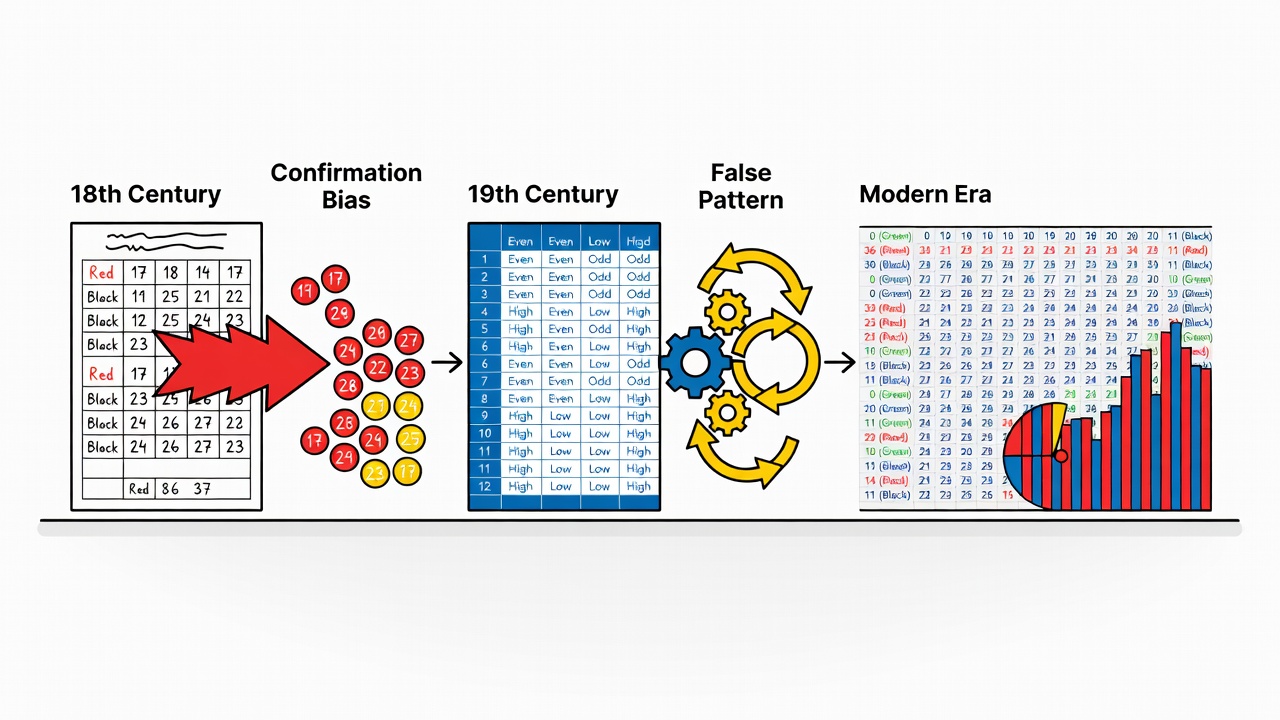
The hot number theory goes like this: if a number has come up five times in the last fifty spins, it is "hot" and therefore more likely to come up in the next spin. The cold number theory is the opposite: a number that has not appeared in fifty spins is "due" to appear soon.
Both theories assume that the roulette wheel has memory. The wheel does not. Each spin is independent. The probability that 17 comes up on the next spin is 1 in 37 on a European wheel, regardless of whether 17 has come up zero times or ten times in the previous spins.
This is not philosophy. This is mathematics. The independence of successive outcomes is provable and tested. Yet bettors continue to track results looking for patterns. Why?
The Pattern Recognition Problem
The human brain is a pattern-recognition machine. We evolved in an environment where finding patterns was survival-critical. Predators move in patterns. Food appears in patterns. Weather follows patterns. The brain developed sophisticated machinery for detecting them.
In a truly random sequence, patterns emerge. If you flip a coin a hundred times, you will see sequences of six or seven heads in a row. This is not evidence that the coin is biased toward heads. It is evidence that random sequences contain patterns.
A bettor sees a roulette wheel produce 7, 23, 5, 23, 11, 23 in six spins. Their brain says: twenty-three is appearing too much. Play twenty-three. The probability that twenty-three appears next is still 1 in 37. The bettor is wrong. But their brain is doing what it evolved to do: find patterns.
The Statistical Reality
Over a sample of infinite spins, every number comes up exactly the same number of times on a fair wheel. But over a sample of one hundred spins, they do not. Some numbers come up four times. Some come up zero times. This variance is exactly what we expect from probability theory.
A tracker who watches one hundred spins and sees number 14 come up five times while number 3 comes up zero times might conclude that 14 is hot. In fact, they have observed normal variance. If they continue tracking for ten thousand spins, the distribution will converge on the theoretical expectation: each number comes up roughly 270 times.
The mistake is treating a small sample as evidence of a pattern rather than as evidence of variance. A roulette wheel that produces 100 spins of data is like a coin that has been flipped 100 times. The results do not prove anything about future flips.
The Closing Line Value Problem
A professional sports bettor uses a concept called closing line value. Did I bet at better odds than what the final odds ended up being? If yes, I had value, even if I lost. If no, I did not have value, even if I won.
Applied to roulette, the hot and cold number approach has no closing line value. The odds on every number are fixed at 35 to 1. The odds never move. There is no market clearing. Therefore, there is no value to be found by timing your bets based on historical results.
Sports bettors win long-term by finding closing line value. Roulette bettors cannot find closing line value at a fair wheel because the odds are fixed. The only edge is at an unfair wheel or through information advantage (knowing the dealer's spin patterns, for example). Hot and cold numbers provide neither.
Why This Persists
The hot and cold number theory persists because:
First, it feels true. Humans are built to find patterns. When they find one, it feels real, even when the pattern is statistical noise.
Second, it is self-selecting. A bettor who plays hot numbers will eventually win. When they do, they attribute the win to their strategy. When they lose, they attribute the loss to bad luck or failure to follow the system correctly. This is confirmation bias.
Third, it creates the illusion of control. Playing based on observed patterns feels like you are doing something intelligent, something informed. Betting randomly feels stupid. The feeling is misleading, but it is a powerful motivator.
The Only Edge
The only edge in roulette is at a biased wheel or with a trained ability to predict physical outcomes. A dealer's spin might show slight bias based on release point and velocity. A player trained to read these cues might gain an edge. This is rare and casinos guard against it heavily.
Hot and cold numbers are not an edge. They are a tax on the bettor's time and attention. Every hour spent tracking results is an hour not spent making money elsewhere. The net result is negative.
Next notes
More from #roulette

How the Gambler's Fallacy Affects Roulette Players
Roulette teaches the human brain how to recognize patterns that don't exist. Understanding the design loop reveals why the game is so effective at it.
Dostoevsky's The Gambler: Roulette, Debt, and Literature
Dostoevsky spent years in debt and years at roulette tables. He wrote a novel about both. It is the greatest gambling book ever written.
How Racetrack Roulette Layouts Work
High-limit baccarat dealers see things the regular pit does not. A racetrack layout is a language for placing bets without speaking.

Common Mistakes New Roulette Players Make
I spent months in underground roulette rooms watching fresh players arrive with confidence and leave with lessons. The same errors repeat across every table.
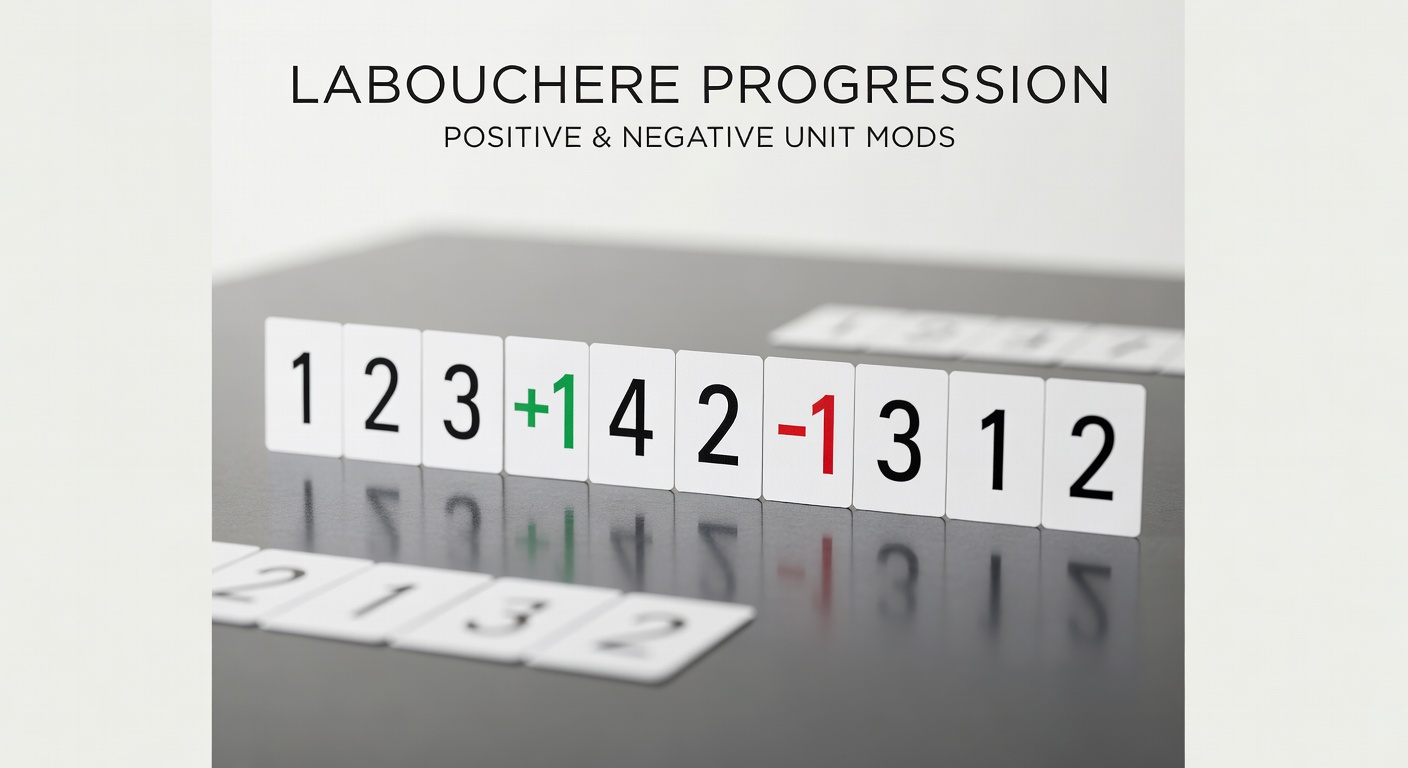
Why the Labouchere System Fails at Low-Stakes Roulette
The Labouchere system works until the wheel finds its teeth, which is inside thirty spins at low stakes. Here is the cold math on why it eats beginners alive, and why table limits and bankroll size make it a trap, not a strategy.

The Ultimate Guide to 3-Betting in No-Limit Hold'em
Three-betting is a specific technique used in poker to apply pressure. It worked the same way in organized crime investigations. Apply pressure, watch who cracks.