The Monte Carlo Fallacy: A Famous Roulette Lesson in Probability
On August 18, 1913, a roulette wheel at Monte Carlo produced twenty-six consecutive black outcomes, and the assembled patrons lost an enormous sum betting on red. The interesting question is not whether they were wrong. It is what they were actually trying to buy.
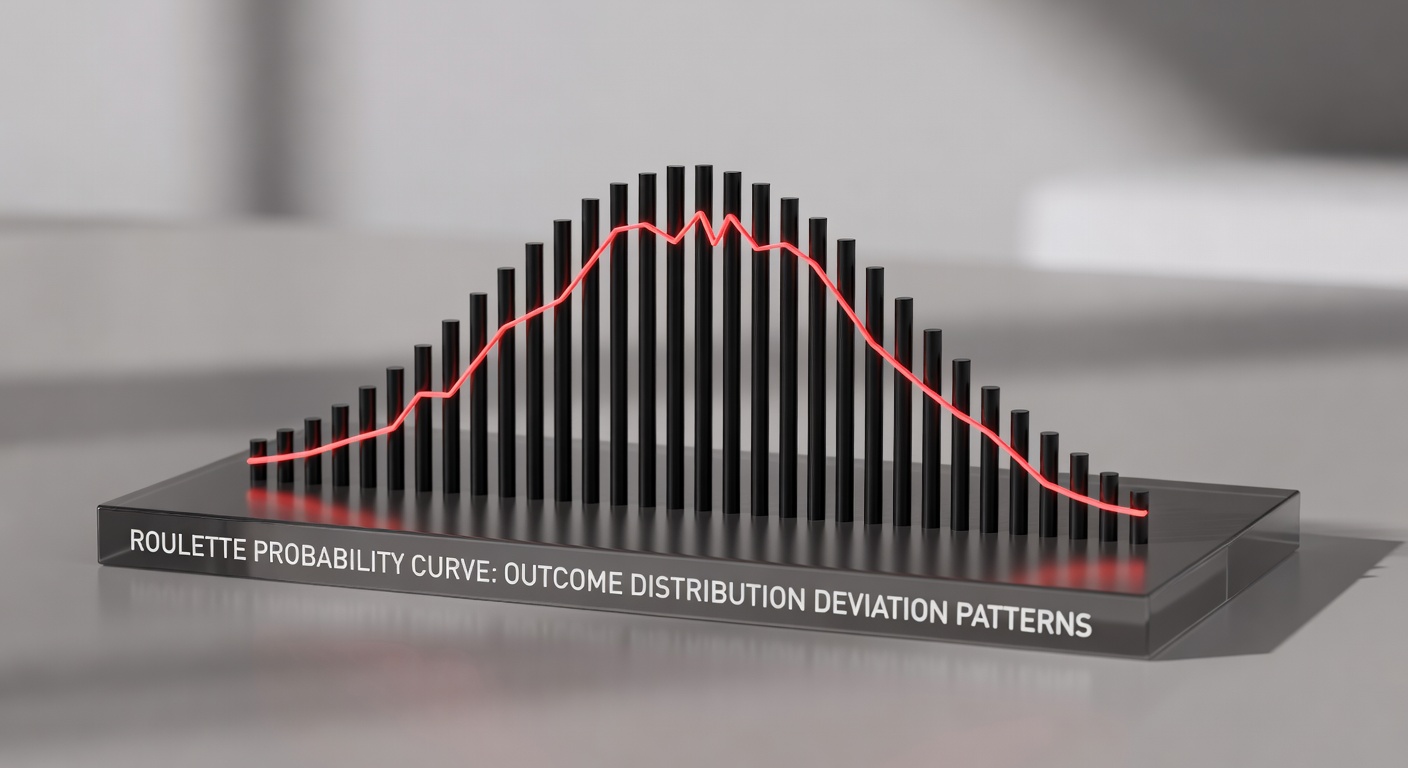
The thesis: the gambler's fallacy is not a miscalculation. It is a subjective time-preference expressing itself as a false belief about independent events. Treating it purely as an error in probability misses what the agent was doing.
On August 18, 1913, the wheel at Monte Carlo produced black twenty-six times in a row, and the crowd lost heavily betting red. This is the standard illustration. It is a correct illustration, as far as probability goes. The wheel has no memory. Each spin is independent. A streak of twenty-six blacks tells you nothing about the next spin except the prior probability, which on a single-zero wheel is 18 in 37 for red, 18 in 37 for black, and 1 in 37 for zero.
But that framing is incomplete. It describes the bettor's error and leaves out the bettor's purpose.
What the Bettor Is Actually Purchasing
Consider what the Monte Carlo bettor in 1913 subjectively valued. The bet on red after ten blacks is not, from his perspective, a mechanical probability trade. It is the purchase of an experience structured around the bettor's own discount rate on future events. He treats the streak as a signal of an approaching correction because, subjectively, he is weighing near-term outcomes more heavily than the law of large numbers can pay out. The correction, if it comes, is near. The continuation, if it persists, is a distant irritation. His time preference is compressed to the immediate table.
This is not stupid. It is a coherent, if incorrect, expression of a very steep discount rate applied to a specific sequence. The error is treating independence as dependence. The rationality, on a subjective margin, is treating the next spin as the only spin that matters. The gambler is, in a real sense, purchasing the feeling that the universe is responsive to him.
Why the Law of Large Numbers Does Not Rescue Him
The law of large numbers guarantees that across infinite spins, the frequency of red will converge on 18 in 37. It does not guarantee, at any finite sample, that a run of blacks will be followed by a compensating run of reds. The correction is a property of the limit, not of the next draw. A bettor who misunderstands this is treating an asymptotic property as a short-run tendency.
The trade he is making:
- Subjectively, the next spin has a near-certain red
- Objectively, the next spin has an 18-in-37 red probability, slightly under even money
- He stakes an increasing sum on the subjective belief
- The objective distribution does not care about his belief
The 1913 crowd lost because the wheel continued black through spin twenty-six. They did not lose because black is somehow more likely than red. They lost because they staked at a subjective rate that did not match the objective distribution.
The Contrarian Observation
Here is the part the standard telling of the fallacy leaves out. If you believe, as I do, that gambling is a set of trades rather than a vice or a virtue, you have to ask what the 1913 crowd was buying that made the experience valuable. The answer is not just excitement, though excitement was part of it. It was the narrative ownership of the streak. For every spin in that sequence, a bettor who had put money on red had a stake in the story. The longer the streak ran, the larger the subjective payoff of the eventual reversal. The reversal, of course, did not come in time to pay anyone.
From a purely expected-value standpoint, the bettors lost. From a narrative-consumption standpoint, they spent roughly what they would have spent on a theatre ticket to witness the same event, and they lost the opportunity to spend it elsewhere. That is the real trade. The fallacy is the misprice.
The Concession
The obvious counterargument is that describing the bettors as purchasing a narrative is special pleading. They thought they were making money. Their stated intention was to win. Yes. That is true. And the gap between stated intention and revealed preference is common across all trading activity, not unique to gambling. A stock investor who stays in a falling position because he cannot admit the thesis was wrong is making the same mistake in a different setting. The 1913 crowd is not particularly irrational. They are ordinarily irrational, in a way humans consistently are.
The Monte Carlo fallacy is therefore not a special class of error. It is a time-preference phenomenon showing up at a table. Treating it as an isolated cognitive bias misses the generality. Any trader facing a sequence of random outcomes with rising stakes will exhibit some version of it. The casino is simply a laboratory where the phenomenon appears in pure form, because the distribution is known and the stake is small relative to the sample size.
What Follows
The marginal bettor who understands independence will not place increasing stakes on red after a run of blacks. The marginal bettor who does not understand independence will continue to do so and will, on the long run, lose the house edge times his total action. Both bettors are making consistent choices given their beliefs. The difference is the quality of the information they hold about the distribution.
The lesson of 1913 is not that people are fools. It is that subjective probability, absent knowledge of the underlying mechanism, drifts toward whatever story the bettor finds emotionally coherent. The house edge is the price of that drift.
Next notes
More from #famous-players
Richard Marcus: The Infamous Past-Poster and Casino Cheat
Richard Marcus spent his life buying possibilities, not just in the lottery, but in the spaces between rules where people aren't looking.

Allen Iverson's Casino Bans: What the Reports Actually Say
Public records from Nevada gaming authorities show Iverson was excluded from casinos in 2012. The reasons were never fully disclosed, but the timeline reveals something about how exclusion actually works.

Kirk Kerkorian: The Quiet Billionaire Who Built Vegas Three Times
Kirk Kerkorian understood a fundamental truth about Las Vegas: the game is real estate, not gaming. Gaming is the excuse that gets people into the buildings.

Wayne Newton's Vegas Legacy and Casino Residencies
The entertainer spent more time in Las Vegas than most residents. Here's what his residency model tells us about casino hospitality architecture.
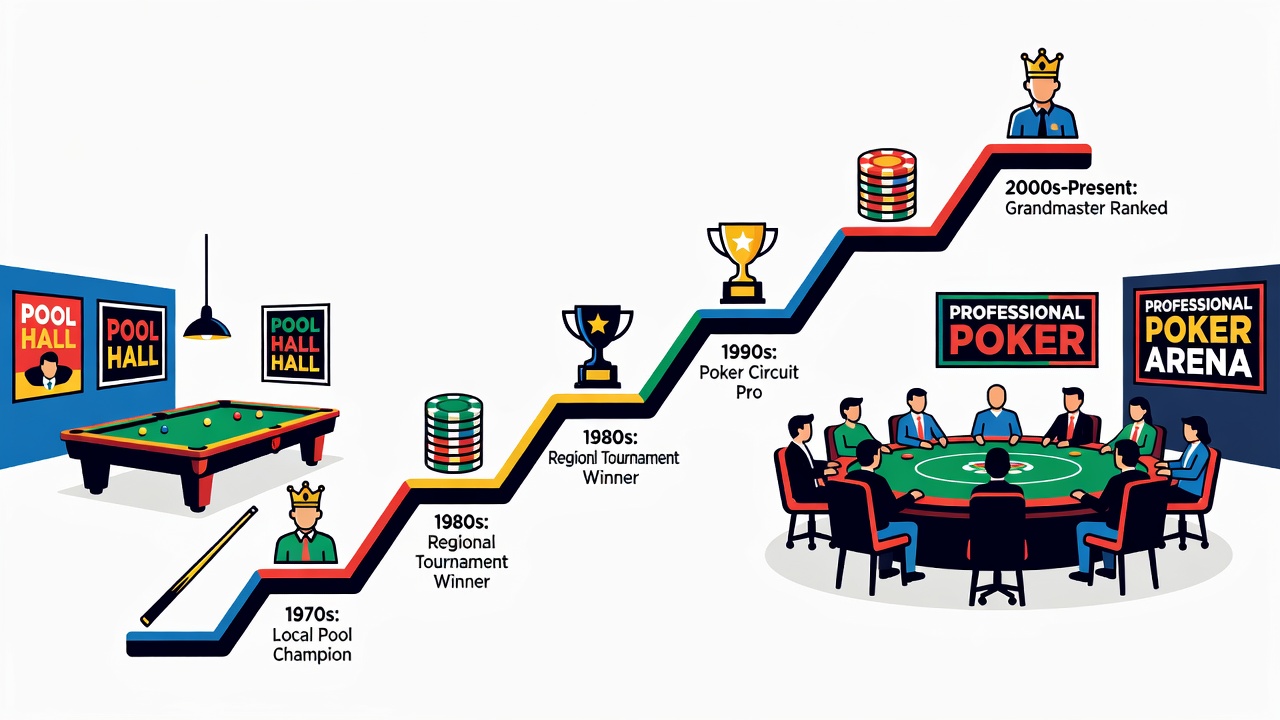
Daniel Negreanu: From Toronto Pool Halls to Poker Royalty
Daniel was shooting pool in Toronto in the early 1990s. Made maybe forty grand a year. By 1997, he'd figured out poker. By 2000, he was beating the best players in the world. That's a ten-year arc from regional operator to world-class grinder.

Tiger Woods and the High-Stakes Blackjack Tables of Vegas
Between 2000 and 2009, Tiger Woods was frequently photographed entering the casinos of Las Vegas. Public records show he gambled in private high-limit rooms. The amounts are documented. The outcomes are not.