How Much Mobile Data Does an Online Casino Session Use?
A patient examination of a quiet question. How many bytes pass through the ether while a bettor watches a virtual wheel spin, and what does the answer reveal about the nature of modern play?
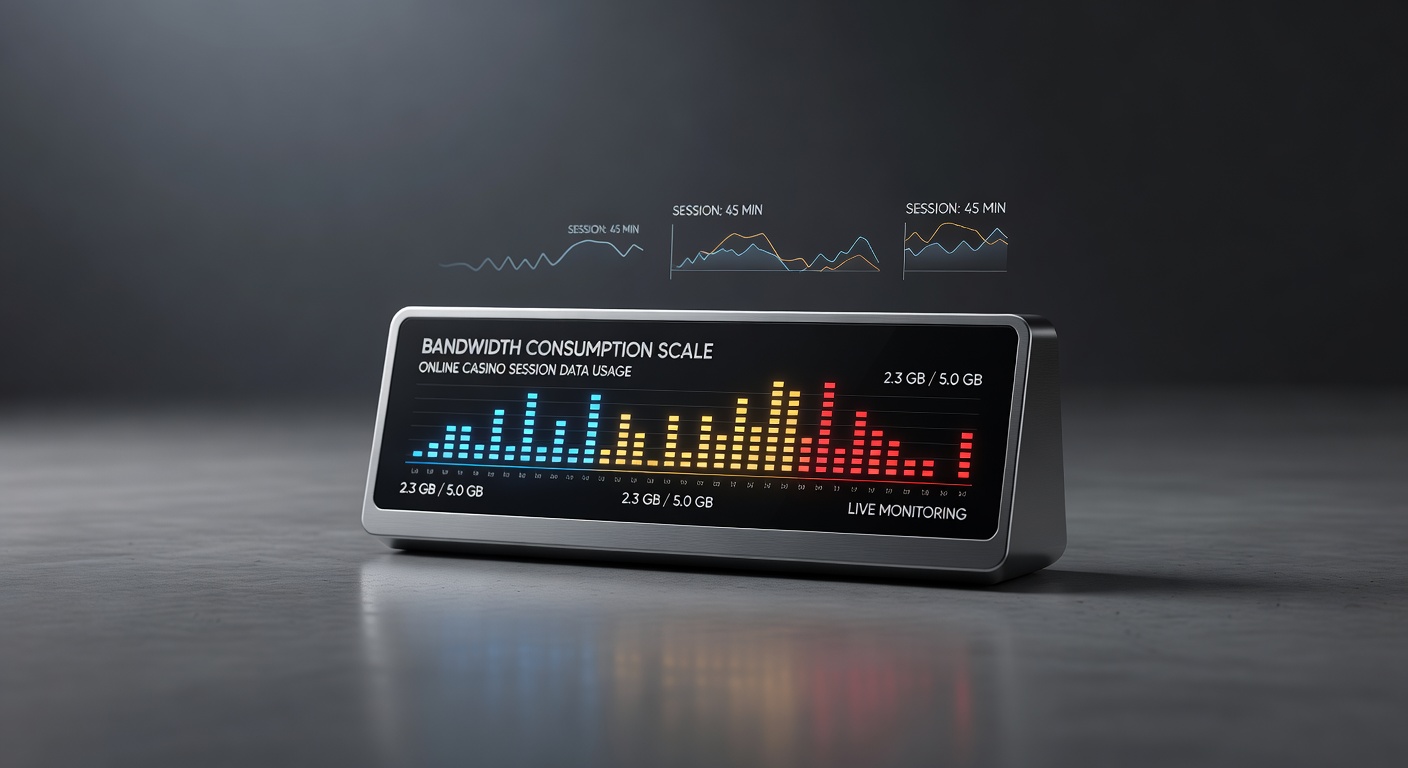
Let us begin with a question that seems humble, and may not be. When a player opens a casino on a mobile telephone, how much data does he consume, and what is he truly purchasing with it?
The question is not merely technical. Every byte is a small act of participation. One might ask whether the player knows the size of his own attention.
What the Numbers Suggest
Is a slot session heavy on data?
A typical online slot, once loaded, streams little. The graphics are downloaded in an initial burst, perhaps 3 to 8 megabytes. After that, each spin is a small exchange, a few kilobytes at most. A full hour of spinning often consumes between 20 and 60 megabytes. A modest amount, if the sage is counting carefully.
What about live dealer games?
Here the picture changes. A live dealer table streams real video from a studio, and video is a heavy thing. At standard definition, a player may consume 150 to 300 megabytes per hour. At high definition, 500 megabytes or more. The bettor who watches the croupier's hands in sharp resolution is paying, in bytes, for the illusion of presence.
Is sports betting different?
Sports betting, without live streaming of matches, is quite light. A session of placing wagers and refreshing odds may use 10 to 30 megabytes per hour. But if the app also streams the game itself, one must add the video cost, which dwarfs the wagering traffic.
The Deeper Question
One might ask: why does the answer matter? A bettor on a generous data plan perhaps shrugs. But the philosopher notices that the question reveals the shape of the activity. Consider:
- A slot session is the lightest, because the randomness is generated on a distant server and only the result is sent.
- A live dealer session is heavy, because the player is paying, in data, for a human to appear before him.
- A sports bet is light until the game itself is watched, at which point attention, data, and money flow in the same direction.
What does the bettor believe about the future when he consumes these bytes? The slot player believes the next spin might change him. The live player believes the presence of the dealer somehow bends probability. The sports bettor believes his eyes on the match are a form of participation.
Does Wi-Fi solve the problem?
Yes, in the crude sense of data caps. A home network removes the numeric worry. But the philosopher would note that Wi-Fi also removes a small friction that might otherwise ask the bettor: is this the best use of my hour?
What does a full evening cost in bytes?
An evening of three hours, mixed between slots and live blackjack, might consume between 400 megabytes and one gigabyte. On a 10 gigabyte monthly plan, this is a tenth of the allocation. On an unlimited plan, it is nothing, numerically.
Is there wisdom in measuring it?
Perhaps. The bettor who knows the weight of his session, in any unit, knows something about his session. A man who can measure may also, in time, pause.
A Final Turning
One might ask whether the question is too small for serious thought. I would answer that no question concerning the allocation of a finite resource, by a finite creature, is ever small. The bettor allocates money, certainly. He also allocates minutes and bytes and the attention of his own evening. The wise player counts all three, and does not pretend otherwise.
Next notes
More from #live-tables
Live Casino Hold'em Strategy: When to Call and When to Fold
Live Casino Hold'em is fundamentally different from traditional poker because you have perfect information about dealer strength. Understanding this transforms the entire decision tree.

Random Number Generation vs Live Dealers: Fairness Compared
A gentleman from Stuttgart played both live and RNG blackjack in the same evening. By three in the morning, his impressions of fairness had inverted twice.
Immersive Roulette: How Camera Angles Changed Live Play
The Resorts had a money wheel in 1978, and they filmed it with one camera from above. Evolution Films it from eight angles. The difference in the experience is architectural.
Dream Catcher: The Money Wheel That Started It All
Dream Catcher is often credited as the first live wheel game. Testing this claim methodically reveals it was actually the first one executed well enough to matter.
Which Studios Run the Best Live Dealer Tables
One might ask: what distinguishes a good casino from a bad one when the house always profits. Perhaps the answer lies in how the house profits and what it asks of the player.

How Optical Character Recognition Powers Live Dealer Games
Every card the dealer touches gets read instantly. OCR is the invisible machine that turns physical cards into game state.