Landscape vs Portrait Mode for Live Dealer Games
The mobile device has two orientations. Each affects how you perceive the game. Law enforcement has patterns for recognizing problem behavior. Screen orientation matters less, but the underlying mechanics do.

The Technical Setup
Live dealer games run on video streams. Your device receives the stream and displays it. The stream can be rendered in landscape (wide) or portrait (tall) orientation.
Landscape orientation is wider. More horizontal space. The entire table is visible at once. The dealer and community cards are centered.
Portrait orientation is taller. More vertical space. Part of the table might be off-screen. You scroll or pan to see different areas.
Landscape Advantages
For table games (blackjack, baccarat, roulette), landscape is superior. You see the full table without panning. The dealer is properly positioned. The action unfolds in a natural, wide format.
The game runs smoother in landscape. Fewer graphics need to be rendered and repositioned when you rotate. The frame rate is typically stable.
Chat and betting controls fit naturally to the sides. You have room for UI elements without obscuring the game.
Portrait Advantages
Portrait is better for one-handed play. You hold the phone in one hand, tap buttons with the other thumb. For casual play while doing something else, portrait works.
Portrait uses battery more efficiently on some devices (less screen rotation, more stable frame rate on some chipsets).
Portrait is more natural if you're sitting down with the phone resting on a table. Landscape requires more arm movement to tap controls.
The Design Philosophy
Casino apps are designed to support both, but they optimize for one. Most optimize for landscape.
Why? Because landscape is the "serious" orientation. Players who orient their device to landscape are signaling higher engagement. They're settling in for a session.
Players in portrait are often casual. They're playing while commuting, eating, doing other things. The app works for them, but it's not the primary use case.
The Performance Reality
In landscape, you'll see:
- Higher frame rate (60fps vs 30fps typical)
- Lower latency (streaming is optimized for landscape)
- Better image quality (fewer compression artifacts)
In portrait, you'll see:
- Lower frame rate (30-40fps typical)
- Slightly higher latency
- More compression
The differences are real but often not noticeable unless you're sensitive to frame rate or latency.
Live Dealer Considerations
For live dealer specifically, landscape is strongly recommended.
The dealer occupies the center-top of the stream. The community cards (for poker, blackjack) or the roulette wheel are in the middle. Player positions are on the sides.
In landscape, you see everything at once. The game flows naturally.
In portrait, you're missing information on the sides. You might not see other players' positions or the betting layout clearly.
The Control Layout
In landscape, buttons (hit, stand, raise, fold) are positioned on the sides or bottom. Easy to reach without covering the main action.
In portrait, buttons might overlap the action or require scrolling to access. This is frustrating during a fast-paced hand.
My Recommendation
Use landscape for live dealer games, especially for blackjack and poker. The experience is superior.
Use portrait for slots or casual play. For those games, you're not watching dealer movements or reading community cards. The orientation matters less.
If you're playing on your phone one-handed, accept the inferior experience. It's the trade-off for convenience.
The Stability Factor
One last point: some devices handle orientation changes poorly. Your connection might drop when you rotate. The app might crash.
Test your device before playing real money. Rotate between portrait and landscape a few times. If the connection is stable, you're good. If it drops, stick to one orientation.
Next notes
More from #live-tables
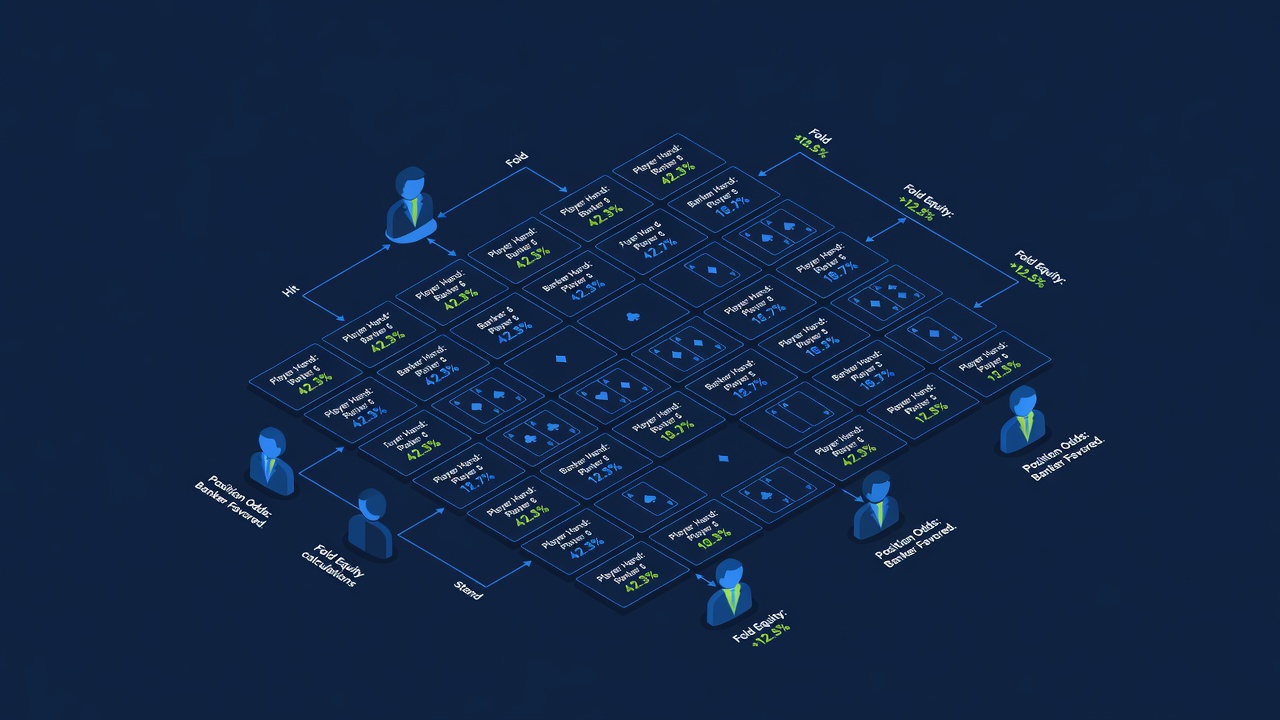
Live Casino Hold'em Strategy: When to Call and When to Fold
Live Casino Hold'em is fundamentally different from traditional poker because you have perfect information about dealer strength. Understanding this transforms the entire decision tree.
Random Number Generation vs Live Dealers: Fairness Compared
A gentleman from Stuttgart played both live and RNG blackjack in the same evening. By three in the morning, his impressions of fairness had inverted twice.
Immersive Roulette: How Camera Angles Changed Live Play
The Resorts had a money wheel in 1978, and they filmed it with one camera from above. Evolution Films it from eight angles. The difference in the experience is architectural.
Dream Catcher: The Money Wheel That Started It All
Dream Catcher is often credited as the first live wheel game. Testing this claim methodically reveals it was actually the first one executed well enough to matter.
Which Studios Run the Best Live Dealer Tables
One might ask: what distinguishes a good casino from a bad one when the house always profits. Perhaps the answer lies in how the house profits and what it asks of the player.
How Optical Character Recognition Powers Live Dealer Games
Every card the dealer touches gets read instantly. OCR is the invisible machine that turns physical cards into game state.