Tipping Dealers in Live Poker: What's Appropriate
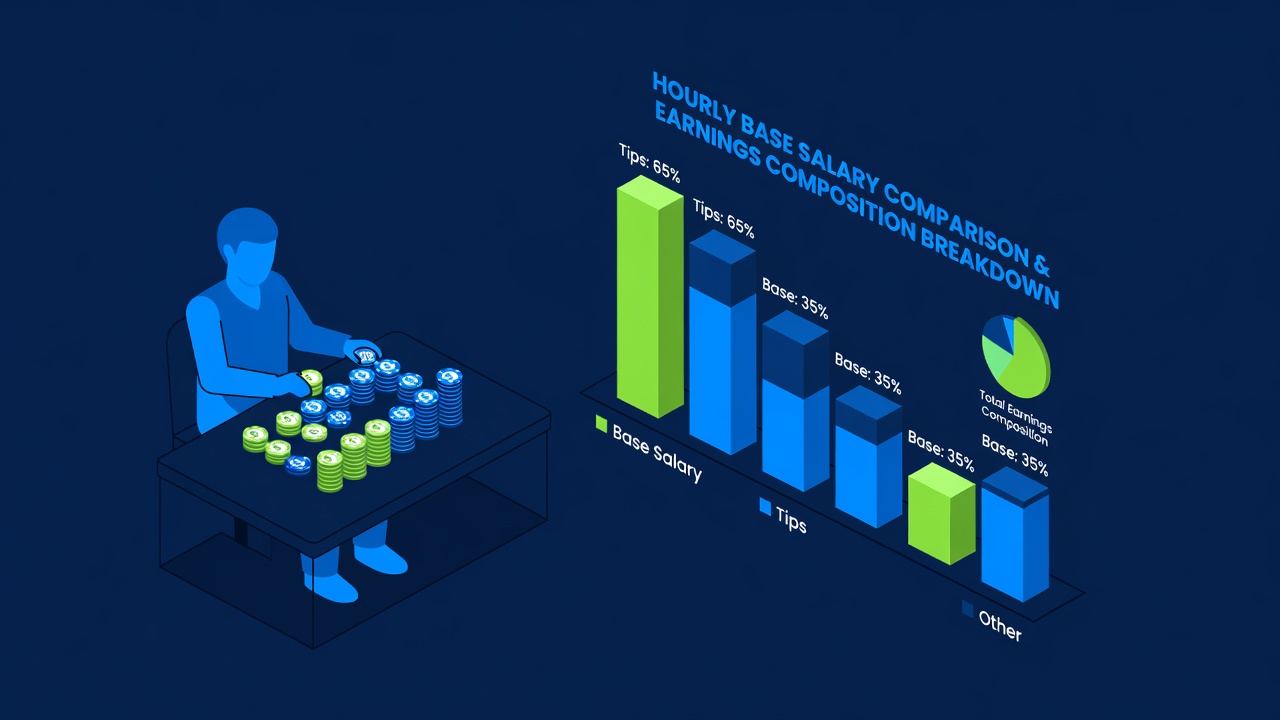
A dealer working five hours on a Tuesday afternoon at a regional poker room makes maybe $200 in base salary. Everything else is tips. This changes how you understand the relationship between player and dealer.
The Economics
Most dealers in poker rooms are paid minimum wage or slightly above. In Nevada, that's $12.01 per hour (as of 2024). A dealer working a 40-hour week makes about $480 before tips.
Tips are where the money is. In a busy room, a dealer might receive $8-$15 per hour in tips. In a slow room, maybe $3-$5. If you add tips to base, a dealer at a busy casino makes $20-$28 per hour. A dealer at a slow room makes $15-$17.
This is important context. The dealer's livelihood depends on player generosity.
When to Tip
Tipping is most appropriate when you win a hand. A standard tip is 1-2% of the pot if you won, or a fixed amount per win ($1-$5 depending on pot size).
Example: You win a $200 pot. A tip of $2-$4 is reasonable.
Tipping on losses is less common but appreciated. A player down $300 might tip the dealer $10 over the course of a session as a gesture of goodwill.
When you leave the game, even if you haven't tipped much, consider a small parting tip ($5-$10). It's a minor gesture that significantly impacts the dealer's perception of you.
What's Appropriate
At micro-stakes ($0.05/$0.10 or $0.25/$0.50), tips are small. $1-$2 per big win. The pots are small. The dealer understands.
At mid-stakes ($1/$2, $2/$5), tips are $2-$5 per win.
At high-stakes ($10/$20 and up), tips are typically 1% of the pot or a fixed amount like $20-$50 per significant win.
Tipping varies by region. In Las Vegas, tipping norms are established. In smaller regional casinos, expectations are lower but tips are more appreciated.
The Social Dynamics
Tipping creates a relationship. A dealer who notices you tip consistently will give you slightly more favorable treatment. They'll chat with you. They'll move you up to better seats if there are seat changes. They'll remember you.
This is not corruption. It's human nature. A customer who tips well is a customer you want to keep happy.
A player who never tips will still be dealt fairly (the house enforces fairness), but the dealer won't extend extra courtesy.
The Tipping Threshold
There's a tipping threshold. Below it, you're seen as cheap. Above it, you're seen as generous.
The threshold varies by location and stakes. At $2/$5 in Vegas, tipping $5 per win is standard. If you only tip $1, you're below the threshold.
If you consistently tip well, the dealer will remember you favorably. If you consistently tip poorly, the dealer won't remember you fondly, but they'll still deal to you professionally.
What Not To Do
Don't tip for a bad beat. It's not the dealer's fault. The beat happened. Tipping won't change it. (This is something losers do, mistakenly thinking the tip curries favor. It doesn't.)
Don't stiff a dealer when you leave after losing. It's understandable that you're upset, but the dealer had nothing to do with your loss.
Don't tip excessively if you're playing with borrowed money or money you can't afford to lose. Your financial responsibility to yourself outweighs courtesy to the dealer.
Don't tip if the dealer is openly rude or unprofessional. Politeness is a baseline.
The Norm Variation
In tournament poker, tipping norms are lower. Players expect to tip 1-2% of their final payday, not per hand.
In home games, tipping doesn't exist. The host might contribute to the pot or dealers play for free.
In online poker, there's no tipping (though some platforms have tip buttons for streamers or dealers in live-streamed games).
The Practical Guideline
If you're unsure whether to tip, observe other players. If they're tipping $3 per win, do the same. If they're tipping $1, you can tip $1.
If you win significantly (a big pot, a tournament prize), tip a bit more than standard. It's expected.
If you're playing at a casino where you'll become a regular, err toward generous tipping early. Build goodwill.
If you're just passing through, standard tipping is fine.
The fundamental principle: the dealer made their living possible. A small percentage of your wins, redirected to them, is appropriate recognition of that.
Next notes
More from #poker
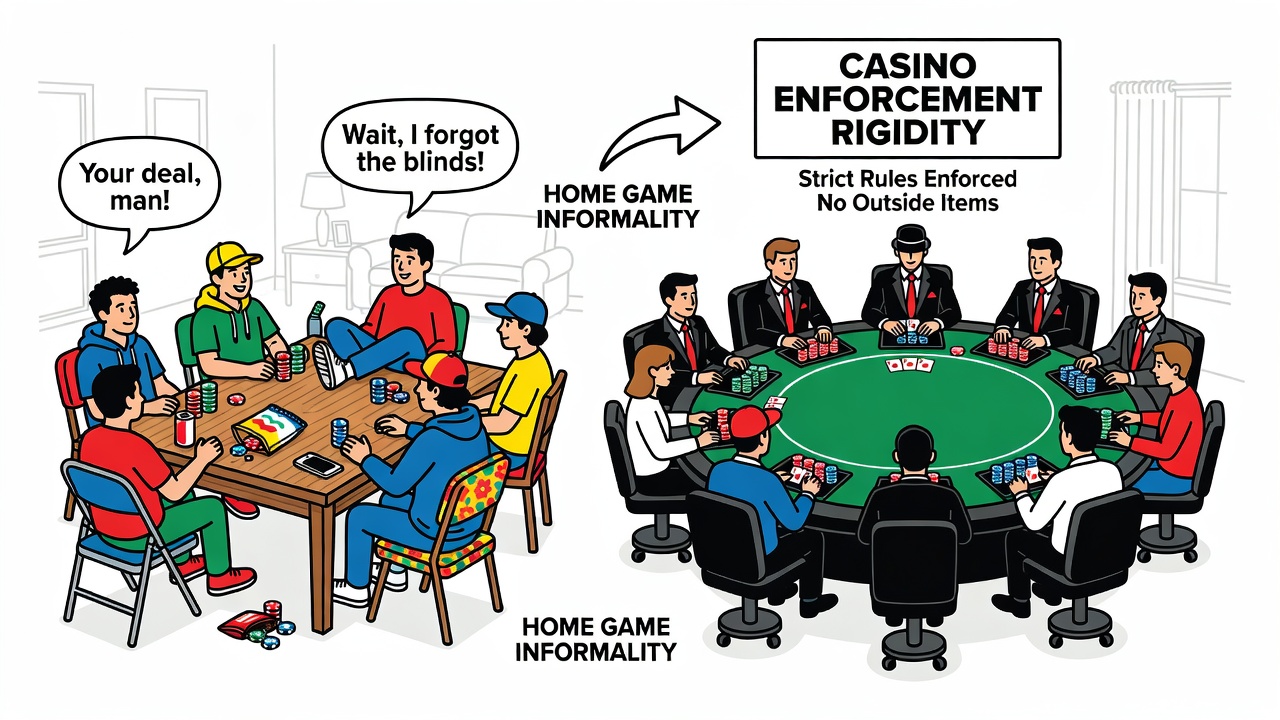
How Home Poker Games Differ From Casino Cash Games
A careful examination of the legal, social, and mathematical differences between home poker and casino cash games reveals that the similarities are often overstated.
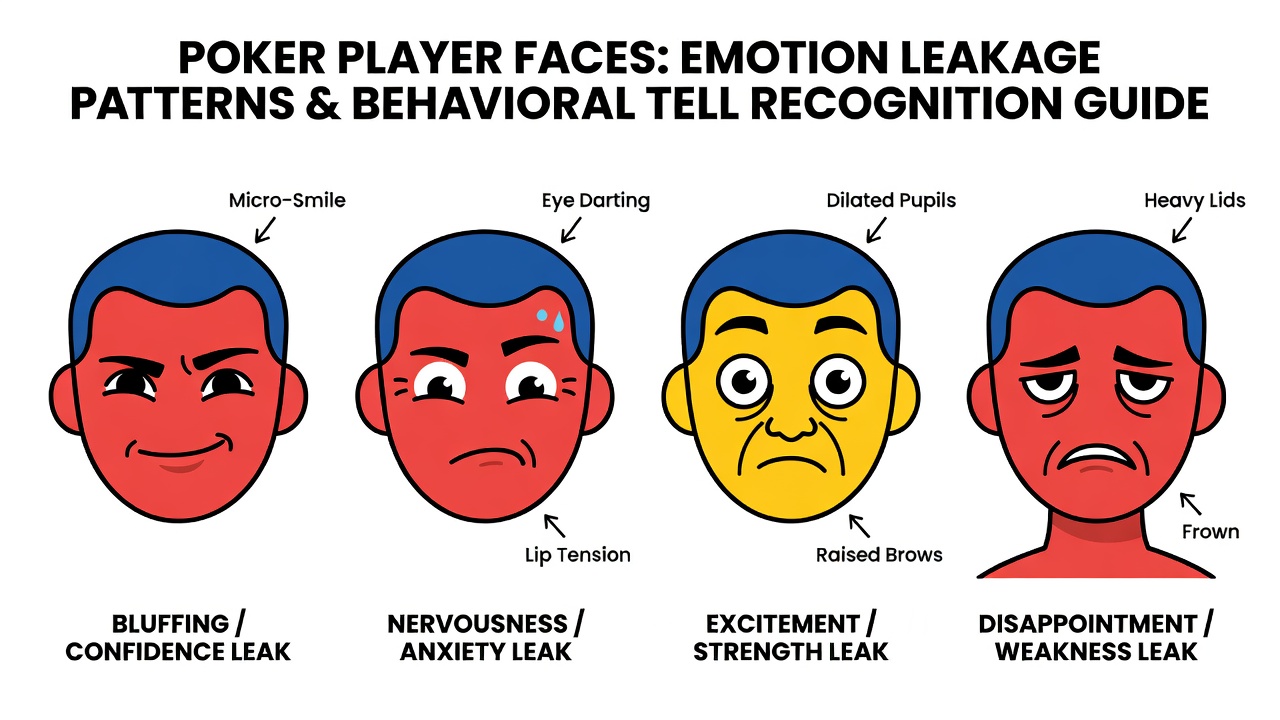
Poker Tells in Live Games: What to Watch For
A tell is a behavioral pattern that reveals hand strength. Poker players are trying to mask their emotions. The tells emerge from the parts they forgot to mask.

Poker Night TV: The Rise and Fall of Televised Poker on ESPN
ESPN started broadcasting poker in 2003. For five years, it was the most watched non-sports programming on the network. Then it disappeared. The moral is that even good things end when people stop watching.

Short Deck Hold'em: Rules and Starting Strategy
Short deck removes the twos through fives. The math changes. Your hand values shift. Here is what adjusts.

Short-Stack Strategy for Poker Tournaments
When the blinds have eaten your chips down to a whisper, the game changes. A dealer I worked with in Macau explained this better than any poker book ever could.
How US State-by-State Online Gambling Regulation Generally Works
Federal law does not explicitly ban online gambling. It does not explicitly allow it either. So states do. Each state makes its own decision. This creates 50 different legal regimes and a patchwork that would baffle a bureaucrat.