How Home Poker Games Differ From Casino Cash Games
A careful examination of the legal, social, and mathematical differences between home poker and casino cash games reveals that the similarities are often overstated.
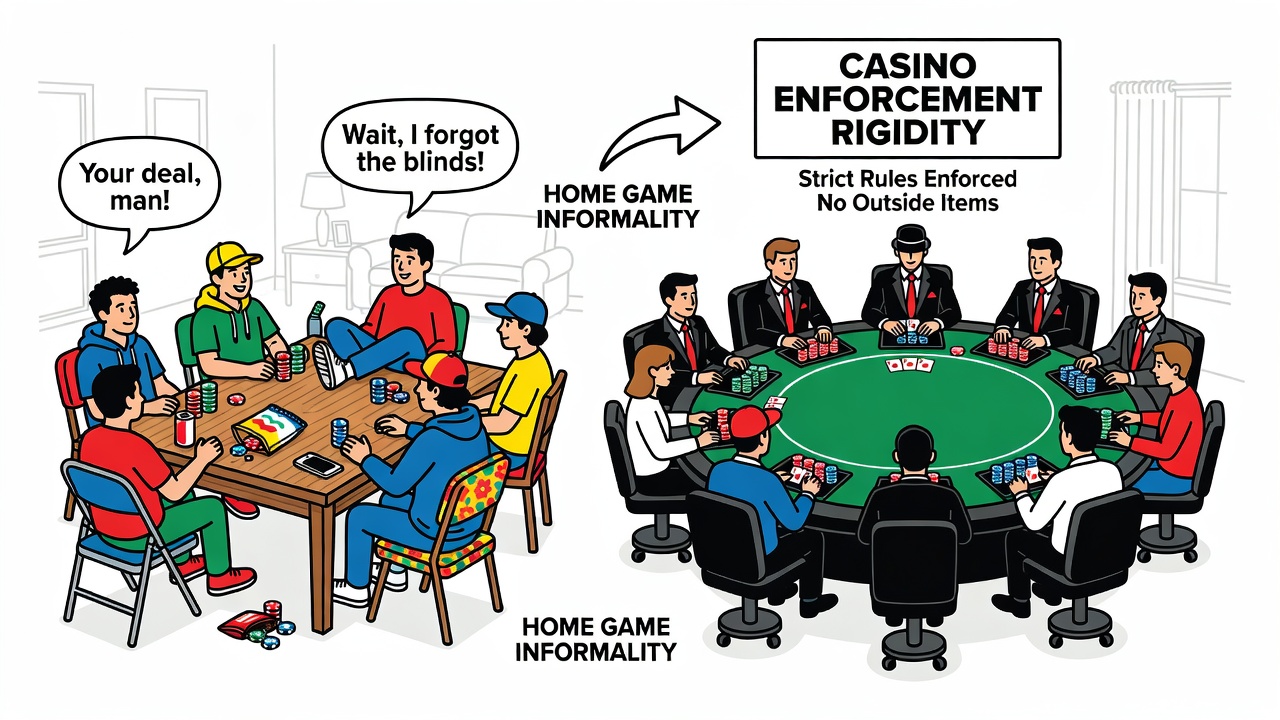
Home poker games have existed since at least the eighteenth century. A formal record shows George Washington played cards for money in 1770. By the nineteenth century, poker had become standard in American culture. The game was played at home, in saloons, on riverboats. The social context mattered. The game was built on community and relationship.
Casino cash games emerged later as a formalized product. The first permanent casino in the US opened in 1822 in New Orleans. Poker rooms followed decades later, once poker had become established as a commercial product. The social context shifted. The game became transaction. You came for profit, not community.
The legal distinction matters. A home poker game where players ante ten dollars for charity is, in most jurisdictions, legal. The money involved is small and the purpose is social. A home poker game where a player is extracting rake (a commission from the pot) is, in many jurisdictions, operating an unlicensed gaming establishment. The player taking the rake is breaking the law.
Casino cash games operate under licensure. The rake is transparent. The house takes a specific percentage. The player understands and accepts this cost as the price of playing. In a home game, if rake is being extracted, it is typically hidden. The operator might skim five percent quietly, while the players believe they are playing rake-free.
The Mathematical and Social Differences
From a game theory perspective, the differences are significant. A home poker game often includes players of widely varying skill levels. The experienced player at your poker table might be your friend, your neighbor, someone you owe money to. This social context constrains how aggressively they can play. A casino poker game has no such constraint. The experienced player can run the table without social consequence.
The differences manifest as:
A home game has implicit understandings about acceptable play. Aggressive play that wins too much money creates resentment. A casino game has explicit rules about play and no resentment because the transaction is pure commerce. A home game builds relationships over time. A casino game is transactional.
- Casino games typically use a button that moves around the table to ensure positional advantage rotates fairly. Home games often run without formal button management.
- Casino games use a dedicated dealer so that playing is decoupled from dealing. Home games usually have players deal their own hands.
- Casino games have minimum bet sizes enforced. Home games often allow "string bets" (betting multiple times in sequence), which is prohibited in casinos.
- A casino game is tracked by surveillance and logged. A home game is unrecorded.
From a player's perspective, a casino game is superior if you are a skilled player because the house takes a cut that is less than what you might lose in a home game with hidden rake. A home game is superior if you are playing with friends and the purpose is social rather than profit.
Historically, most poker happened at home. Professional poker in casinos is a recent phenomenon, really only becoming mainstream in the last thirty years. The professionalization of poker has changed the game. It is no longer primarily a social activity with money. It is now primarily a commercial transaction. The difference cannot be overstated.
Next notes
More from #poker
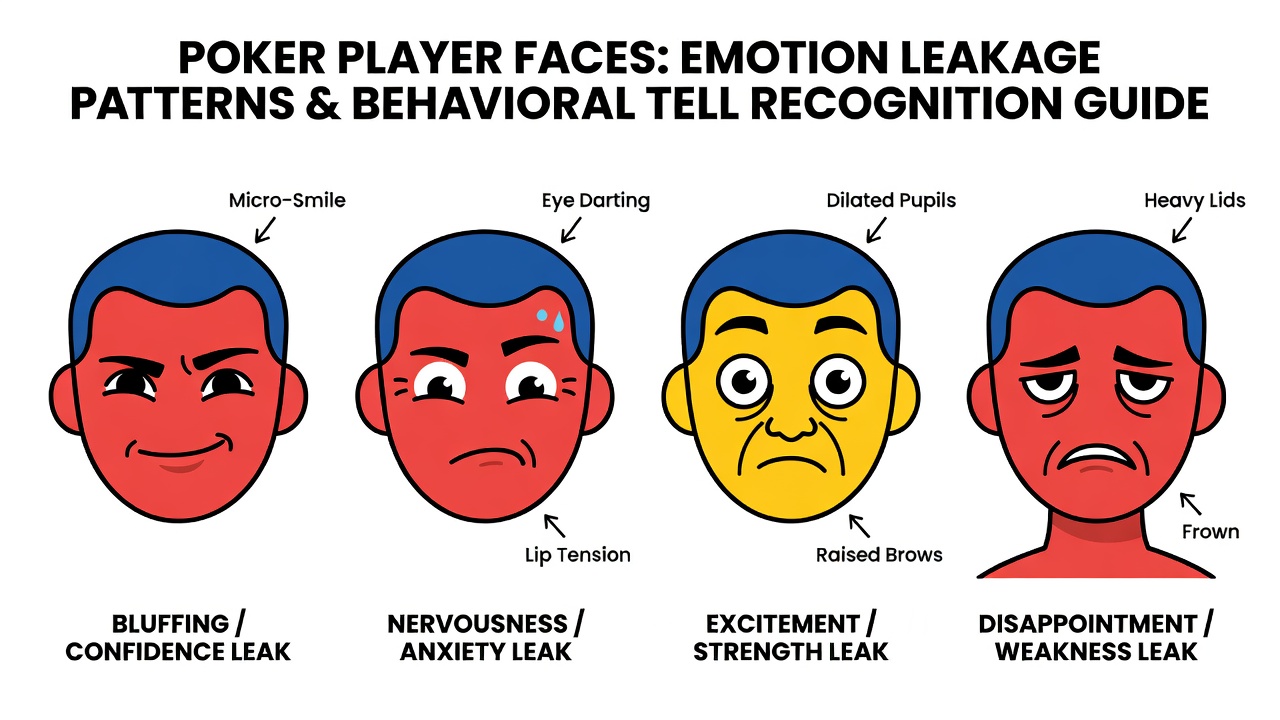
Poker Tells in Live Games: What to Watch For
A tell is a behavioral pattern that reveals hand strength. Poker players are trying to mask their emotions. The tells emerge from the parts they forgot to mask.

Tipping Dealers in Live Poker: What's Appropriate
A dealer working five hours on a Tuesday afternoon at a regional poker room makes maybe $200 in base salary. Everything else is tips. This changes how you understand the relationship between player and dealer.
Poker Night TV: The Rise and Fall of Televised Poker on ESPN
ESPN started broadcasting poker in 2003. For five years, it was the most watched non-sports programming on the network. Then it disappeared. The moral is that even good things end when people stop watching.

Short Deck Hold'em: Rules and Starting Strategy
Short deck removes the twos through fives. The math changes. Your hand values shift. Here is what adjusts.

Short-Stack Strategy for Poker Tournaments
When the blinds have eaten your chips down to a whisper, the game changes. A dealer I worked with in Macau explained this better than any poker book ever could.
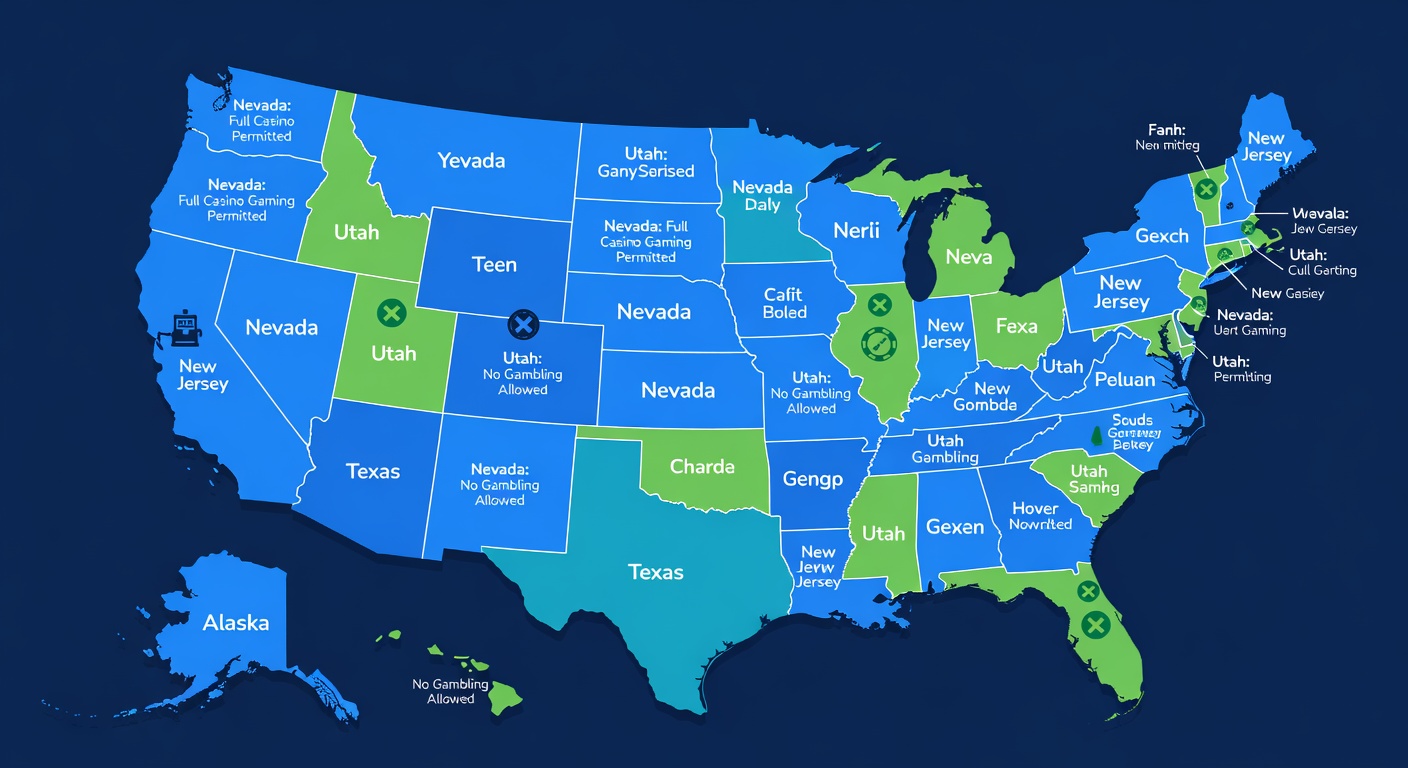
How US State-by-State Online Gambling Regulation Generally Works
Federal law does not explicitly ban online gambling. It does not explicitly allow it either. So states do. Each state makes its own decision. This creates 50 different legal regimes and a patchwork that would baffle a bureaucrat.