The Monte Carlo Fallacy: A Famous Roulette Lesson in Probability
In 1913, a roulette wheel in Monte Carlo landed on black 26 consecutive times. Gamblers lost millions betting it would finally hit red. The math of their loss is the math that loses money every day.
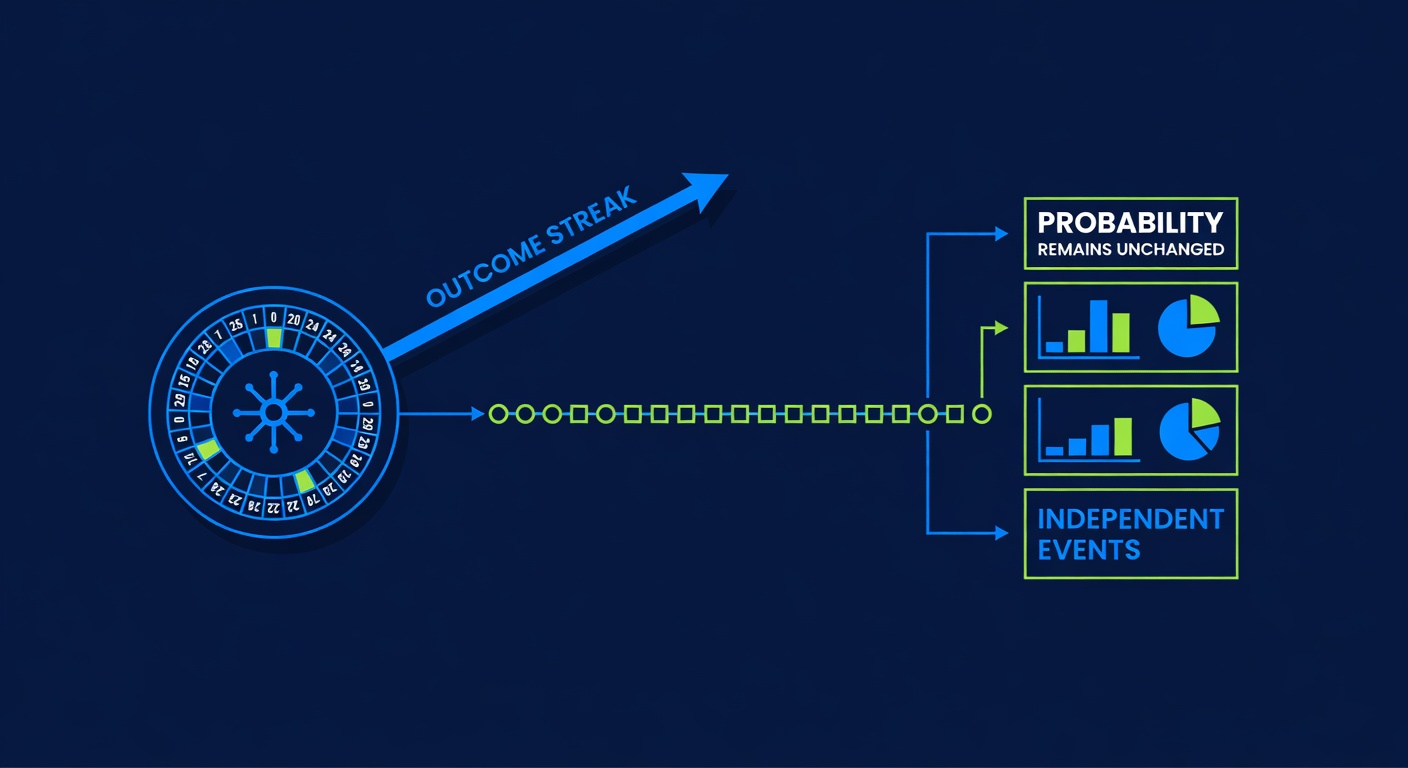
The wheel landed on black. Then black again. Then black again.
By spin 15, the odds of 16 consecutive blacks felt impossible. They were not. The odds were exactly the same as black-red-black-red-black: 1 in 131,072.
But they felt different. That feeling is the Monte Carlo Fallacy, and it has cost more money than most small nations earn in a year.
The Event
Auguste Blanc's roulette wheel in Monte Carlo on August 18, 1913. European wheel. 18 red, 18 black, 1 zero. Each spin, 18/37 odds of landing on any given color.
It landed on black 26 times in a row.
Gamblers crowded the table. They watched the probability tilt further and further against black. By spin 20, they were certain the next spin would be red. They wagered fortunes on it.
It was black. Spin 21: black again.
The losses accumulated into legend. The best estimate is that 50+ million francs changed hands on that wheel across the multiple-day run. In 1913 francs, that's roughly 200 million in modern currency.
The Misunderstanding
The fallacy operates as follows: "black has come up 26 times. The odds of black are 48.6%. Over many spins, red and black should equalize. Therefore, red is more likely next."
This is false. Each spin is independent. The wheel has no memory. Spin 27 has exactly 48.6% odds of being black, regardless of the previous 26 outcomes.
The probability of 27 blacks in a row is 1 in 262,144. That is truly unlikely. But the probability was established on spin 1, not spin 27. After spin 26 has occurred, that outcome is no longer future. It is past.
The odds of "26 blacks already happened and spin 27 is black" is: 1 in 262,144 (the joint probability of all 27 events). But you do not face that bet. You face: "26 blacks have happened. What are the odds spin 27 is black?"
That answer is 48.6%, always.
The Gambler's Intuition
The intuition is seductive because it's partially correct. Over long runs, deviations do regress to the mean. If you flip a fair coin 100,000 times, you will get approximately 50,000 heads.
But the regression is not toward "fairness" in recent spins. It is toward the statistical average across all spins. If you have 99 flips of heads and 1 flip of tails in 100 flips, the ratio is extreme. But flipping 1,000,000 more times brings you toward 50-50, not because the coin "remembers" the early imbalance, but because 1 million new flips dominates the average.
The 99 heads remain in the history. They do not create a debt that future flips repay.
Why It Persists
Cognitive bias. The human brain is pattern-seeking. It sees 26 blacks as a pattern violation. Our intuition says patterns cannot continue. They must normalize.
But randomness has no normalization mechanism. A fair coin has no mechanism to "remember" it is heads-biased recently. The next flip is 50-50.
This is counterintuitive because evolution built our brains to detect patterns in non-random environments. If a lion appears in certain conditions, patterns matter. If fruit ripens on certain trees in certain seasons, patterns matter.
But a roulette wheel has no seasons. No conditions. No mechanism. Just probability.
The Economic Reality
The Monte Carlo event lost money because 50+ million francs bet on red being "due." They were not due. Red was due to appear, eventually, with 48.6% frequency. But "eventually" does not mean "next."
A player betting red on spin 27 faces 48.6% odds of winning. The house takes a 2.7% cut of the expected value. The player's expected loss is 1.35 francs on a 100 franc bet.
No previous outcome changed this. Not 1 black before the bet. Not 26 blacks before the bet.
The Discipline
Understanding this requires accepting that recent history is irrelevant to future probability in independent events. This is not intuitive. It is true.
The traders and investors who last are the ones who have internalized this: past deviation does not create future probability. A stock that is down 50% does not have higher odds of bouncing back 50%. It has 50% odds of going up tomorrow and 50% odds of going down tomorrow, based on new information, not on historical position.
Monte Carlo was a lesson in how expensive it is to assume otherwise.
Next notes
More from #famous-players

Richard Marcus: The Infamous Past-Poster and Casino Cheat
Richard Marcus spent his life buying possibilities, not just in the lottery, but in the spaces between rules where people aren't looking.

Allen Iverson's Casino Bans: What the Reports Actually Say
Public records from Nevada gaming authorities show Iverson was excluded from casinos in 2012. The reasons were never fully disclosed, but the timeline reveals something about how exclusion actually works.

Kirk Kerkorian: The Quiet Billionaire Who Built Vegas Three Times
Kirk Kerkorian understood a fundamental truth about Las Vegas: the game is real estate, not gaming. Gaming is the excuse that gets people into the buildings.

Wayne Newton's Vegas Legacy and Casino Residencies
The entertainer spent more time in Las Vegas than most residents. Here's what his residency model tells us about casino hospitality architecture.
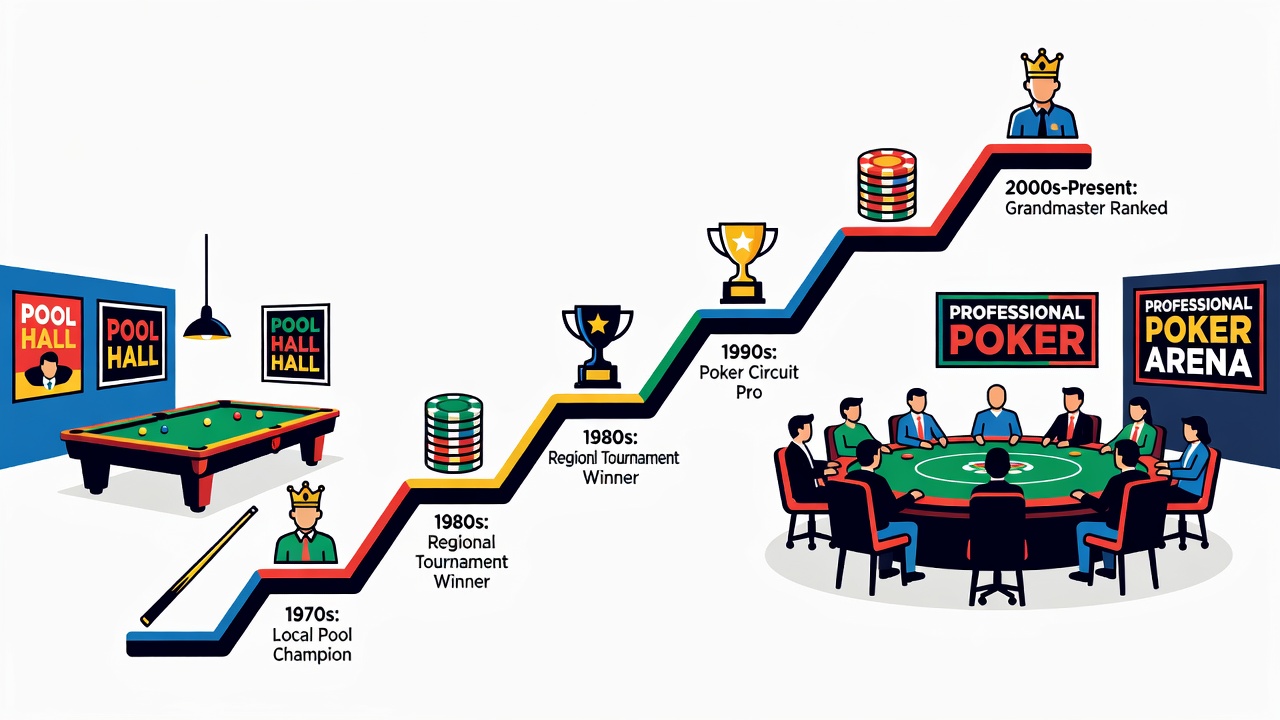
Daniel Negreanu: From Toronto Pool Halls to Poker Royalty
Daniel was shooting pool in Toronto in the early 1990s. Made maybe forty grand a year. By 1997, he'd figured out poker. By 2000, he was beating the best players in the world. That's a ten-year arc from regional operator to world-class grinder.

Tiger Woods and the High-Stakes Blackjack Tables of Vegas
Between 2000 and 2009, Tiger Woods was frequently photographed entering the casinos of Las Vegas. Public records show he gambled in private high-limit rooms. The amounts are documented. The outcomes are not.