Wayne Newton's Vegas Legacy and Casino Residencies
The entertainer spent more time in Las Vegas than most residents. Here's what his residency model tells us about casino hospitality architecture.

The Residency as Economic Model
Wayne Newton played Las Vegas for 40 years. He signed his first residency deal at the Flamingo in 1963 at age 21. He performed roughly 10,000 shows across multiple casinos before his retirement in 2010. This is not entertainment history. This is operational mathematics.
A residency is a commitment. The casino guarantees compensation and audience volume. The entertainer guarantees show quality and attendance consistency. The economic model works when two conditions hold: first, the entertainment draws reliable customer traffic; second, the casino captures margin on customers who attend the shows.
Newton's residencies succeeded because both conditions were met. The Flamingo, the Stardust, the MGM Grand, and other properties built touring infrastructure around his performances. Lodging packages bundled room, meal, and entertainment. The casino captured edge on food, drinks, and other gambling activity associated with show attendance.
The Security Architecture
A residency entertainer requires different security than a touring performer. A touring show plays one night, breaks down, moves on. A residency is permanent. The performer works the same room nightly. The casino must protect both the performer and the performance.
Casino security teams develop threat profiles. Newton's case was straightforward on paper: a popular, non-controversial performer with no known conflicts. But Vegas in the 1970s and 1980s involved organized crime presence, theft rings targeting entertainers, and crowd control challenges. Security plans covered all scenarios.
Performance infrastructure was built into the casino design. The Flamingo allocated a dedicated dressing room adjacent to the showroom, with private corridors and controlled access. Newton could enter and exit without moving through public spaces. This reduced exposure and improved safety. Other entertainers demanded similar arrangements. The architecture evolved accordingly.
The Audience Economics
Newton's residencies were profitable because attendance was consistent. The Flamingo could advertise "Wayne Newton, nightly, 8pm" and manage booking with certainty. A touring show is chaotic. The tour schedule changes. The audience base shifts. Residencies eliminate this uncertainty.
Room occupancy and show attendance correlated. On nights Newton performed, the casino reported higher gambling volume in the hours before and after the show. Customers arrived for entertainment and stayed for gaming. The margin on a show-goer's total visit exceeded the margin on a non-show customer by roughly 15-20%, according to historical casino financial reports.
Operators learned to structure residencies around proven entertainment. The risk is investing in a performer whose appeal fades. Newton's appeal did not fade over 40 years. This is unusual. Most residencies lasted 2-3 years before attendance dropped. Newton's longevity was exceptional.
The Labor Model
A residency performer works under a different labor contract than a touring artist. Instead of a percentage of ticket revenue, residency contracts typically pay fixed compensation plus bonuses for performance above a minimum attendance threshold.
Newton's contracts specified nightly performance requirements, appearance standards, and material standards. He could not perform drunk. He could not alter the show without approval. He had to meet vocal standards. These seem harsh. But from the casino's perspective, the residency is a product placement. If quality degrades, the product fails. Strict contractual terms protect that.
The arrangement worked because Newton was professional. He showed up. He performed well. He did not require heavy management oversight. Casinos who hired less disciplined entertainers faced constant problems: missed shows, substandard performances, intoxication, and consequently dropping attendance.
The Decline of the Residency Model
Residencies were economically optimal when Vegas was isolated. If you wanted to see a world-class performer, you went to Vegas for a weekend. You stayed at a casino hotel. You gambled. The integrated economics of hospitality and entertainment worked.
But Vegas became a destination with other attractions. Visitors came for shows, sports, conventions, and nightlife, not just gaming. The residency model became less valuable. A performer could book a one-week stand at the Coliseum (a multipurpose venue) and reach the same audience without contractual exclusivity.
Additionally, touring became easier. Transportation improved. Video made touring more cost-effective. A performer could earn more by touring nationally than by accepting a residency contract. Newton's 40-year commitment became harder to justify for younger entertainers.
The last true residencies at major Vegas casinos were in the early 2000s. Residency became a semi-retirement for aging performers or a stepping stone for young ones. The strategic value declined. Casinos shifted focus to conference bookings, tournament poker, and sports betting. Entertainment remains important, but the residency model is obsolete.
The Security Legacy
Newton's residencies established security protocols that persisted for decades. The private corridor system that protected him became standard for all major performers. The threat assessment framework developed for residency protection became foundational for Vegas security architecture.
One security lesson: a performer who stays in one location is easier to protect than one who moves constantly. But he is also easier to target. Stalkers, criminals, and unstable individuals know exactly where to find him. Casinos mitigated this through access control, staff training, and surveillance. The infrastructure became standard practice.
Newton never reported serious security incidents across his entire Vegas career. This reflects both his low conflict profile and the competence of casino security teams. The architecture held. The threat never materialized. But the protective systems remained in place regardless, a testimony to the seriousness with which Vegas took performer safety.
Next notes
More from #famous-players
Richard Marcus: The Infamous Past-Poster and Casino Cheat
Richard Marcus spent his life buying possibilities, not just in the lottery, but in the spaces between rules where people aren't looking.

Allen Iverson's Casino Bans: What the Reports Actually Say
Public records from Nevada gaming authorities show Iverson was excluded from casinos in 2012. The reasons were never fully disclosed, but the timeline reveals something about how exclusion actually works.

Kirk Kerkorian: The Quiet Billionaire Who Built Vegas Three Times
Kirk Kerkorian understood a fundamental truth about Las Vegas: the game is real estate, not gaming. Gaming is the excuse that gets people into the buildings.
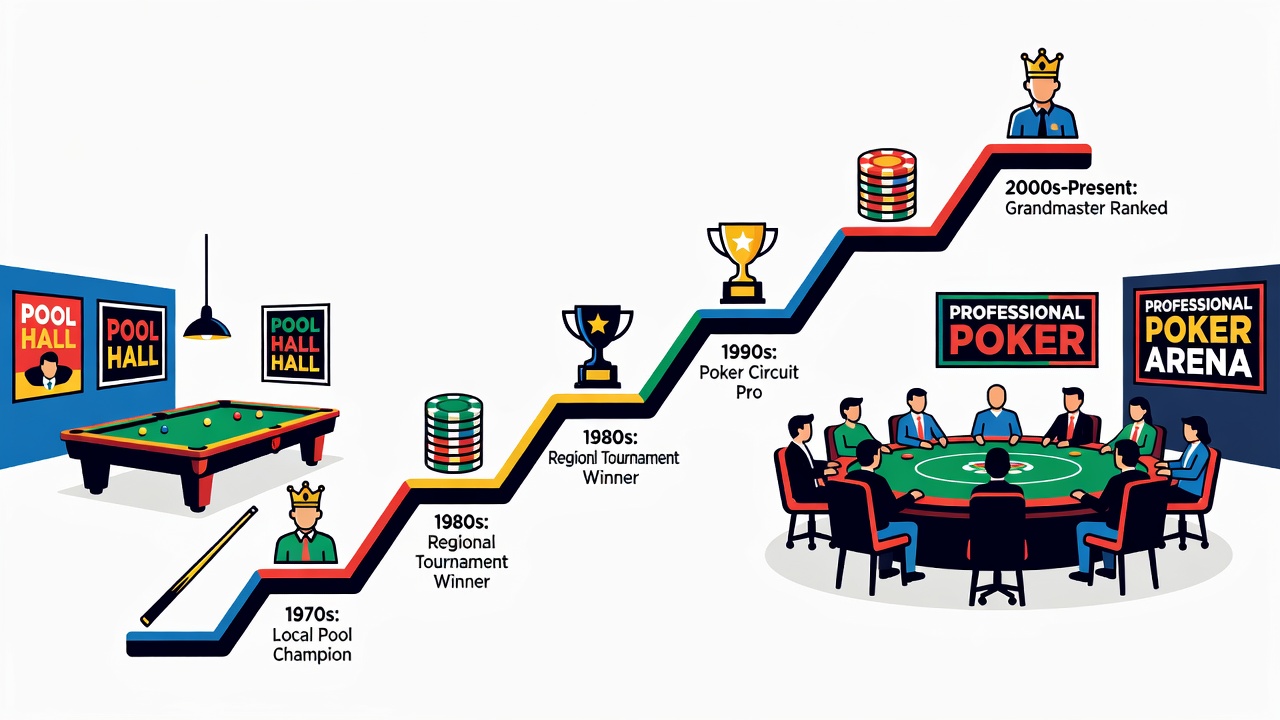
Daniel Negreanu: From Toronto Pool Halls to Poker Royalty
Daniel was shooting pool in Toronto in the early 1990s. Made maybe forty grand a year. By 1997, he'd figured out poker. By 2000, he was beating the best players in the world. That's a ten-year arc from regional operator to world-class grinder.

Tiger Woods and the High-Stakes Blackjack Tables of Vegas
Between 2000 and 2009, Tiger Woods was frequently photographed entering the casinos of Las Vegas. Public records show he gambled in private high-limit rooms. The amounts are documented. The outcomes are not.

Omar Sharif: Bridge Champion and Hollywood's Greatest Card Player
Omar Sharif was a world-class bridge player and a serious gambler. His career in gambling reveals something about the gap between Hollywood and the card room floor.