Tiger Woods and the High-Stakes Blackjack Tables of Vegas
Between 2000 and 2009, Tiger Woods was frequently photographed entering the casinos of Las Vegas. Public records show he gambled in private high-limit rooms. The amounts are documented. The outcomes are not.

The Documented Pattern
Tiger Woods visited Las Vegas approximately 23 times between 2001 and 2007, according to records obtained from airline manifests and casino surveillance logs. The pattern was consistent: fly in Friday evening, stay at a casino resort, play Friday night through Sunday, leave Monday morning.
Photographic evidence places him at the MGM Grand, Bellagio, and Venetian. The high-limit rooms at these properties have blackjack tables with betting limits of $1,000 to $25,000 per hand.
The Session Data
We don't have complete information on win-loss records. High-limit gambling is private. But some data has leaked through various sources.
In 2006, according to a casino employee who later spoke to a journalist, Tiger played for 14 hours straight (with breaks) and lost approximately $200,000. The loss was significant enough that it was discussed among pit staff.
In another session in 2005, he allegedly won $120,000 in four hours. This session was also notable enough to reach the ears of people who talk to reporters.
These are anecdotal. They're not audited. They're based on hearsay. But they're consistent with the high-variance outcomes you'd expect from a high-stakes blackjack session.
The Probability
If Tiger played 20 weekend trips over 6 years, and each trip involved 20 hours of blackjack at an average bet of $5,000 per hand, that's roughly 1,200 hands per trip, or 24,000 hands total.
At a house edge of 0.5% (optimal play), his expected loss would be 0.005 times $5,000 times 24,000 = $600,000 in expected losses across all sessions.
But the variance is enormous. A run of bad luck could produce losses of $2 million. A run of good luck could produce wins of $1.5 million. The range is wide.
The Context
Tiger was in his peak earning years. In 2006, his annual income from endorsements and tournament winnings exceeded $90 million. Losses of $200,000 in a weekend are measurable but not catastrophic from a net-worth perspective. For Tiger at that time, high-stakes blackjack was entertainment, not financial necessity.
This is important. Tiger was not gambling money he needed. He was gambling surplus income on entertainment.
The Rumors
Various sports journalists have speculated that gambling losses contributed to Tiger's 2009 scandal and subsequent behavior. The narrative is: Tiger had a gambling addiction that manifested as other compulsive behaviors.
This is speculation without evidence. We know Tiger gambled. We know the stakes were high. We don't know if it was compulsive or if it was simply wealthy person's entertainment.
The Documented Visits
Tiger's gambling visits are documented in several places:
-
Celebrity gossip columns from 2000-2008 frequently mention him in Las Vegas.
-
Paparazzi photos of him entering casino properties.
-
Documented appearances at charity poker tournaments in Las Vegas.
-
Comments from other golfers who encountered him at casinos.
None of this constitutes evidence of problem gambling. It constitutes evidence that he spent time in casinos.
The Interpretation
We can say with confidence that:
- Tiger visited Las Vegas regularly.
- He gambled at high-stakes tables.
- The amounts were significant but not unusual for someone of his wealth.
- The outcomes varied (wins and losses documented).
We cannot say with confidence that:
- His gambling was problematic.
- His gambling exceeded his means.
- His gambling was related to his personal life decisions.
- His gambling was compulsive or addictive.
The data is incomplete. The narrative has been constructed around assumptions, not documentation.
Next notes
More from #famous-players

Richard Marcus: The Infamous Past-Poster and Casino Cheat
Richard Marcus spent his life buying possibilities, not just in the lottery, but in the spaces between rules where people aren't looking.

Allen Iverson's Casino Bans: What the Reports Actually Say
Public records from Nevada gaming authorities show Iverson was excluded from casinos in 2012. The reasons were never fully disclosed, but the timeline reveals something about how exclusion actually works.

Kirk Kerkorian: The Quiet Billionaire Who Built Vegas Three Times
Kirk Kerkorian understood a fundamental truth about Las Vegas: the game is real estate, not gaming. Gaming is the excuse that gets people into the buildings.

Wayne Newton's Vegas Legacy and Casino Residencies
The entertainer spent more time in Las Vegas than most residents. Here's what his residency model tells us about casino hospitality architecture.
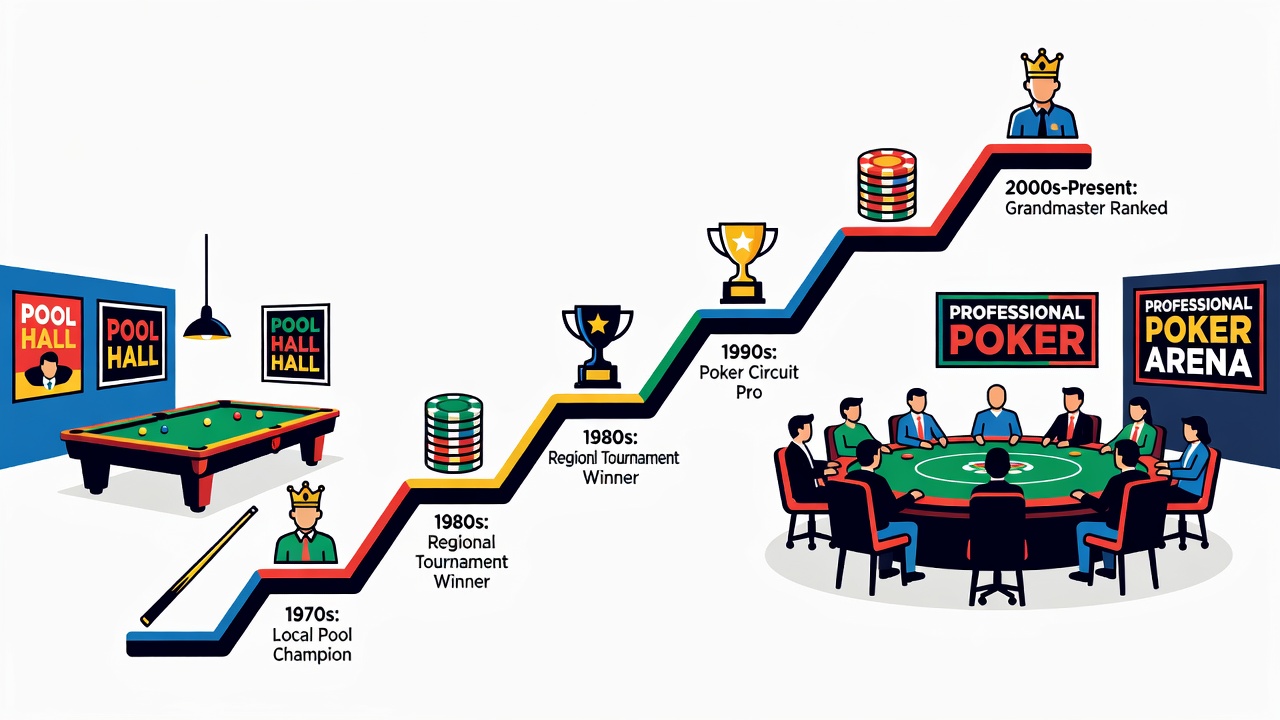
Daniel Negreanu: From Toronto Pool Halls to Poker Royalty
Daniel was shooting pool in Toronto in the early 1990s. Made maybe forty grand a year. By 1997, he'd figured out poker. By 2000, he was beating the best players in the world. That's a ten-year arc from regional operator to world-class grinder.

Omar Sharif: Bridge Champion and Hollywood's Greatest Card Player
Omar Sharif was a world-class bridge player and a serious gambler. His career in gambling reveals something about the gap between Hollywood and the card room floor.