Multi-Currency Casino Accounts: How They Work
A casino advertises that you can gamble in Bitcoin, Ethereum, or USD. The mechanics sound simple. The regulatory and technical implications are complex.

You deposit 0.5 BTC. You play. You win 0.2 BTC. You withdraw 0.7 BTC.
Simple. Except for the 20 hidden layers underneath.
The Custody Problem
When you deposit cryptocurrency, the casino holds it. This creates a custody liability that the casino must manage. If the casino holds $1 million in Bitcoin and loses the private keys, that money vanishes. If the casino's wallet is compromised, the money is stolen.
Regulated casinos (UKGC, MGA) require proof of custody insurance or collateral backing. An unregulated casino has no such requirement. This asymmetry is central to the risk calculation.
Evolution Gaming (licensed MGA) holds customer crypto in segregated, insured cold storage. Stake (Curaçao-licensed) has faced accusations of fractional reserve practices, though they claim full backing.
The difference in custody practice creates wildly different risk profiles.
The Exchange Rate Risk
You deposit $10,000 USD. You convert to 0.33 BTC. You play and don't win or lose. You want to withdraw your 0.33 BTC.
BTC has moved from $30,000 to $45,000 per coin. Your 0.33 BTC is now worth $14,850. Should you withdraw in BTC (gaining the upside) or in USD (what you originally deposited)?
The casino offers both options. This creates an incentive structure: if crypto has appreciated, customers withdraw in crypto. If crypto has depreciated, customers withdraw in USD.
The casino must hedge this exposure or face directional losses. A casino with $5 million in customer crypto holdings faces millions in daily variance if BTC swings 5%.
Most casinos hedge through derivative contracts with banks. Some do not. The ones that don't are taking directional bets on crypto prices.
The Regulatory Nightmare
Multi-currency accounts create AML (Anti-Money-Laundering) complexities. Curaçao eGaming Authority has minimal requirements. The UKGC has strict requirements. Different regulations for different currencies operate simultaneously.
A deposit in USD triggers enhanced KYC checks under UKGC rules. A deposit in BTC might trigger looser verification under Curaçao rules, even if the casino is the same.
This regulatory gap is why many casinos restrict cryptocurrency deposits by jurisdiction. EU players often cannot deposit in crypto, even if the casino technically supports it, because the UKGC requires stricter KYC for crypto.
The Volatility Problem for Bettors
You deposit 1 ETH when ETH is $2,000. You play slowly over a month. ETH rises to $3,000.
Your account shows 1 ETH, which is now $3,000 at current rate. But the casino's books show your deposit as $2,000. The delta ($1,000) is yours on withdrawal, but accounting complexity emerges.
Does the casino credit you the appreciation? Some do (customer-friendly). Some don't (casino-friendly). The terms of service specify this, but most players never read it.
The Fiat Ramp Problem
To withdraw crypto to a bank account, the casino must convert it to fiat at some exchange rate. What rate do they use?
DraftKings uses the rate from their exchange partner at the moment of withdrawal. Stake uses their internal rate, which may vary from market rate. The spread between market and casino rate is hidden revenue.
A 1-2% variance on $1,000 withdrawal seems small. On $50 million annual withdrawals, it's $500,000-$1 million in hidden fees.
The Tax Reporting Gap
USA IRS requires reporting of all gambling winnings. Crypto gambling is treated as ordinary income. But crypto-to-crypto conversions are also taxable events.
If you deposit USD, convert to BTC in your casino account, win BTC, and withdraw, you've triggered multiple taxable events. Most casinos don't report any of this to tax authorities. The onus falls on the player to calculate and report.
Unregulated or loosely regulated casinos exploit this gap. Customers assume the casino is reporting (they're not). The customer is responsible for voluntary reporting (most don't).
What the Player Should Know
Multi-currency accounts feel modern and efficient. Mechanically, they're cleaner than fiat (faster settlement, no bank involvement). Financially, they hide significant complexities.
The risk profile of a UKGC-regulated casino with crypto accounts differs radically from an unregulated casino. The custody, the hedging, the AML procedures, all vary.
If you use multi-currency accounts, prioritize regulators with actual oversight (UKGC, MGA) over jurisdictions known for loose enforcement. The convenience difference is minimal. The custody difference is significant.
Next notes
More from #crypto-casinos

Penny Slots Online Casino Math: Why 1 Cent Games Hold More
Nevada's revenue report shows 1 cent slots holding 9.06% of every dollar played, more than $1 machines. Here is what a penny spin really costs.

Stablecoin Payment Gateway: From Wallet to Settled Dollars
How a stablecoin payment actually settles: Stripe's 10,000 USD cap, final once the chain records it, no chargebacks, refunds back to your wallet as tokens.

Tron in Crypto Gambling: Why It's Popular for USDT Deposits
Tron carries something in its design that speaks to a particular kind of want. The want for speed. The want for certainty. The want for transactions that happen now.
The Difference Between Crypto Casinos and Traditional Online Casinos
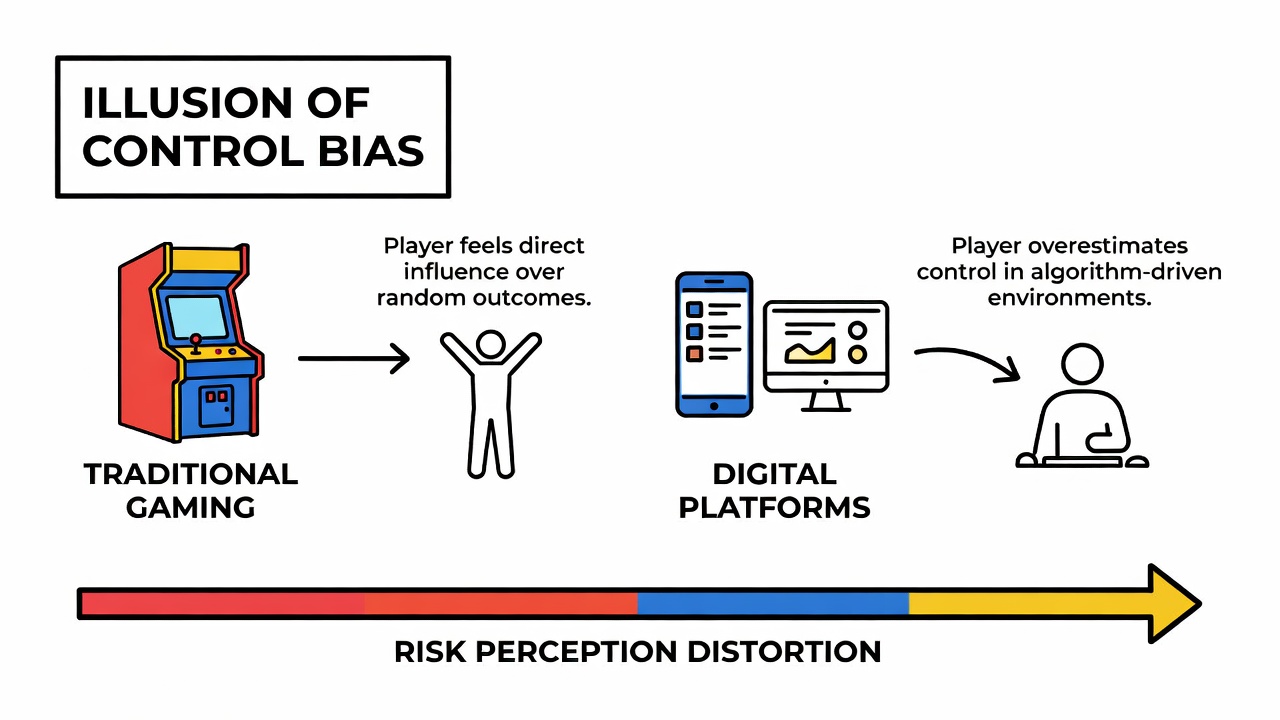
Kahneman and Tversky studied how people evaluate risk. Crypto casinos exploit one specific bias more effectively than traditional operators: the illusion of control.

Crypto Sportsbooks vs Crypto Casinos: Key Differences
The technical architecture between crypto sportsbooks and crypto casinos looks similar to the outsider. But the underlying systems are fundamentally different.

Crypto Deposits at Live Dealer Casinos: A Step-by-Step Walkthrough
The casino is a designed space, and every transaction flows through that design. Crypto deposits have altered the sightlines, but the principles remain unchanged.