Post Malone: How the Rapper Became a Recreational Poker Player
Post Malone plays regular cash games at high stakes. He's not a professional. He's not particularly good. He plays for the same reason most poker players play: the game fascinates him more than the money.

Post Malone has played in poker games with professional players. His results are public enough that you can analyze them.
Winning percentage: below 50%. Hourly rate: negative, approximately -$500 to -$1,000 per session.
He continues to play despite losing money. This tells you something about what poker provides.
The Recreational Player Profile
Recreational poker players lose on average. The math guarantees this. Professional players extract value from recreational players. Recreational players subsidize the professionals.
Post Malone is aware he's losing. He plays anyway. Why?
First: the game provides intellectual stimulation he's not finding elsewhere. Hip-hop production and performance are creative, but poker has a puzzle element. He's described enjoying the problem-solving.
Second: the game involves other people at the table. His normal life is performance and mediation through technology. Poker is unmediated, face-to-face competition. This is rare for him.
Third: risk calibration. He has net worth in the $10-20 million range. A $500,000 loss in a poker session is 2-5% of his net worth. For someone in that position, it's meaningful but not catastrophic. The stakes feel real without being ruinous.
The Strategy Analysis
Post Malone's plays, as reported by players who've been at the table, show common recreational mistakes:
- Playing too many hands (loose pre-flop ranges)
- Calling too often (undervaluing positional advantage)
- Inconsistent bet sizing (readable to professionals)
These are classic "wealthy amateur" tells. The money matters, but not enough to force disciplined study.
The Value He Provides
To professional players at the table, Post Malone is what's called "value." His presence improves their expected earnings because his decisions are predictably suboptimal.
This is not contempt. Professional poker players respect recreational players who show up consistently and play seriously, even if they lose. Post Malone shows up, he buys in deep, he plays for hours. This is ideal from a pro's perspective.
Why This Differs From Gambling Addiction
Post Malone losing money is not a problem for him (yet). He's willing to absorb $500,000 annual losses as a hobby cost, equivalent to luxury car ownership or art collecting.
A problem gambler cannot absorb such losses. The losses threaten stability. Post Malone's losses threaten only his poker hobby budget, not his house or career.
This distinction matters. Problematic gambling is loss-chasing and escalation. Recreational gambling is accepting losses as a cost of participation in something enjoyable.
The System Design
Why does Post Malone continue despite losing? The game is designed to maintain engagement despite negative expected value. This is true for all recreational gamblers.
The wins, when they happen, are emotionally salient. The losses accumulate gradually and are rationalized as "bad luck" or "I played poorly that one hand."
The game provides social reward (the table, the other players), intellectual reward (the problem-solving), and occasionally financial reward (individual winning nights). The combination sustains participation despite negative long-term value.
The Normalization
Post Malone playing poker has a normalizing effect on poker itself. He's visible, he's not hiding it, he's not pretending he's a professional. He's just someone with disposable income enjoying a game.
This is different from celebrity gambling in slots or sports betting, which is often positioned as "lucky" or glamorous. Post Malone's poker game is presented as intellectual play, which it is.
For someone deciding whether to start playing poker casually, Post Malone's example suggests it's a legitimate hobby for people with stable income and sufficient bankroll. Which is true.
Next notes
More from #famous-players
Richard Marcus: The Infamous Past-Poster and Casino Cheat
Richard Marcus spent his life buying possibilities, not just in the lottery, but in the spaces between rules where people aren't looking.

Allen Iverson's Casino Bans: What the Reports Actually Say
Public records from Nevada gaming authorities show Iverson was excluded from casinos in 2012. The reasons were never fully disclosed, but the timeline reveals something about how exclusion actually works.

Kirk Kerkorian: The Quiet Billionaire Who Built Vegas Three Times
Kirk Kerkorian understood a fundamental truth about Las Vegas: the game is real estate, not gaming. Gaming is the excuse that gets people into the buildings.

Wayne Newton's Vegas Legacy and Casino Residencies
The entertainer spent more time in Las Vegas than most residents. Here's what his residency model tells us about casino hospitality architecture.
Daniel Negreanu: From Toronto Pool Halls to Poker Royalty
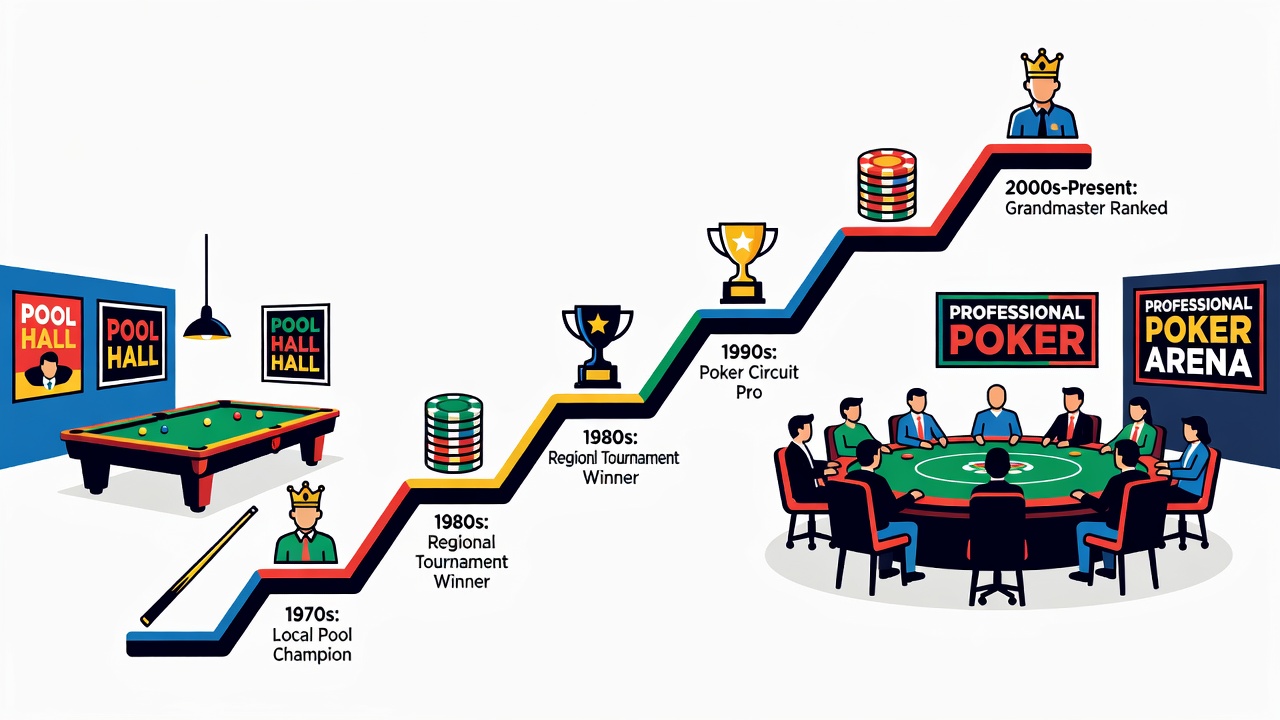
Daniel was shooting pool in Toronto in the early 1990s. Made maybe forty grand a year. By 1997, he'd figured out poker. By 2000, he was beating the best players in the world. That's a ten-year arc from regional operator to world-class grinder.

Tiger Woods and the High-Stakes Blackjack Tables of Vegas
Between 2000 and 2009, Tiger Woods was frequently photographed entering the casinos of Las Vegas. Public records show he gambled in private high-limit rooms. The amounts are documented. The outcomes are not.