The Ritz Club London Laser Roulette Scandal
It was March 2004, and the Ritz Club in Piccadilly was about to become the stage for one of the more curious court cases in British gambling history: a tale involving laser scanners, three foreign visitors, and a roulette wheel whose slight imperfections may or may not have cost the house rather more than the regulars spent on champagne that year.
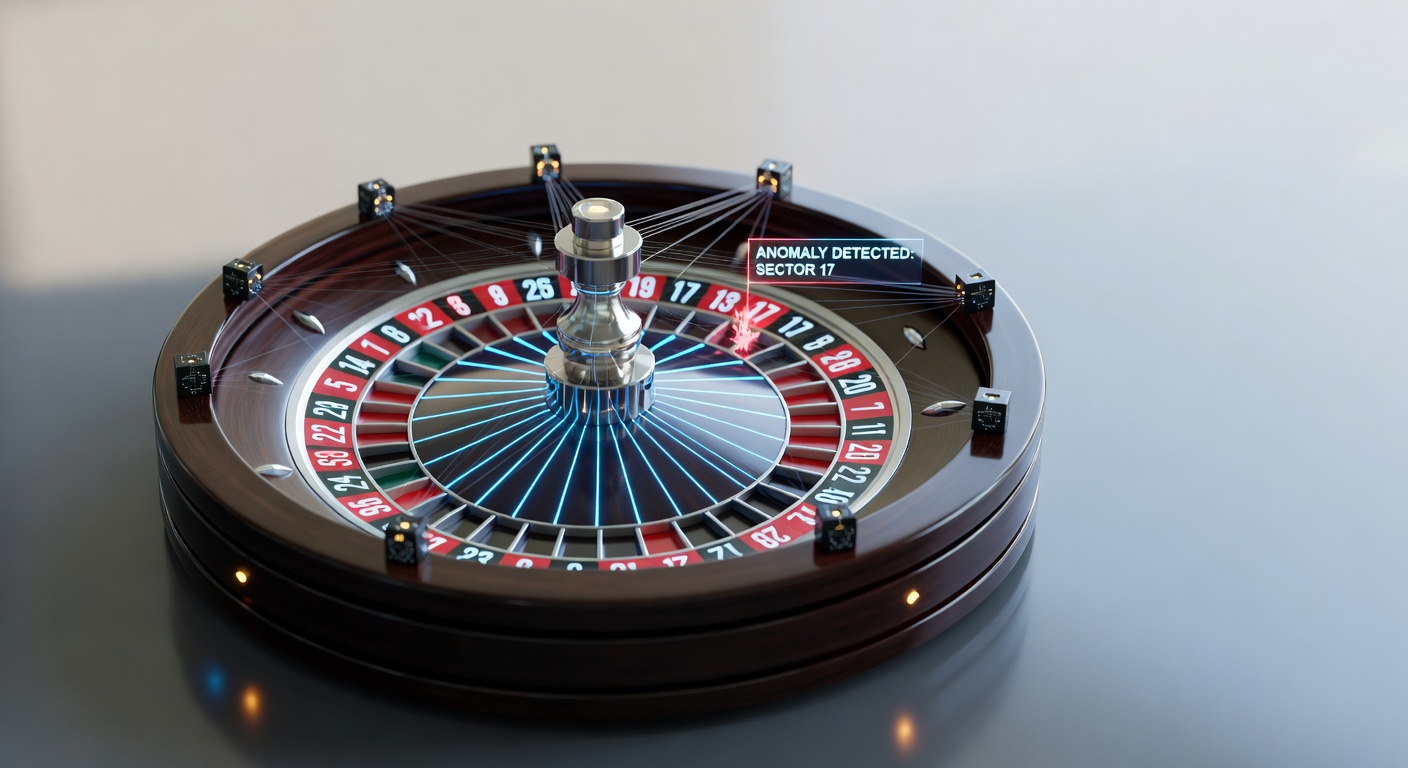
It was, at the time, a story that sat uneasily between the pages of the financial press and the tabloids, neither of which quite knew what to do with it. In March 2004 three guests at the Ritz Club in Piccadilly, the discreet and rather grand casino housed beneath the eponymous hotel, walked out with something in the order of one and a third million pounds, and the long story of how they did so tells us rather more about the state of British casino regulation in the early years of the century than about the sophistication of their method.
March 2004: The Nights in Question
The scheme, insofar as the subsequent reporting can be trusted, depended on the observation that a well-used roulette wheel is not a perfectly impartial device. Any wheel, particularly one that has seen thousands of hours of play, develops the faintest of biases: a pocket or two that settle slightly more often than the idealised mathematics would predict. The three visitors, a Hungarian woman and two Serbian men, were understood to have been using a laser scanner concealed in a mobile telephone, which measured the speed and position of the ball in the fraction of a second after it had been released, fed the data to a small computer, and returned a prediction of the approximate zone in which the ball would eventually drop. The bettor then had time to place a bet on a cluster of numbers before the dealer called the end of wagering.
The method has a name in the literature: sector prediction. It is at least as old as Edward Thorp's work in the late 1960s and the more famous exploits of the Eudaemonic Pie group in Santa Cruz during the late 1970s, about which Thomas Bass wrote an engaging book in 1985. What was novel about the Ritz affair was not the principle but the miniaturisation.
The Arrest and the Charge
The three visitors were detained on 16 March 2004. Metropolitan Police officers questioned them at length. A quantity of cash was seized, as were the mobile telephone and associated device. The arrest followed the casino's decision to examine CCTV footage, which had raised suspicions about the pattern of betting during the preceding two nights. The charge contemplated was obtaining property by deception under the Theft Act 1968.
This is the point at which the story becomes, if anything, more interesting. On 5 December 2004, the Crown Prosecution Service declined to pursue the case. The decision turned on a reading of the then-applicable Gaming Act 1968, which the Crown could not persuade itself covered the use of a device to predict, rather than to influence, the outcome of a game. The money was returned. The three visitors, whose identities the court papers never formally confirmed, departed.
The Legal Thicket
British gambling law at the time pre-dated the Gambling Act 2005, which when it eventually came into force in September 2007 rewrote the framework entirely and, among other things, made cheating at gambling a specific statutory offence under section 42, carrying a penalty of up to two years' imprisonment. The drafters of the 2005 Act had, it was widely supposed, the Ritz case somewhere in mind. The gap the Crown had been unable to bridge under the 1968 Act was explicitly closed. One might also note, with the faint irony that characterises so much of British regulatory reform, that the new offence was broad enough to capture a great many practices that had previously existed in a cheerful grey area.
Later Developments
The Ritz Club itself weathered the affair reasonably well, though the casino's subsequent history was not uncomplicated. The London gaming licence regime changed repeatedly through the 2010s, and the Ritz eventually closed its casino in 2020 after a long period of reduced activity, partly attributable to the pandemic and partly to the shifting economics of the West End high-stakes market.
One of the quieter consequences of the case was a gradual upgrading of wheel maintenance and surveillance protocol across the major London clubs. Wheel rotation, the practice of physically rearranging wheels between tables to defeat observation of individual biases, became rather more common after 2004 than it had been before. The laser-scanner method itself was largely neutralised, at roulette at least, by a combination of tighter call-no-more-bets discipline by dealers and the gradual replacement of older wheel stock.
In the Present
Twenty years on, the Ritz laser case occupies an odd corner of gambling history: a scandal that was and was not one, a crime that was and was not committed, a sum that was won and then not lost. It is invoked in compliance training across the European industry and cited, though not often named, in academic discussions of the interaction between technology and the statutory definition of cheating. The three visitors, wherever they are, presumably recall it with a certain dry satisfaction. Whether the house, two decades on, remembers it differently is a matter one might leave to those who still frequent the tables of Piccadilly.
Next notes
More from #famous-players
Richard Marcus: The Infamous Past-Poster and Casino Cheat
Richard Marcus spent his life buying possibilities, not just in the lottery, but in the spaces between rules where people aren't looking.

Allen Iverson's Casino Bans: What the Reports Actually Say
Public records from Nevada gaming authorities show Iverson was excluded from casinos in 2012. The reasons were never fully disclosed, but the timeline reveals something about how exclusion actually works.

Kirk Kerkorian: The Quiet Billionaire Who Built Vegas Three Times
Kirk Kerkorian understood a fundamental truth about Las Vegas: the game is real estate, not gaming. Gaming is the excuse that gets people into the buildings.

Wayne Newton's Vegas Legacy and Casino Residencies
The entertainer spent more time in Las Vegas than most residents. Here's what his residency model tells us about casino hospitality architecture.
Daniel Negreanu: From Toronto Pool Halls to Poker Royalty
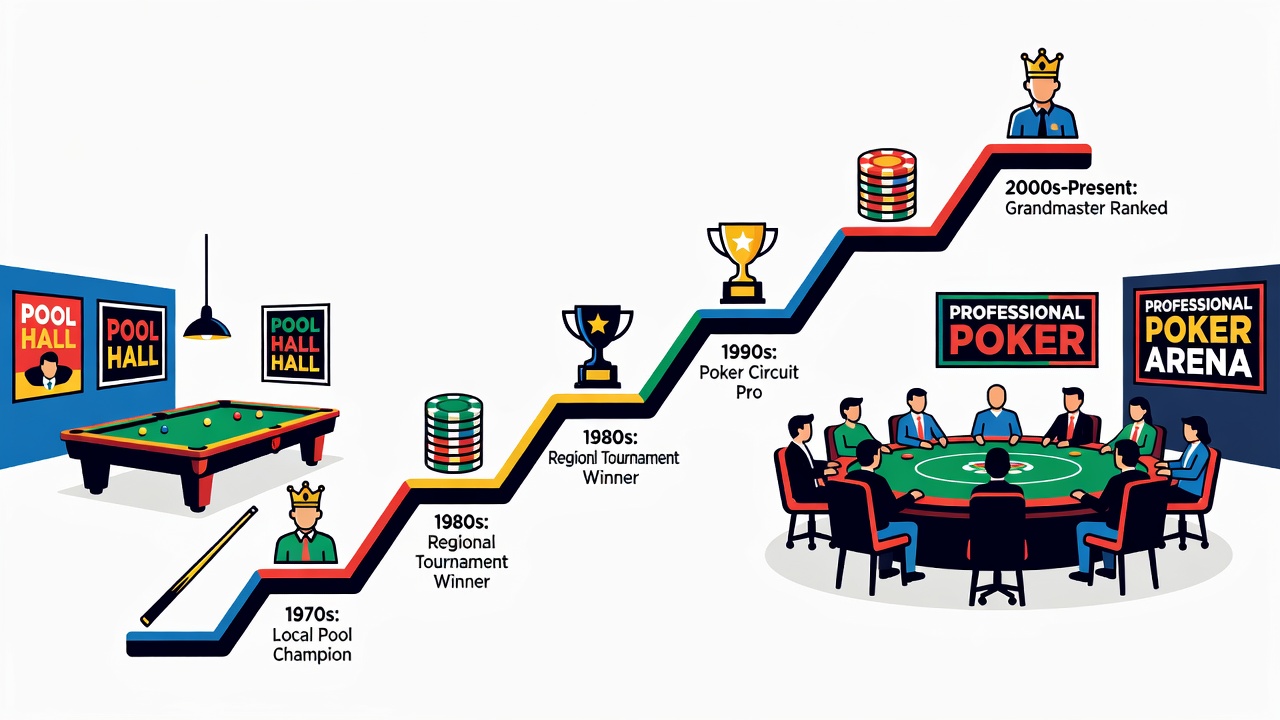
Daniel was shooting pool in Toronto in the early 1990s. Made maybe forty grand a year. By 1997, he'd figured out poker. By 2000, he was beating the best players in the world. That's a ten-year arc from regional operator to world-class grinder.

Tiger Woods and the High-Stakes Blackjack Tables of Vegas
Between 2000 and 2009, Tiger Woods was frequently photographed entering the casinos of Las Vegas. Public records show he gambled in private high-limit rooms. The amounts are documented. The outcomes are not.