Minimum Gambling Ages Around the World: A General Overview
Onboarding new players requires understanding where they can legally participate. Age restrictions operate on a tier system that shapes player acquisition across jurisdictions.

The minimum gambling age is not a universal constant. It's a onboarding gate, and game designers call it the biggest retention barrier in regulated markets.
The Primary Threshold: 18 vs. 21
Most jurisdictions operate at 18. The United Kingdom (UKGC), Malta (MGA), and Curaçao all use 18 as the legal floor. The European Union harmonizes at 18 for most products.
The United States is fragmented. Nevada, New Jersey, and Pennsylvania: 21 for casino gambling, 18 for poker and sports betting in some cases. Other states don't regulate online gaming at all.
This creates onboarding friction. A player in Pennsylvania cannot access the same product as a player in Malta at the same age.
The Acquisition Cost Problem
From a systems design perspective, the 18-vs-21 gap means the American market ages out 3 years of potential players. That's roughly 12 million people in the US at any given time.
Operators adjust by targeting older demographics in the US market. Marketing shifts from age-gating at 18 to targeting 25+. The retention hook ("Play now") hits later in a player's life trajectory, when habits are more set.
In contrast, European operators acquire at 18 and shape habits earlier. After five years, that cohort has stronger behavioral anchors to specific platforms.
The Secondary Restrictions
Some jurisdictions impose age restrictions beyond 18 for specific products. Lotteries in Germany: 18. Slot machines in physical casinos: sometimes 21. Horse racing in the UK: 18 for betting, though some tracks require 25 for entry to certain areas (social, not legal).
These variations create regional player segmentation. A 20-year-old in Frankfurt cannot access physical slot venues but can access online gambling. A 20-year-old in London can access both.
The Identity Verification Burden
Age enforcement is a gating mechanism that becomes part of user experience. KYC (Know Your Customer) verification is required by MGA and UKGC before first withdrawal. Some operators gate it before deposit. Some gate it before first login.
The gate affects signup completion rates. Operators that gate immediately see 15-30% abandonment. Operators that defer gates to first withdrawal see higher signup numbers but lower completion rates at withdrawal.
Design choice: optimize for signup volume or withdrawal completion? The answer varies by region.
The Asia Difference
Regulatory coverage in Asia is sparse. Many jurisdictions don't legally define a minimum age, which creates a vacuum. Operators self-regulate at 18 or sometimes 16 for lottery products.
This absence of regulation, paradoxically, makes acquisition harder. Operators must build their own verification and maintain legal defensibility in case regulation arrives.
The Behavioral Data
Players acquired at 18 versus 21 show different play patterns. A player entering at 18 has higher lifetime value (more years of potential play). But players entering at 21 show stronger decision-making frameworks. The younger cohort exhibits higher problem gambling metrics.
Regulators in the UKGC monitor this. Their annual reports show a correlation between entry age and later harmful play patterns.
The Fraud Vector
Age is the easiest lie in KYC systems. A 16-year-old can forge a birthday. Operators combat this with document verification (passport, ID) at signup rather than relying on self-reported age.
The friction of document verification suppresses total signup volume but improves quality. Jurisdictions like Malta require this. Unregulated markets often don't.
The Strategic Implication
For operators, age minimums determine when they can acquire a player and therefore how many product-years that player has available. This shapes marketing spend, LTV projections, and retention strategy.
For game designers, it's a constraint: build acquisition flows around the legal gate, not in spite of it. The best practice is to make age verification feel like one step in a frictionless signup rather than a barrier.
The age floor shapes the entire funnel.
Next notes
More from #poker

How Home Poker Games Differ From Casino Cash Games
A careful examination of the legal, social, and mathematical differences between home poker and casino cash games reveals that the similarities are often overstated.
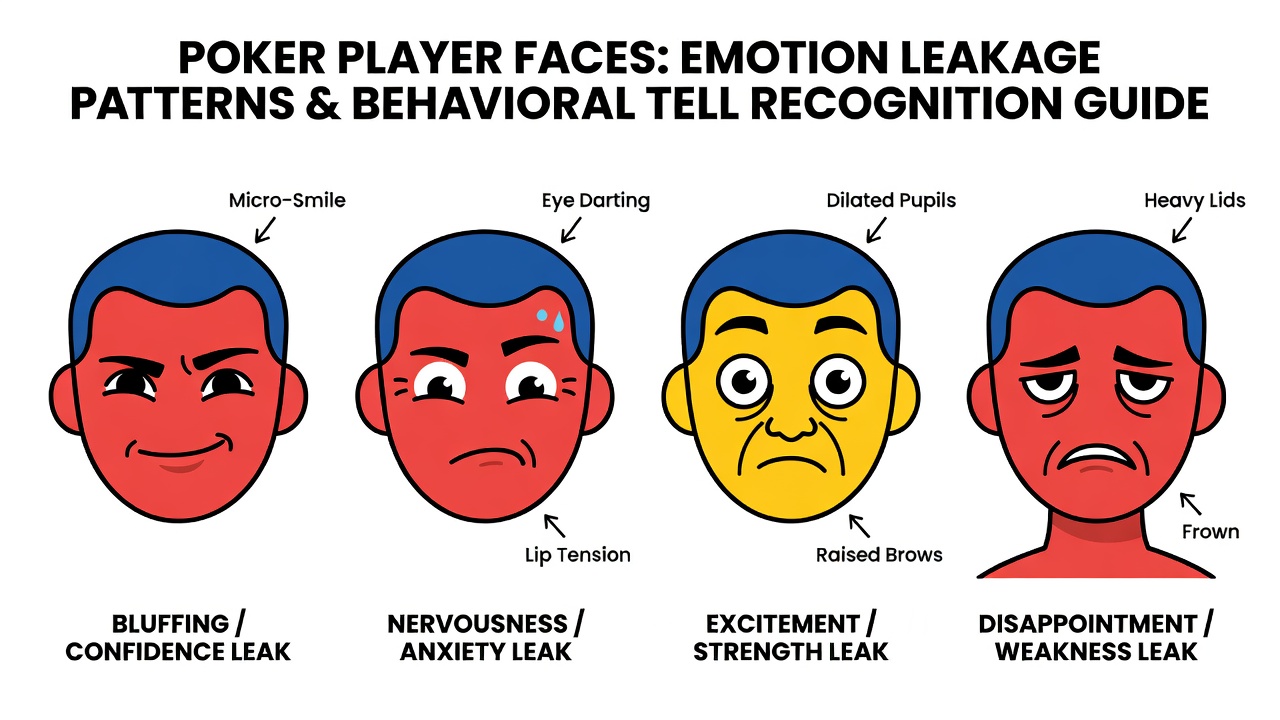
Poker Tells in Live Games: What to Watch For
A tell is a behavioral pattern that reveals hand strength. Poker players are trying to mask their emotions. The tells emerge from the parts they forgot to mask.

Tipping Dealers in Live Poker: What's Appropriate
A dealer working five hours on a Tuesday afternoon at a regional poker room makes maybe $200 in base salary. Everything else is tips. This changes how you understand the relationship between player and dealer.

Poker Night TV: The Rise and Fall of Televised Poker on ESPN
ESPN started broadcasting poker in 2003. For five years, it was the most watched non-sports programming on the network. Then it disappeared. The moral is that even good things end when people stop watching.

Short Deck Hold'em: Rules and Starting Strategy
Short deck removes the twos through fives. The math changes. Your hand values shift. Here is what adjusts.

Short-Stack Strategy for Poker Tournaments
When the blinds have eaten your chips down to a whisper, the game changes. A dealer I worked with in Macau explained this better than any poker book ever could.