Howard Hughes' Bizarre Takeover of the Desert Inn and Vegas
Howard Hughes moved into the Desert Inn on Thanksgiving 1966. He was asked to leave. He bought the hotel instead. This remains, in my view, the correct way to respond to a checkout deadline.

In November 1966, Howard Hughes bought a hotel because he did not want to move rooms. That is the whole story. Everything else is detail.
My thesis is this. If your strategy for avoiding a difficult conversation with the front desk is to acquire the front desk, you are no longer having a business career. You are having something else.
The Thanksgiving Problem
Hughes arrived at the Desert Inn on November 27, 1966. He took the top two floors. He stopped gambling shortly after, which is a problem for a casino because the top two floors of the Desert Inn were traditionally reserved for high rollers, and Hughes was occupying them without playing. Moe Dalitz, who owned the hotel and had a background in what polite accounts call distribution and impolite ones call something else, wanted him out by New Year's. This was a reasonable request. Hughes disagreed.
On March 22, 1967, Hughes purchased the Desert Inn for approximately thirteen million dollars. He did not move. He stayed in the same suite. He now owned the ceiling.
The Shopping Spree
This might have been the end of it. It was not. Over the following four years, Hughes also purchased the Sands, the Frontier, the Castaways, the Landmark, the Silver Slipper, and Harold's Club in Reno. He never visited any of them. He stayed in the Desert Inn the entire time. His stated reasoning, to the extent he ever stated it, involved concerns about nuclear testing, mob influence in Nevada, and also about germs, which are real problems but not usually solved by real estate.
The Nevada Gaming Commission granted him licences without requiring him to appear in person. This had never been done before. It has rarely been done since. The commissioners explained that Hughes was a known public figure and that his appearance was unnecessary. His last public photograph at this point was several years old. One imagines the commissioners reassuring themselves over dinner.
By 1970, Hughes owned approximately one-seventh of all Strip gaming revenue. He had not been seen in public since 1958.
The Counterargument
A reasonable person might say this was not, strictly speaking, bizarre. Large investors buy things. Eccentric men have lived in hotels before. The Plaza has always had a slight population of permanent residents. A man with billions of dollars can stay anywhere he likes.
All of this is true. The counterargument fails, however, on a small point. Most large investors look at the things they buy. Most eccentric hotel residents eat in the dining room at least once. Hughes did neither. He watched Ice Station Zebra on a loop. He subsisted, for extended periods, on ice cream. When the ice cream supplier discontinued a flavour he favoured, his staff arranged for the company to manufacture several hundred gallons of it specifically for him.
This is a man who owned a casino and never played a slot. Who owned a Strip and never walked it. Whose aviation company had built the Spruce Goose and whose film company had produced Scarface, and who now primarily needed a supply of tissues and a telephone.
The Departure
On November 25, 1970, Hughes left the Desert Inn as quietly as he had arrived. He was carried out on a stretcher, in secret, at night. He relocated to the Bahamas. His Las Vegas holdings remained under his ownership through his death in April 1976, at which point the Summa Corporation continued to manage them for his estate.
There is a small wistful note here. The Strip Hughes left behind had been reshaped. Before him, the Vegas casino business was a Mob operation, with cash skimmed from counting rooms and deposited in places the federal government preferred not to investigate. Hughes' arrival accelerated a process of corporate ownership that would eventually produce the Mirage, Caesars Palace as we now know it, and the entire publicly traded casino industry. He did this mostly by staying in bed.
The Lesson
I do not want to draw too strong a conclusion from a single case. But if the story teaches anything, it is that acquisition is sometimes cheaper than negotiation. A three-bedroom suite at the Desert Inn in 1966 cost roughly two hundred dollars a night. The hotel itself cost thirteen million. Hughes could have moved. Hughes could have stayed at another hotel for the rest of his life for less money than he paid in title transfer fees alone. He chose the other path.
I think about this often, usually around checkout time.
Next notes
More from #famous-players
Richard Marcus: The Infamous Past-Poster and Casino Cheat
Richard Marcus spent his life buying possibilities, not just in the lottery, but in the spaces between rules where people aren't looking.

Allen Iverson's Casino Bans: What the Reports Actually Say
Public records from Nevada gaming authorities show Iverson was excluded from casinos in 2012. The reasons were never fully disclosed, but the timeline reveals something about how exclusion actually works.

Kirk Kerkorian: The Quiet Billionaire Who Built Vegas Three Times
Kirk Kerkorian understood a fundamental truth about Las Vegas: the game is real estate, not gaming. Gaming is the excuse that gets people into the buildings.
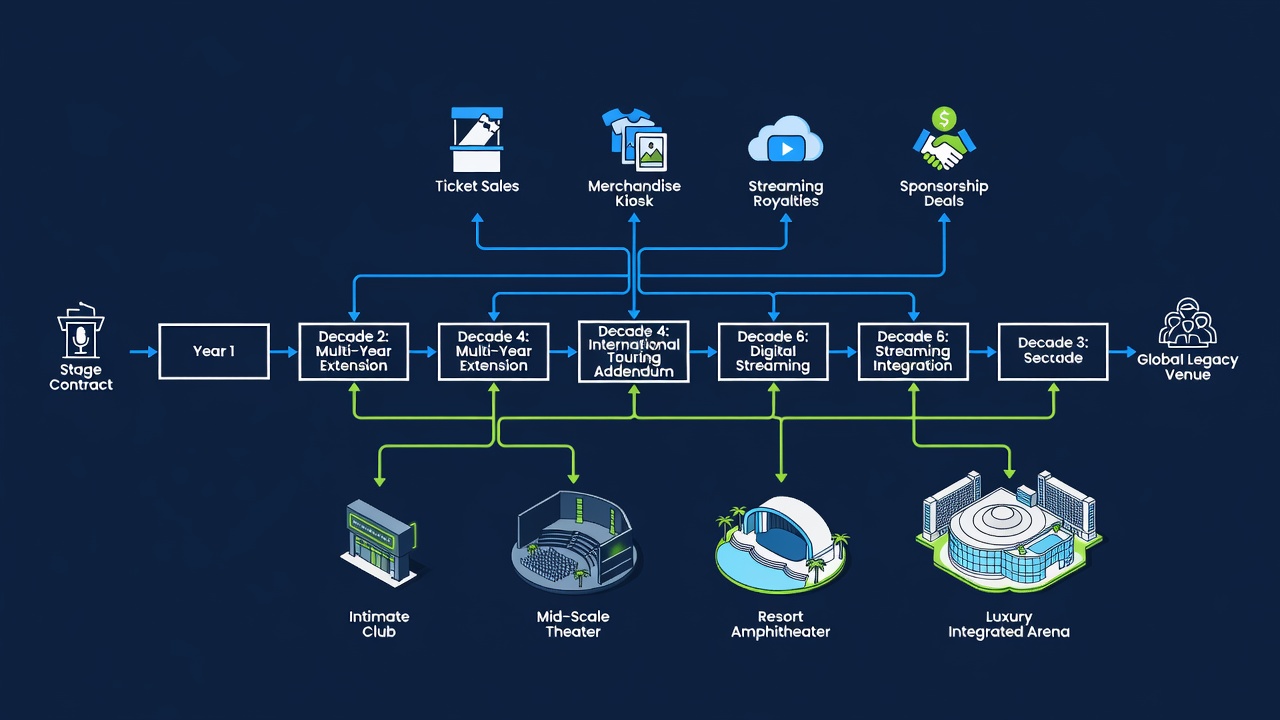
Wayne Newton's Vegas Legacy and Casino Residencies
The entertainer spent more time in Las Vegas than most residents. Here's what his residency model tells us about casino hospitality architecture.
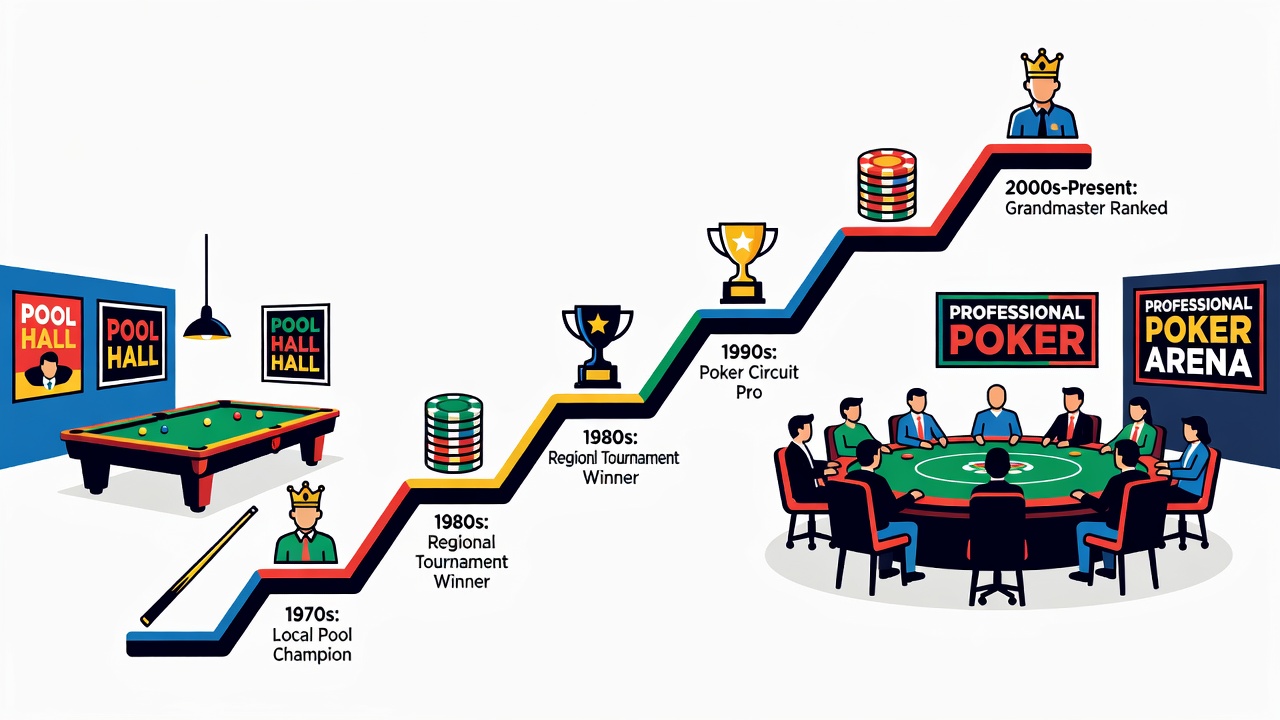
Daniel Negreanu: From Toronto Pool Halls to Poker Royalty
Daniel was shooting pool in Toronto in the early 1990s. Made maybe forty grand a year. By 1997, he'd figured out poker. By 2000, he was beating the best players in the world. That's a ten-year arc from regional operator to world-class grinder.
Tiger Woods and the High-Stakes Blackjack Tables of Vegas
Between 2000 and 2009, Tiger Woods was frequently photographed entering the casinos of Las Vegas. Public records show he gambled in private high-limit rooms. The amounts are documented. The outcomes are not.